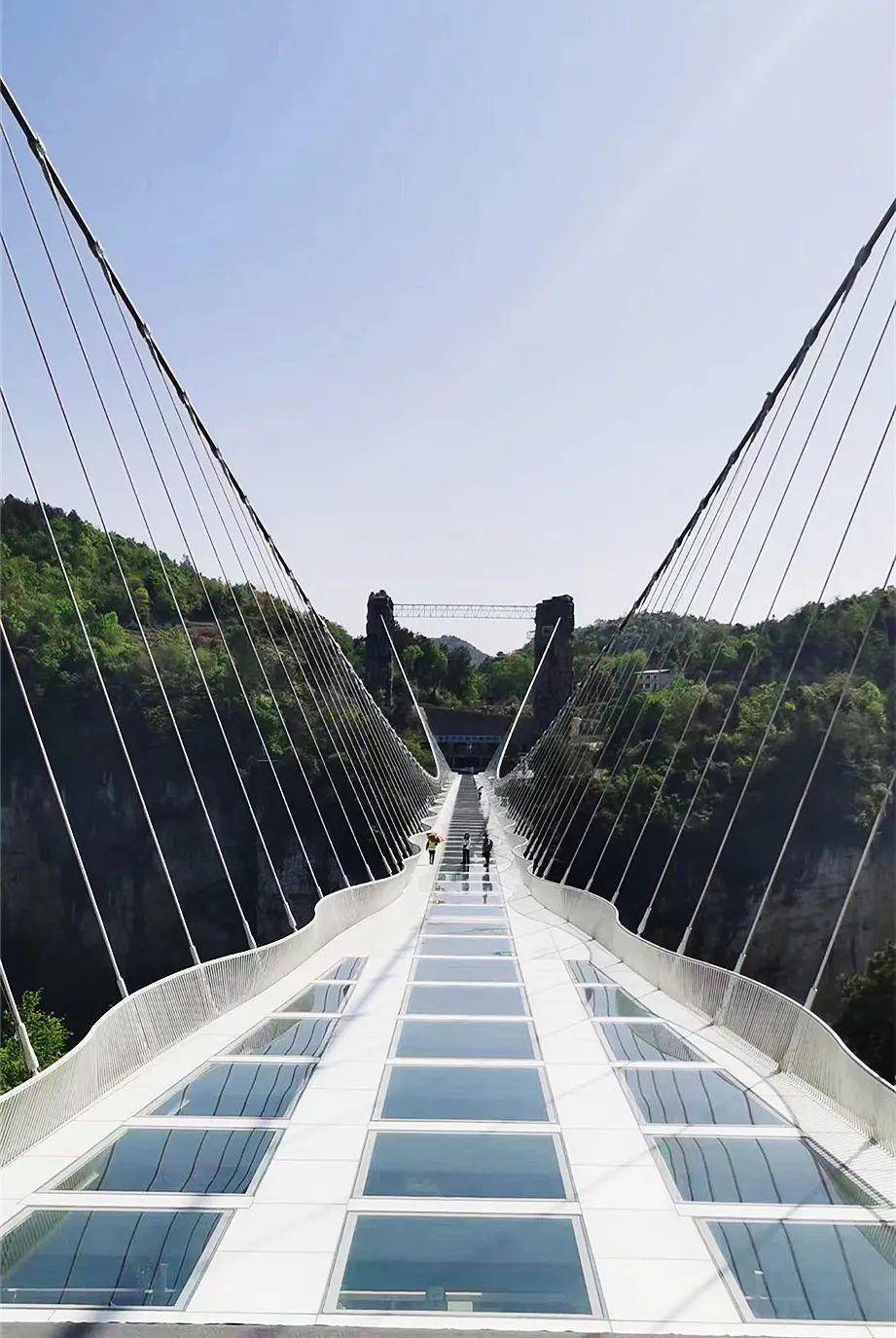
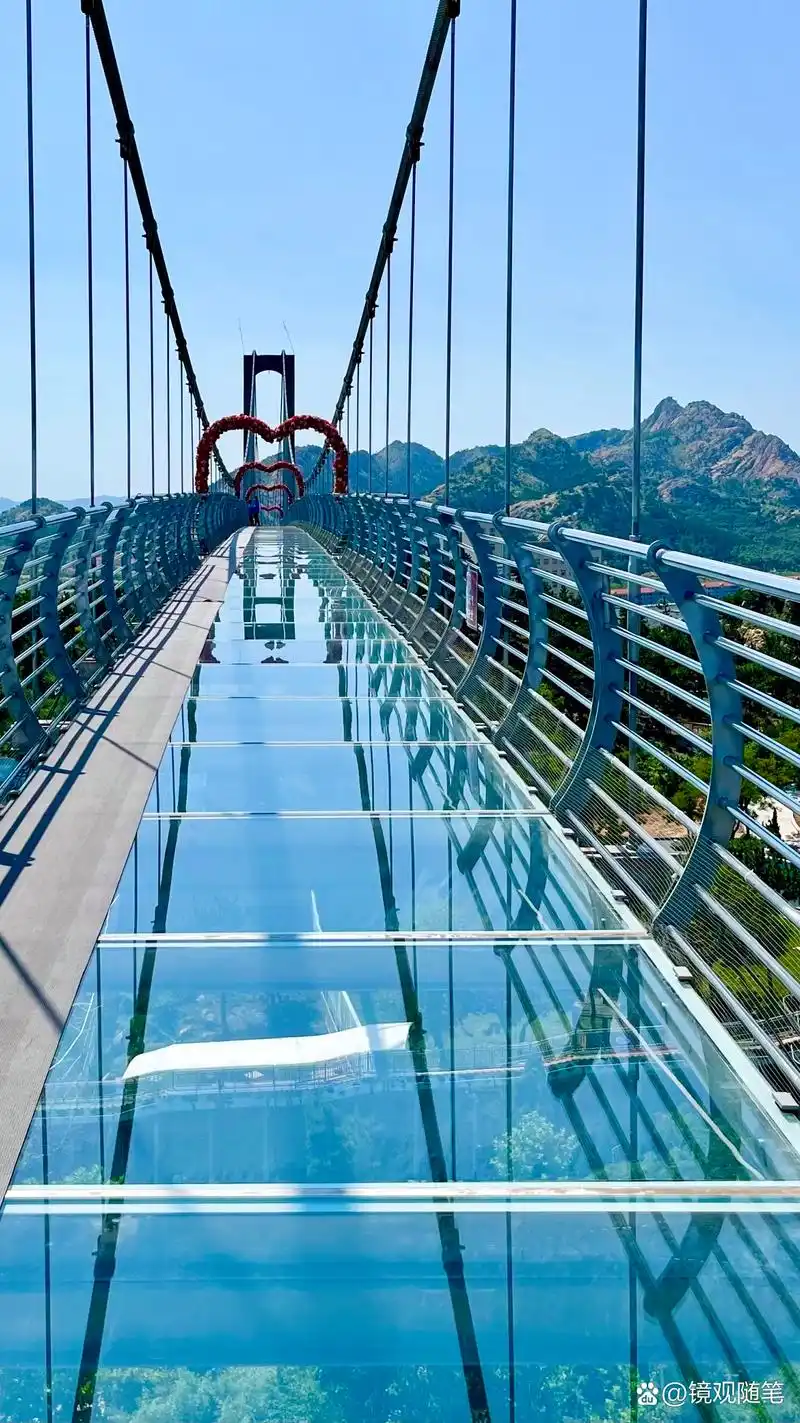
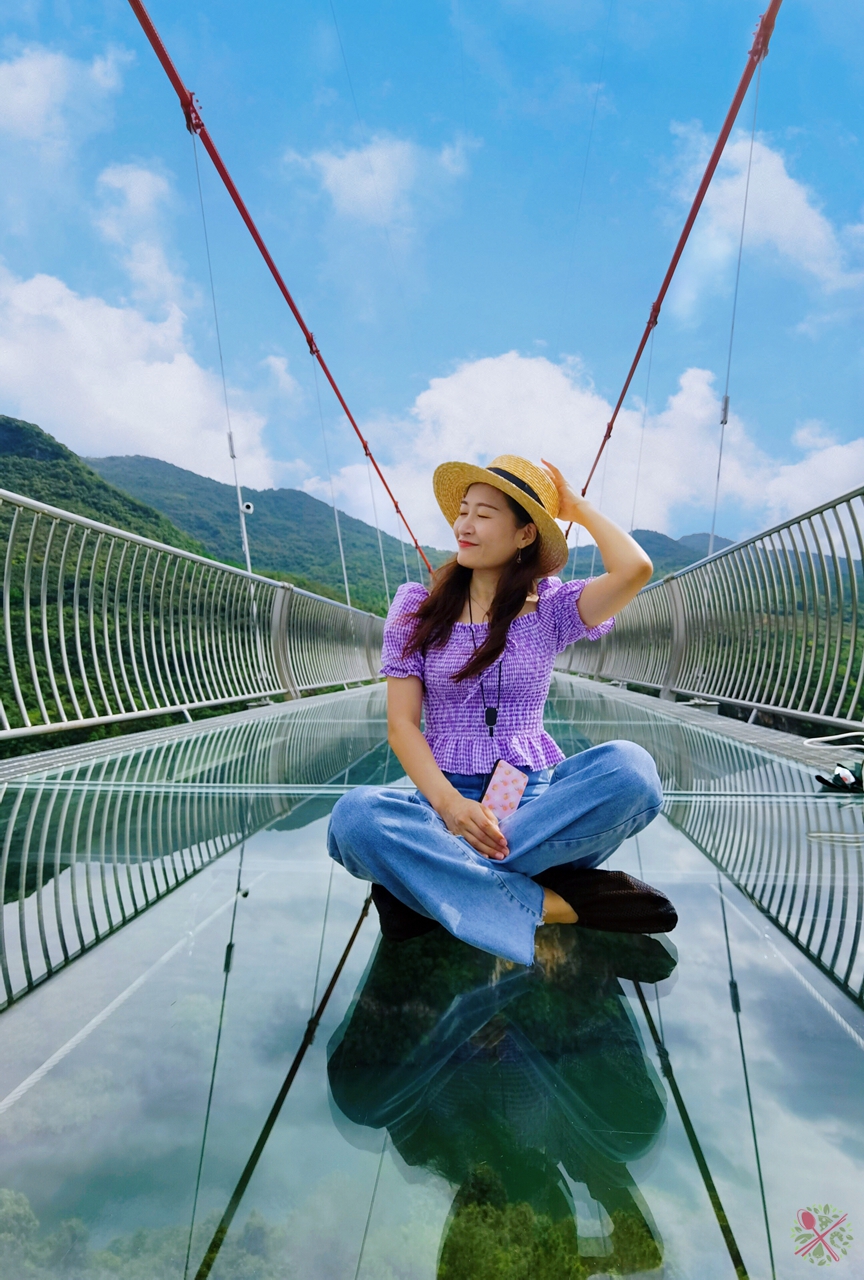
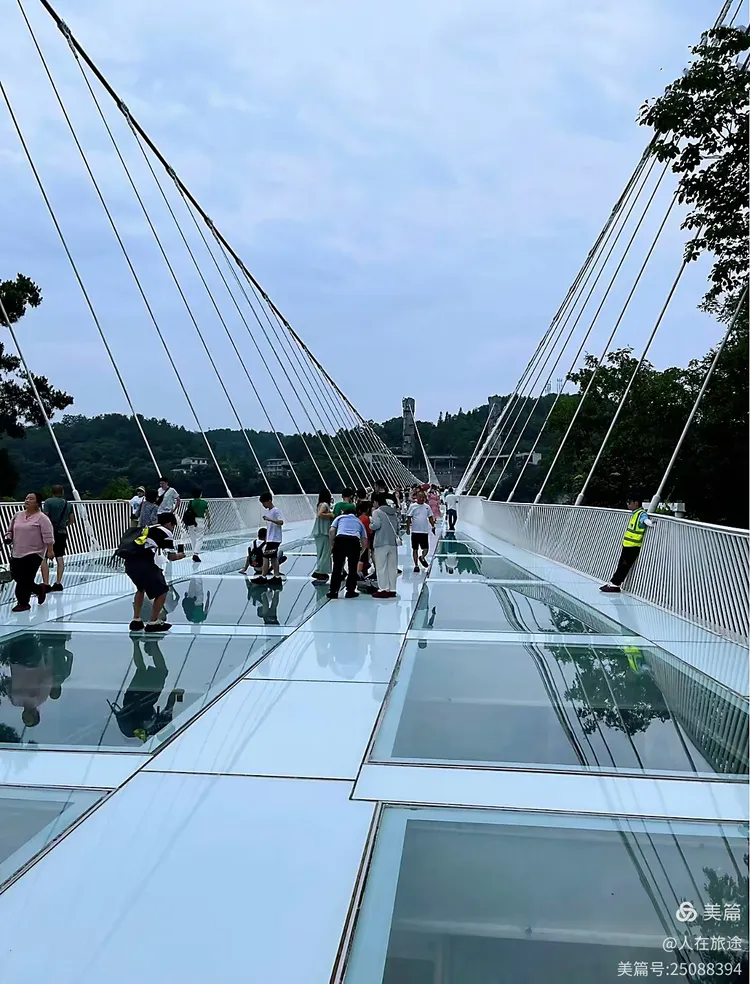
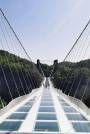
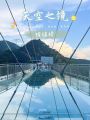
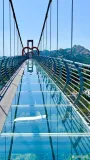
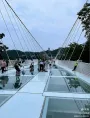
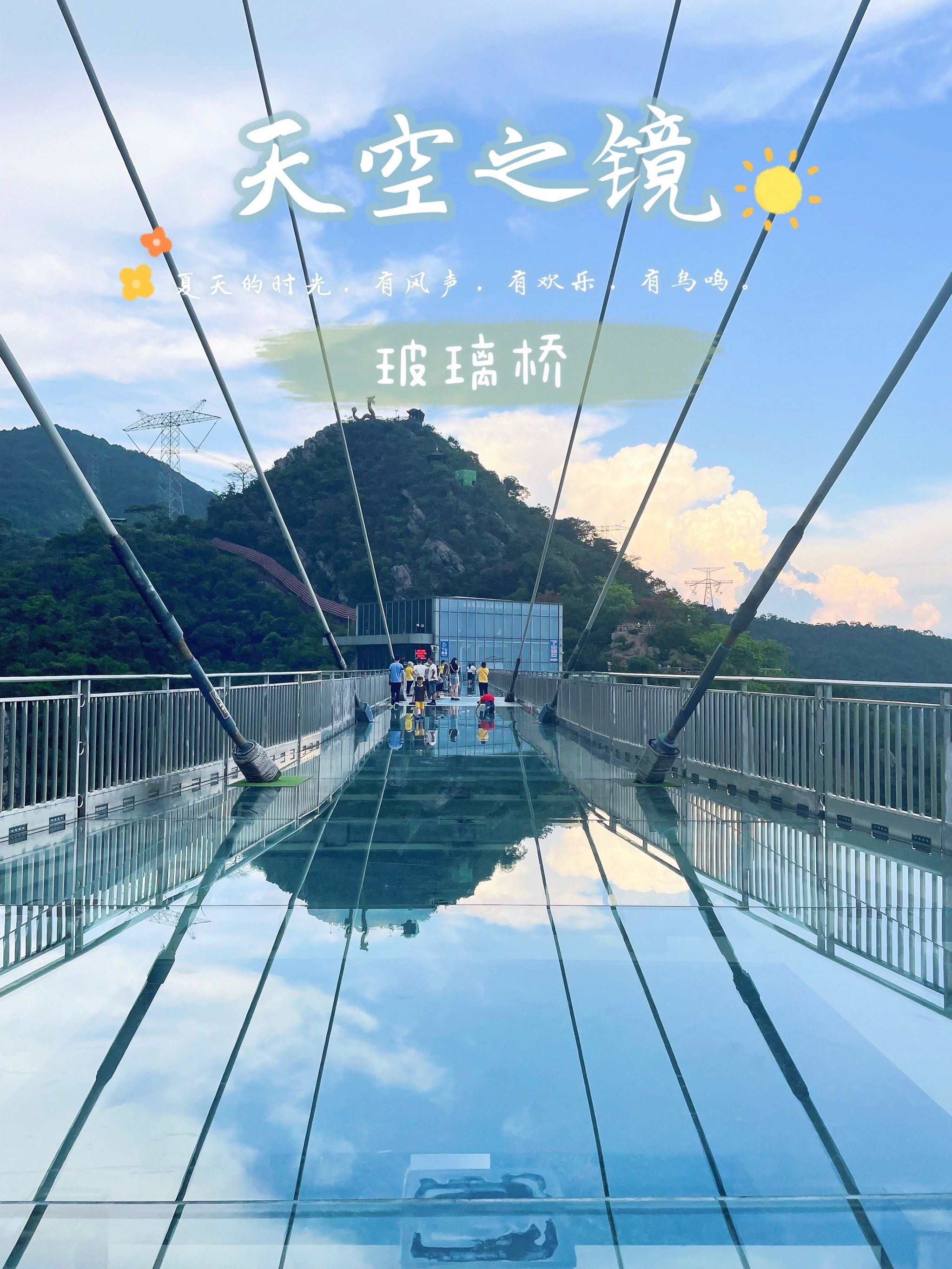
Low-Iron Glass Bridge
Ultra-Clear Multi-Layer Laminated & Laminated-Tempered Glass Flooring for Premium Pedestrian Bridges, Skywalks & Observation Walkways – Water-White Transparency, True Colour Rendering, Unobstructed Views
Low-iron glass bridge flooring is manufactured with specially formulated glass containing significantly reduced iron oxide content (typically <0.02% Fe₂O₃ compared to 0.08–0.12% in standard clear glass). The result is water-white transparency with minimal green tint – delivering the purest possible visual experience through the bridge floor and the cleanest aesthetic for premium architectural bridge installations.
For architects, structural engineers, architectural glazing contractors, construction firms, and procurement managers supplying the European, North American, Australian and global premium architectural market, low-iron glass bridge flooring represents the defining visual differentiator – the glass specification that transforms a functional bridge structure into an invisible viewing platform, creating the illusion of walking on air with completely unobstructed views of the landscape below.
💡 Why low-iron glass matters for bridge applications: A glass bridge is fundamentally a viewing experience. Whether spanning a canyon, connecting hotel towers or extending over a museum atrium, the entire purpose of a glass bridge is to provide an unobstructed view. Standard clear glass contains iron oxide impurities that produce a visible green tint – particularly noticeable at the edges and in thicker multi-layer glass panels. In bridge glass, this green tint is amplified because: (1) bridge panels use thick multi-layer construction (33.04mm–55.68mm) where green tint is most pronounced, (2) bridge panels are viewed from above and below simultaneously, (3) the panel edges are highly visible along the bridge length, (4) natural light passing through the bridge floor is filtered through the glass – and green-tinted light transmission dramatically reduces the visual impact, and (5) the entire bridge experience depends on undistorted views of the scenery below. Low-iron glass eliminates this issue entirely, creating the illusion of an invisible bridge surface and allowing the surrounding environment to be experienced in its purest form.
1. Low-Iron Glass Bridge Solutions
Low-iron glass bridge flooring is available in multiple configurations to suit different span lengths, load requirements and visual quality aspirations.
1.1 Low-Iron Multi-Layer Laminated Glass Bridge Flooring
- Description: 10+1.52+10+1.52+10mm low-iron multi-layer laminated
- Total thickness: 33.04 mm (~1-5/16″)
- Typical application: Premium interior bridges, scenic skywalks
- Key benefit: Post-breakage retention + water-white clarity
1.2 Low-Iron Heavy-Duty Laminated Glass Bridge Flooring
- Description: 12+1.52+12+1.52+12mm low-iron multi-layer laminated
- Total thickness: 38.56 mm (~1-1/2″)
- Typical application: Premium commercial bridges, public access skywalks
- Key benefit: Greater load capacity + ultra-clear optics
1.3 Low-Iron Multi-Layer Laminated-Tempered Glass Bridge Flooring
- Description: Three low-iron tempered glass plies bonded with PVB interlayers
- Total thickness: Variable (e.g., 10T+1.52+10T+1.52+10T = 34.31mm)
- Typical application: Maximum specification – flagship exterior bridges, tourist attractions
- Key benefit: Strength of tempered + retention of laminated + water-white clarity
1.4 Low-Iron Four-Ply Laminated Glass Bridge Flooring
- Description: Four low-iron glass plies with three PVB interlayers
- Total thickness: Variable (e.g., 10+1.52+10+1.52+10+1.52+10 = 46.65mm)
- Typical application: Long-span premium bridges, observation walkways
- Key benefit: Maximum redundancy + water-white clarity throughout
1.5 Low-Iron Glass Bridge with Anti-Slip Treatment
- Description: Low-iron glass with ceramic frit anti-slip surface
- Typical application: All premium bridge applications – interior and exterior
- Key benefit: Slip resistance without compromising optical clarity
2. Clear vs Low-Iron Glass Bridge Flooring
This is the most important decision module for procurement managers evaluating low-iron glass for bridge applications. The visual difference is amplified at bridge glass thicknesses.
| Feature | Standard Clear Glass Bridge | Low-Iron Glass Bridge |
|---|
| Transparency | High | Very High – water-white |
| Green Tint | Visible – especially at edges | Minimal to none |
| Colour Clarity | Good – slight colour distortion | Excellent – true colour rendering |
| Edge Appearance | Green/blue glow visible along bridge length | Clear – nearly invisible |
| Thicker Panels (33.04mm+) | Green tint pronounced | Remains clear at all thicknesses |
| Views Through Bridge Floor | Slightly green-tinted | True colour – no distortion |
| Natural Light Transmission | Green-tinted light | Pure white light |
| Photography / Videography | Green cast visible in images | Clean, neutral images |
| Perceived Quality | Standard | Premium – visibly superior |
| Cost | Lower – standard specification | Higher (+20–35%) |
2.1 Visual Impact at Bridge Glass Thicknesses
| Build-Up | Standard Clear – Edge Appearance | Low-Iron – Edge Appearance | Recommendation |
|---|
| 33.04mm (3-ply laminated) | Noticeable green edge glow | Nearly invisible edge | Low-iron recommended for premium |
| 38.62mm (3-ply laminated) | Clearly visible green tint | Clear edge | Low-iron strongly recommended |
| 43.18mm (3-ply laminated-tempered) | Pronounced green glow | Clear edge | Low-iron strongly recommended |
| 54.74mm (4-ply laminated) | Maximum green tint | Clear edge | Low-iron essential |
2.2 When to Choose Low-Iron Over Clear for Bridge Applications
| Scenario | Recommendation | Reason |
|---|
| Scenic observation walkway | Low-Iron | Unobstructed views of landscape below |
| Tourist attraction bridge | Low-Iron | Visitor experience depends on clarity |
| Luxury hotel skywalk | Low-Iron | Guest experience demands uncompromising quality |
| Museum bridge | Low-Iron | True colour rendering for exhibits viewed through floor |
| Photography / media bridge | Low-Iron | Clean images without green cast |
| Thick glass (38.62mm+) | Low-Iron | Green tint intensifies with thickness |
| Under-lit bridge | Low-Iron | Light passes through glass – green tint ruins effect |
| Budget-conscious project | Clear | Cost saving where green tint acceptable |
3. Glass Configurations for Low-Iron Bridge Flooring
3.1 Glass Types
| Glass Type | Typical Use | Key Advantage | Link to Product |
|---|
| Low-Iron Multi-Layer Laminated | Premium interior bridges | Post-breakage retention + clarity | View Laminated Glass → |
| Low-Iron Multi-Layer Laminated-Tempered | Flagship exterior bridges | Strength + retention + clarity | View Laminated Glass → |
| Low-Iron Four-Ply Laminated | Long-span premium bridges | Ultimate load + water-white clarity | View Laminated Glass → |
3.2 Glass Build-Up Options
| Build-Up | Total Thickness | Typical Span | Weight per m² | Load Rating |
|---|
| 10+1.52+10+1.52+10mm Low-Iron Laminated | 33.29 mm (~1-5/16″) | Up to 2300mm | ~79 kg | Standard duty |
| 12+1.52+12+1.52+12mm Low-Iron Laminated | 38.87 mm (~1-1/2″) | Up to 3400mm | ~95 kg | Heavy duty |
| 10T+1.52+10T+1.52+10T Low-Iron Lam-Temp | 34.83 mm (~1-3/8″) | Up to 2900mm | ~82 kg | Standard + retention |
| 12T+1.52+12T+1.52+12T Low-Iron Lam-Temp | 40.73 mm (~1-5/8″) | Up to 3900mm | ~98 kg | Heavy + retention |
| 10+1.52+10+1.52+10+1.52+10 Low-Iron 4-Ply | 48.81 mm (~1-15/16″) | Up to 4400mm | ~116 kg | Extra heavy duty |
3.3 Low-Iron Glass Chemical Composition
| Component | Standard Clear Glass | Low-Iron Glass |
|---|
| Iron oxide (Fe₂O₃) content | 0.08–0.12% | <0.02% |
| Light transmission | ~89% | ~91–92% |
| Green tint presence | Visible | Virtually eliminated |
| Edge appearance | Green/blue glow | Clear / colourless |
4. Why Low-Iron Glass for Bridges?
This section explains the specific advantages of low-iron glass in bridge applications beyond general floor glass.
4.1 Visual Experience Enhancement
| Aspect | Standard Clear Glass | Low-Iron Glass |
|---|
| View of landscape below | Slightly green-tinted | True colour – as seen with naked eye |
| Sky seen through bridge | Subtle green cast | Pure blue sky |
| People seen through bridge | Slight green skin tone shift | Natural skin tones |
| Photography through bridge | Green colour cast in images | Neutral, clean images |
| Edge appearance along bridge length | Continuous green glow | Invisible edges |
4.2 Why Low-Iron Matters More at Bridge Glass Thicknesses
| Build-Up | Clear Glass Green Tint | Low-Iron Clarity | Recommendation |
|---|
| 33.04mm (10+1.52+10+1.52+10) | Noticeable green at edges | Excellent | Low-iron recommended for premium |
| 38.61mm (12+1.52+12+1.52+12) | Clearly visible green tint | Excellent | Low-iron strongly recommended |
| 43.17mm (12T+1.52+12T+1.52+12T) | Pronounced green glow | Excellent | Low-iron strongly recommended |
| 46.66mm (10+1.52+10+1.52+10+1.52+10) | Strong green tint | Excellent | Low-iron essential |
Important note: The green tint in standard clear glass becomes progressively more visible as glass thickness increases. For bridge glass – which typically uses 33.04mm to 55.69mm multi-layer panels – low-iron glass is strongly recommended to achieve the clean, transparent appearance that premium bridge projects demand.
5. Glass Thickness for Low-Iron Bridge Flooring
5.1 Thickness Recommendations by Span
| Clear Span | Recommended Low-Iron Build-Up | Expected Deflection (3.0kN load) |
|---|
| Up to 1900 mm | 10+1.52+10+1.52+10mm low-iron laminated | ~2.5 mm |
| 1900–2800 mm | 12+1.52+12+1.52+12mm low-iron laminated | ~3.5 mm |
| 3800–4800 mm | 12T+1.52+12T+1.52+12T+1.52+12T low-iron lam-temp | ~5.5 mm |
| 4900 mm+ | Custom low-iron multi-layer – FEA required | Subject to structural calc |
5.2 Thickness by Application
| Application | Recommended Low-Iron Build-Up | Notes |
|---|
| Premium interior bridge (<2500mm) | 10+1.52+10+1.52+10mm low-iron laminated | Standard premium specification |
| Premium interior bridge (2500–3500mm) | 12+1.52+12+1.52+12mm low-iron laminated | Greater load capacity |
| Flagship exterior bridge | Low-iron laminated-tempered + anti-slip | Maximum strength + clarity |
| Scenic observation walkway | Low-iron multi-layer laminated-tempered | Unobstructed views + public safety |
| Tourist attraction bridge | Low-iron 4-ply laminated-tempered | Maximum visual impact |
Note: These are indicative guidelines. Final glass construction depends on span, panel dimensions, support conditions, design loads, deflection criteria and applicable local standards. Engineering assessment is mandatory for all glass bridge applications.
6. Processing & Fabrication for Low-Iron Bridge Glass
6.1 Standard Processing Services
| Processing Service | Description | Low-Iron Bridge Glass Application |
|---|
| Precision cutting | Cut to exact dimensions (±0.5mm) | All low-iron bridge panels |
| CNC drilling | Computer-controlled hole drilling | Structural fixing holes |
| Countersinking | Conical recess for flush bolt heads | Flush-finished walking surface |
| Edge polishing | Smooth, transparent polished edges | Mandatory – edges are highly visible |
| Arris beveling | Slight edge chamfer for safe handling | All panels |
| Radius corners | Curved corners for safety and appearance | All panels |
| Ceramic frit printing | Anti-slip dot pattern fired onto surface | Slip-resistant low-iron bridges |
6.2 Why Edge Finish Matters for Low-Iron Bridge Glass
| Edge Finish | Appearance on Low-Iron Glass | Recommendation |
|---|
| Polished edge | Transparent, nearly invisible | Highly recommended – standard for premium |
| Beveled edge | Decorative angled reflection | Popular for luxury bridge installations |
| Arrissed edge | Matte, slightly visible | Acceptable but not premium |
| Raw cut edge | Visible, unfinished | Not suitable for bridge glass |
Note: Because low-iron glass eliminates the green edge glow of standard glass, the edge finish becomes the defining visual feature of the glass perimeter along the entire bridge length. Polished edges are strongly recommended to maintain the clean, transparent appearance that justifies the low-iron investment.
7. Size & Shape Capabilities
7.1 Standard Size Range
| Parameter | Standard Capability | Jumbo Glass Capability |
|---|
| Max Panel Length | 3000 mm (118″) | ≤6000 mm |
| Max Panel Width | 1500 mm (59″) | ≤3300 mm |
| Max Panel Area | ~4.5 m² | ~20 m² |
| Glass Thickness | 33.03–55.70 mm | 8–44.5 mm (multi-ply) |
7.2 Shape Capabilities
| Shape | Capability | Typical Application |
|---|
| Rectangle | ✅ Standard | Straight bridge spans |
| Square | ✅ Standard | Individual bridge panels |
| Trapezoid | ✅ Available | Angled bridge sections |
| Custom polygon | ✅ Available | Irregular bridge layouts |
| Radius edge | ✅ Available | Curved bridge walkways |
8. Safety & Standards
8.1 Applicable Standards by Market
| Standard | Market | Scope |
|---|
| EN 14449 | Europe / UK | Primary standard for laminated safety glass |
| EN 12150 | Europe / UK | Thermally toughened safety glass |
| EN 12600 | Europe / UK | Pendulum impact test |
| ASTM E2751 | USA | Standard practice for glass pedestrian walkways |
| ASTM C1172 | USA | Standard specification for laminated architectural glass |
| ANSI Z97.1 | USA | Safety glazing materials |
| AS/NZS 2208 | Australia / NZ | Safety glazing materials |
| Eurocode 1 (EN 1991) | Europe | Actions on structures – imposed loads |
8.2 Load Requirements for Glass Bridges
| Application | Typical Design Load | Standard Reference |
|---|
| Interior pedestrian bridge | 3.0 kN concentrated + 5.0 kN/m² UDL | Eurocode 1 / IBC |
| Exterior pedestrian bridge | 3.0 kN concentrated + 5.0 kN/m² UDL + wind load | Eurocode 1 / IBC |
| Observation walkway | 5.0 kN concentrated + 5.0 kN/m² UDL | Project-specific |
8.3 Compliance Statement
Our low-iron glass bridge flooring panels are manufactured to meet applicable safety and structural requirements for your target market, including EN 14449 and EN 12150 for Europe, ASTM E2751 for North America, and AS/NZS 2208 for Australia and New Zealand. Final structural design and compliance verification must be performed by a qualified structural engineer for each project.
9. Applications – Low-Iron Glass Bridge Projects
9.1 Bridge Types Using Low-Iron Glass Flooring
| Bridge Type | Description | Recommended Low-Iron Build-Up |
|---|
| Scenic observation walkway | Elevated exterior walkway with panoramic views | Low-iron multi-layer laminated-tempered |
| Tourist attraction bridge | Landmark bridge at visitor destination | Low-iron 4-ply laminated-tempered + anti-slip |
| Luxury hotel skywalk | Interior bridge in premium hotel | Low-iron multi-layer laminated |
| Museum bridge | Interior bridge in cultural institution | Low-iron multi-layer laminated |
| Premium corporate HQ bridge | Flagship corporate building bridge | Low-iron multi-layer laminated-tempered |
| Mountain / canyon bridge | Scenic bridge in natural setting | Low-iron laminated-tempered + anti-slip |
9.2 Application Environments
| Environment | Recommendation | Notes |
|---|
| Scenic / viewpoint location | Low-iron essential | Viewing experience is primary purpose |
| Luxury hospitality | Low-iron recommended | Guest experience demands premium quality |
| Museum / gallery | Low-iron recommended | True colour rendering for art viewing |
| Corporate flagship | Low-iron recommended | Brand image demands excellence |
| Public park / garden | Low-iron optional | Budget-dependent |
| Budget-sensitive project | Clear glass | Cost saving where green tint acceptable |
10. Product Selection – Choosing Your Low-Iron Bridge Glass
10.1 Glass Selection Matrix
| Build-Up | Clarity | Post-Breakage Retention | Strength | Thermal Stability | Cost Level | Best For |
|---|
| Low-Iron Multi-Layer Laminated | ★★★★★★ | ✅ Yes | ★★★ | ★★ | Highest | Premium interior bridges |
| Low-Iron Multi-Layer Laminated-Tempered | ★★★★★★ | ✅ Yes | ★★★★★ | ★★★★★ | Highest | Flagship exterior bridges |
| Low-Iron Four-Ply Laminated | ★★★★★★ | ✅ Yes | ★★★★★ | ★★★ | Highest | Long-span premium bridges |
10.2 Decision Flow for Procurement Managers
Your Bridge Project Type?
↓
Scenic / Tourist / Luxury Hotel / Museum / Corporate HQ
↓
Is Visual Clarity a Primary Requirement?
↓
YES → Continue with Low-Iron Assessment
NO → Consider Standard Clear Glass
↓
Is the Bridge Exterior or Interior?
↓
EXTERIOR → Laminated-Tempered Low-Iron Recommended
INTERIOR → Multi-Layer Laminated Low-Iron Sufficient
↓
What is the Clear Span?
↓
<2500mm / 2500-3500mm / 3500-4500mm / >4500mm
↓
Select Ply Count:
↓
3-Ply / 4-Ply / Custom
↓
Select Construction:
↓
Laminated / Laminated-Tempered
↓
Anti-Slip Required?
↓
YES (recommended for all bridge applications)
↓
ENGINEERING ASSESSMENT REQUIRED (FEA for spans >3000mm)
↓
SUBMIT BRIDGE PROJECT SPECIFICATIONS FOR QUOTATION
11. Frequently Asked Questions – Low-Iron Glass Bridge
Q1: What is low-iron glass bridge flooring?
Low-iron glass bridge flooring is manufactured with reduced iron oxide content (<0.02%), eliminating the green tint found in standard clear glass. The result is water-white transparency that allows true colour rendering and creates a nearly invisible bridge floor.
Q2: Why is low-iron glass particularly important for bridge applications?
Bridge glass uses thick multi-layer panels (33.04mm–55.69mm) where green tint is most pronounced. Additionally, bridges are viewed from above and below, edges are highly visible along the entire bridge length, and the primary purpose of a glass bridge is unobstructed viewing – all factors that amplify the importance of low-iron clarity.
Q3: How does low-iron compare to standard clear glass for bridges?
Standard clear glass has a visible green tint, especially at edges and in thicker panels. Low-iron glass eliminates this, providing water-white clarity. The difference is immediately apparent when panels are placed side by side – particularly at bridge glass thicknesses.
Q4: Is low-iron glass available in multi-layer laminated configurations for bridges?
Yes. Low-iron glass is available in 3-ply laminated, 3-ply laminated-tempered and 4-ply laminated configurations – combining post-breakage retention with premium optical clarity.
Q5: Is low-iron glass worth the extra cost for bridge applications?
For scenic observation walkways, tourist attractions and luxury hotel bridges where the viewing experience is the primary purpose, low-iron glass is widely considered essential. The green edge glow of standard glass can significantly detract from the experience.
Q6: Does low-iron glass meet the same safety standards as clear glass for bridges?
Yes. Low-iron glass is available in fully tempered and laminated configurations that meet the same safety standards as standard glass, including EN 14449, EN 12150, ASTM E2751, and AS/NZS 2208.
Q7: Can low-iron glass be combined with anti-slip treatment?
Yes. Low-iron glass can receive ceramic frit anti-slip treatment, applied before tempering for a permanent bond. The anti-slip treatment does not compromise the optical clarity of the remaining glass surface.
Q8: What edge finish works best with low-iron bridge glass?
Polished edges are strongly recommended. Because there is no green edge glow, the polished edge becomes nearly invisible – creating the cleanest possible appearance along the entire bridge length.
Q9: How long does it take to produce low-iron glass bridge flooring?
Low-iron multi-layer laminated panels: 6–8 weeks. Low-iron multi-layer laminated-tempered panels: 7–9 weeks. Four-ply panels: 8–10 weeks.
Q10: How do I request a quotation for low-iron glass bridge flooring?
Please provide: clear span, bridge width, number of panels, support conditions, design load, indoor/outdoor, slip resistance requirement, glass type preference, applicable standard, height above ground, and target delivery date.
12. Request Low-Iron Glass Bridge Quote
Submit your bridge project specifications for a competitive FOB quotation.
Required Information:
- Customer type: Architect / Structural Engineer / Contractor / Construction Firm / Developer / Other
- Project type: Scenic Walkway / Tourist Bridge / Hotel Skywalk / Museum Bridge / Corporate Bridge / Other
- Clear span: ___ mm
- Bridge width: ___ mm
- Number of panels: ___ (or panel width per piece)
- Support conditions: End-supported / Continuous beam / Cantilevered / Other
- Design load: ___ kN concentrated + ___ kN/m² UDL
- Deflection limit: Span/___ (e.g., span/200)
- Traffic type: Occasional / Regular / Continuous Public
- Indoor / Outdoor: Indoor / Outdoor Covered / Outdoor Exposed
- Height above ground: ___ metres
- Slip resistance required: Yes / No
- Glass type: Low-Iron Multi-Layer Laminated / Low-Iron Multi-Layer Laminated-Tempered / Unsure
- Ply count: 3-Ply / 4-Ply / Custom / Unsure
- Build-up: 10+1.52+10+1.52+10mm / 12+1.52+12+1.52+12mm / 10T+1.52+10T+1.52+10T / 12T+1.52+12T+1.52+12T / 4-Ply / Custom / Unsure
- PVB interlayer: Clear / Acoustic / UV-Control / Unsure
- Anti-slip treatment: Ceramic Frit / None
- Edge finish: Polished / Beveled / Arrissed
- Fixing method: Structural Silicone / Mechanical Clamps / Bolt Fixing / Combination / Undefined
- Applicable standard: EN / ASTM / AS/NZS / Other / Unsure
- Upload drawing: PDF / DWG / DXF
- Quantity per order: ___ panels
- Destination port
- Target delivery date
- 📧 Email your bridge project specifications to: tomron@gmail.com
- 🌐 Upload drawings at: www.jumbotemperedglass.com
- Response time: Preliminary feasibility assessment within 24 hours; detailed quotation with engineering assessment within 48 hours.
13. Related Pages (Internal Link Cluster)
Within Floor Glass Section
Product Pages (Cross‑Links)
Other Applications