Low‑Iron Glass Canopy
Ultra‑Clear Glass for Luxury Entrance Canopies & Premium Commercial Entrances – Water‑White Clarity, No Green Tint
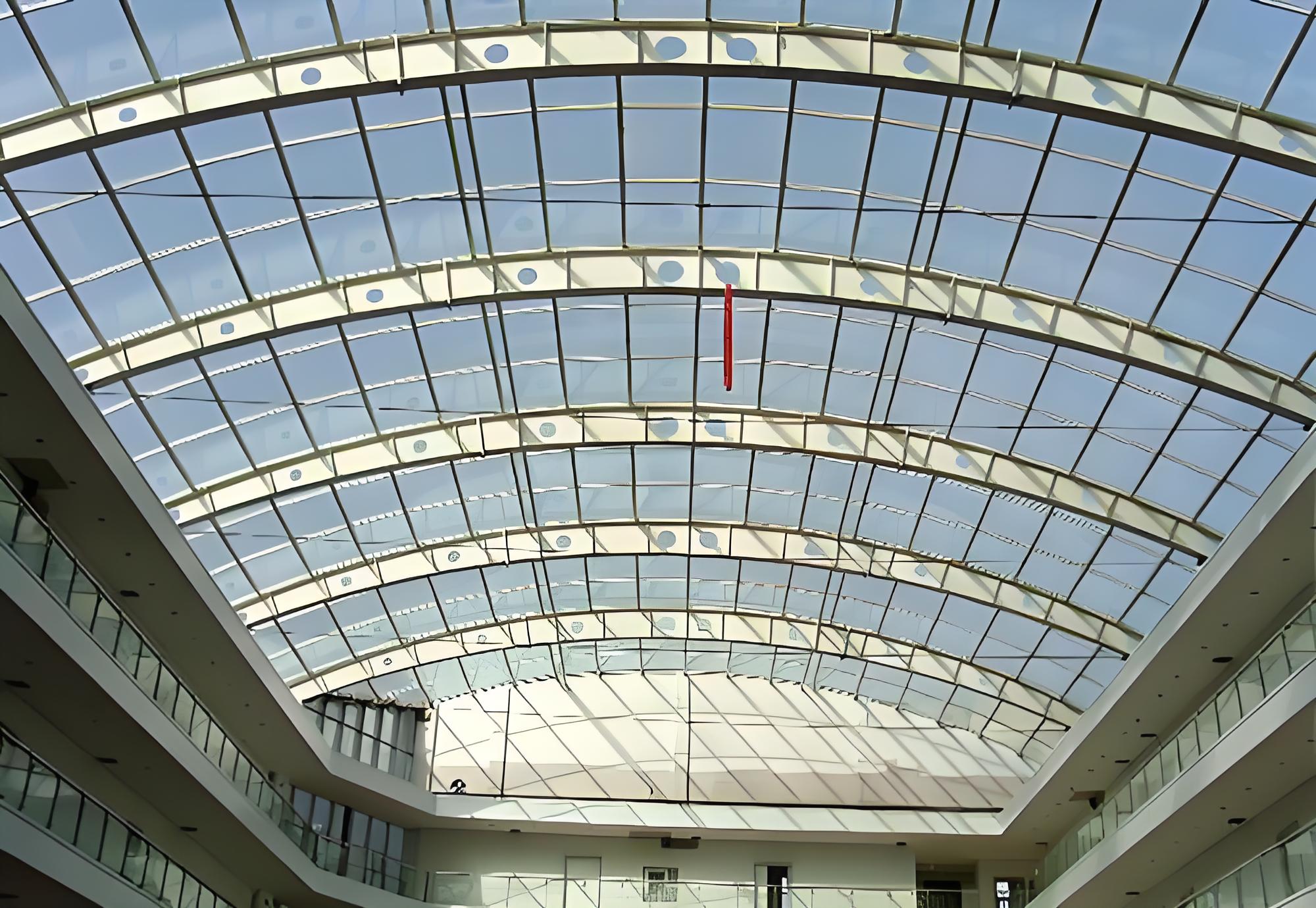
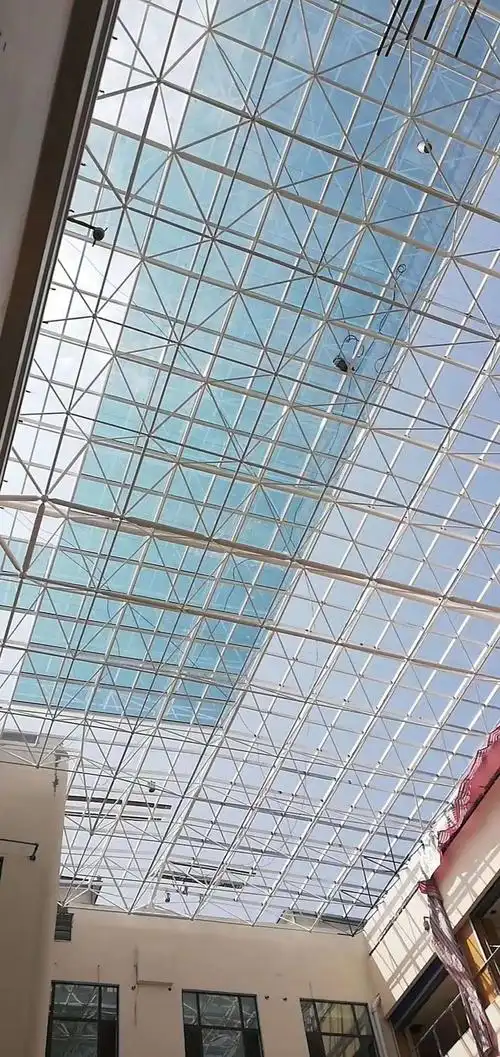
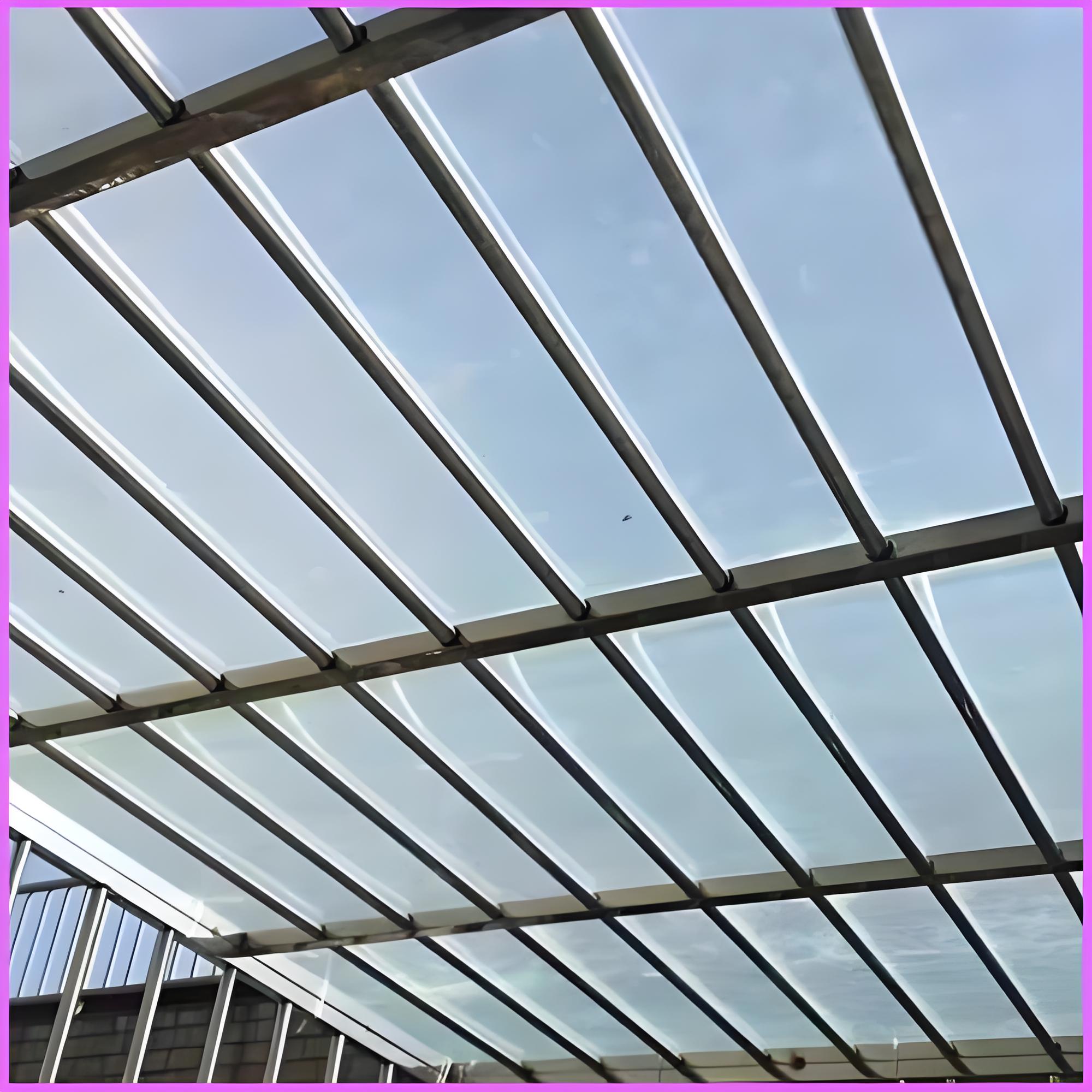
Low‑iron glass canopy refers to glass panels manufactured from low‑iron (ultra‑clear) glass substrate, specifically engineered for use in entrance canopies, building entrances, porte‑cocheres, and commercial walkway covers where maximum optical clarity and colour neutrality are required. Unlike standard clear glass – which exhibits a greenish tint at the edges and becomes more pronounced with increasing thickness – low‑iron glass delivers a water‑white appearance that reveals the true colour of the building facade and interior finishes behind it.
For procurement managers and glazing contractors supplying luxury hotel entrances, flagship retail storefronts, premium residential developments, museum and gallery entrances, corporate headquarters, and high‑end hospitality venues, low‑iron glass is the default specification for entrance canopies where architectural purity is paramount.
💡 Why low‑iron glass for entrance canopies? The entrance canopy is the first architectural element visitors see. Standard clear glass introduces a green tint that distorts the appearance of the building facade and interior finishes. Low‑iron glass eliminates this colour cast, delivering a neutral, transparent surface that presents the building exactly as the architect intended. For glass exporters, low‑iron canopy glass commands a 30–50% premium over standard clear glass, with the highest margins in laminated configurations.
1. Quick Specification
| Parameter | Standard Clear Canopy Glass | Low‑Iron Glass Canopy |
|---|
| Glass Substrate | Standard float glass (0.06–0.09% Fe₂O₃) | Low‑iron glass (<0.005% Fe₂O₃) |
| Visible Light Transmission (VLT) | ~88% (10mm clear) | ~91% (10mm low‑iron) |
| Edge Colour | Green tint | Water‑white, colourless |
| Face Colour | Slight green cast (especially in thick sections) | Neutral, colour‑free |
| Thickness Range | 10–21.52 mm | 10–25.52 mm (laminated) |
| Max Size | 3300×18000 mm | 3300×18000 mm |
| Interlayer Options | PVB, SGP | PVB, SGP (both clear‑grade) |
| Best For | Standard commercial entrances | Luxury / premium / architectural entrances |
2. Low‑Iron Glass Canopy Solutions
2.1 Low‑Iron Tempered Glass Canopy
- Description: Single‑ply low‑iron tempered glass for framed canopy systems
- Build‑up: 10mm, 12mm, or 15mm low‑iron tempered
- VLT: ~91% (10mm)
- Best for: Framed canopies where glass is fully perimeter‑supported and budget is a consideration
- Key benefit: Ultra‑clear appearance at lower cost than laminated
- Limitation: No post‑breakage retention – not suitable for cantilever or point‑supported systems
2.2 Low‑Iron Laminated Glass Canopy (Standard)
- Description: Two low‑iron tempered plies bonded with clear PVB interlayer
- Build‑up: 10T Low‑Iron + 1.52PVB + 10T Low‑Iron (21.52mm)
- VLT: ~89% (combined)
- Best for: Framed and point‑supported canopies where safety + clarity are required
- Key benefit: Safety glazing compliance + ultra‑clear appearance
2.3 Low‑Iron Laminated Glass Canopy (Premium SGP)
- Description: Two low‑iron tempered plies bonded with clear SGP ionomer interlayer
- Build‑up: 10T Low‑Iron + 1.52SGP + 10T Low‑Iron (21.52mm) or 12T Low‑Iron + 1.52SGP + 12T Low‑Iron (25.52mm)
- VLT: ~89% (combined)
- Post‑breakage retention: ≥80%
- Best for: Cantilever canopies, large‑span entrances, flagship projects
- Key benefit: Maximum safety + maximum clarity + maximum span capability
2.4 Low‑Iron Triple‑Ply Canopy
- Description: Three low‑iron tempered plies with SGP interlayers
- Build‑up: 8T Low‑Iron + 1.52SGP + 8T Low‑Iron + 1.52SGP + 8T Low‑Iron (27.52mm)
- VLT: ~87% (combined)
- Best for: Maximum‑safety luxury canopies, high‑profile public buildings
- Key benefit: Redundancy + clarity – even after two plies break, the panel remains safe
2.5 Low‑Iron IGU Canopy (Thermal + Clarity)
- Description: Low‑iron laminated inner pane + argon cavity + low‑iron Low‑E outer pane
- Build‑up: 8T Low‑Iron + 1.52SGP + 8T Low‑Iron + 16Ar + 8T Low‑Iron Triple Silver Low‑E (33.5mm IGU)
- VLT: ~78% (combined with Low‑E)
- U‑value: ~1.0 W/m²K
- Best for: Heated/cooled luxury entrance canopies
- Key benefit: Thermal performance without compromising clarity
2.6 Low‑Iron with Ceramic Frit Canopy
- Description: Low‑iron glass with ceramic frit pattern for solar control
- Build‑up: 10T Low‑Iron + frit + 1.52SGP + 10T Low‑Iron
- Frit coverage: 30–50% dot pattern or custom design
- Best for: South‑facing luxury entrances where solar control is needed without sacrificing clarity
- Key benefit: Solar control + ultra‑clear background
3. Canopy Support Systems for Low‑Iron Glass
Low‑iron glass is visually indistinguishable from standard clear glass in terms of mechanical properties. The same support system considerations apply, but the optical quality of the finished installation depends heavily on the support system choice.
| Support System | Recommended Low‑Iron Build‑Up | Optical Consideration |
|---|
| Cantilever | 12T Low‑Iron + 1.52SGP + 12T Low‑Iron | Best optical result – no visible fixings; pure glass surface |
| Point‑Supported | 10T Low‑Iron + 1.52SGP + 10T Low‑Iron | Good – spider fittings visible but glass clarity maximised |
| Cable‑Supported | 10T Low‑Iron + 1.52SGP + 10T Low‑Iron | Good – cable shadows minimal with clear glass |
| Framed | 10T Low‑Iron + 1.52PVB + 10T Low‑Iron | Acceptable – frame conceals edges, glass clarity visible in field |
| Fin‑Supported | 12T Low‑Iron + 1.52SGP + 12T Low‑Iron | Excellent – glass fins also low‑iron for consistent clarity |
💡 Optical tip: For maximum visual impact, specify polished edges on low‑iron glass. The polished edge on low‑iron glass appears completely transparent (vs. the green glow of standard clear polished edges), creating a stunning frameless appearance.
4. Glass Configurations – Low‑Iron Canopy Build‑Ups
4.1 Standard Low‑Iron Configurations
| Build‑Up | Total Thickness | VLT | Post‑Breakage Retention | Application |
|---|
| 10mm Low‑Iron Tempered | 10 mm | ~91% | ❌ None | Framed canopy, budget luxury |
| 12mm Low‑Iron Tempered | 12 mm | ~90% | ❌ None | Framed canopy, larger spans |
| 10T LI + 1.52PVB + 10T LI | 21.52 mm | ~89% | ~40% | Standard luxury canopy (framed/point‑supported) |
| 10T LI + 1.52SGP + 10T LI | 21.52 mm | ~89% | ≥80% | Premium luxury canopy (cantilever/point‑supported) |
| 12T LI + 1.52SGP + 12T LI | 25.52 mm | ~88% | ≥85% | Large‑span luxury canopy, porte‑cochère |
| 8T LI×3 SGP (3‑ply) | 27.52 mm | ~87% | ≥90% | Maximum safety luxury canopy |
| 8T LI+1.52SGP+8T LI+16Ar+8T LI Low‑E | 33.5 mm IGU | ~78% | ≥80% (inner) | Heated/cooled luxury canopy |
4.2 Low‑Iron vs. Standard Clear Glass – Visual Comparison
| Property | Standard Clear (10mm) | Low‑Iron (10mm) | Visible Difference |
|---|
| Iron oxide content | 0.06–0.09% | <0.005% | — |
| VLT | ~88% | ~91% | +3% light transmission |
| Edge colour (10mm) | Green | Colourless | Most noticeable difference |
| Edge colour (21.52mm laminated) | Dark green | Water‑white | Extremely noticeable |
| Face colour (viewed at angle) | Green cast | Neutral | Noticeable in side‑by‑side comparison |
| Colour rendering | Green shift | True colour | Critical for retail / museum applications |
4.3 When to Specify Low‑Iron vs. Standard Clear
| Scenario | Recommend | Reason |
|---|
| Hotel entrance canopy | Low‑Iron | First impression; guests see glass from below and inside |
| Retail flagship store canopy | Low‑Iron | True colour display of merchandise visible through canopy |
| Museum / gallery entrance | Low‑Iron | Colour‑critical environment; standard glass distorts art |
| Office building entrance | Standard clear | Budget consideration; green tint acceptable |
| Residential porte‑cochère | Low‑Iron | Homeowner expects premium appearance |
| Thick laminated canopy (>21.52mm) | Low‑Iron | Green tint becomes very dark in thick standard glass |
| Backlit canopy | Low‑Iron | Standard glass looks green when lit from behind |
| Canopy with coloured interlayer | Standard clear | Colour hides substrate tint |
5. Safety & Structural Performance – Low‑Iron Canopy Engineering
5.1 Mechanical Properties (Identical to Standard Clear)
| Property | Standard Clear | Low‑Iron | Difference |
|---|
| Modulus of elasticity | 70 GPa | 70 GPa | None |
| Poisson's ratio | 0.22 | 0.22 | None |
| Coefficient of thermal expansion | 9×10⁻⁶ /K | 9×10⁻⁶ /K | None |
| Surface stress (tempered) | ≥95 MPa | ≥95 MPa | None |
| Density | 2,500 kg/m³ | 2,500 kg/m³ | None |
⚠️ Important: Low‑iron glass has identical mechanical properties to standard clear glass. All load tables, deflection calculations, and safety classifications are the same. The only difference is optical clarity.
5.2 Load Requirements
| Load Type | Typical Value | Same as Standard Clear? |
|---|
| Dead load (self‑weight) | 25–64 kg/m² | ✅ Identical |
| Wind load (uplift) | 1.5–4.0 kN/m² | ✅ Identical |
| Wind load (positive) | 1.0–3.0 kN/m² | ✅ Identical |
| Live load (maintenance) | 0.5–1.5 kN/m² | ✅ Identical |
| Impact load | 448 J (EN 12600 pendulum) | ✅ Identical |
5.3 Deflection Limits
| Standard | Deflection Limit | Same as Standard Clear? |
|---|
| EN 16612 | L/200 | ✅ Identical |
| ASTM E1300 | L/175 (recommended) | ✅ Identical |
| IBC §2403 | L/200 (recommended) | ✅ Identical |
5.4 Impact Performance
| Standard | Test Method | Requirement | Same as Standard Clear? |
|---|
| EN 12600 | 40 kg pendulum impact | Class 1B1 (no penetration) | ✅ Identical |
| ANSI Z97.1 | Drop ball impact | Category II (safety glazing) | ✅ Identical |
| CPSC 16 CFR 1201 | Impact test | Category I or II | ✅ Identical |
5.5 UV Protection
| Configuration | UV Blockage | Note |
|---|
| Low‑Iron tempered (single ply) | ~40% | Limited UV protection |
| Low‑Iron + PVB laminated | >99% | PVB interlayer blocks UV |
| Low‑Iron + SGP laminated | >99% | SGP interlayer blocks UV |
6. Glass Processing for Low‑Iron Canopies
6.1 Edge Finishing
| Edge Type | Appearance on Low‑Iron | Best For |
|---|
| Polished | Completely transparent, colourless | Frameless / point‑supported canopies – stunning visual effect |
| Flat Ground | Matte, colourless | Framed systems |
| Beveled | Transparent angled edge | Premium entrance canopies |
💡 The polished edge advantage: On standard clear glass, the polished edge glows green – especially noticeable on thick laminated panels. On low‑iron glass, the polished edge is completely invisible – the glass appears to float in its support system. This is one of the strongest visual arguments for specifying low‑iron glass in frameless canopy applications.
6.2 Hole Drilling for Point Fittings
- Same process as standard clear glass
- Edge colour at drill holes: Colourless (vs. green on standard clear)
- Visual benefit: Holes in low‑iron glass are much less visible than in standard clear glass
6.3 Ceramic Frit Application
| Frit Type | Appearance on Low‑Iron | Best For |
|---|
| White frit | Crisp white on clear background | Maximum contrast, modern look |
| Grey frit | Subtle pattern on clear glass | Understated solar control |
| Custom colour frit | True colour on neutral background | Branded entrances |
6.4 Quality Assurance – Every Low‑Iron Canopy Panel
| Test | Standard | Acceptance Criteria |
|---|
| Iron oxide content | Spectrophotometer | <0.005% Fe₂O₃ |
| VLT measurement | ISO 9050 | ≥90% (10mm) |
| Colour rendering index | CIE | Ra ≥96 |
| Dimensional inspection | ISO 9001 | ±0.5 mm |
| Flatness inspection | EN 16612 | ≤L/200 |
| Bond strength | EN 14449 | ≥5 N/mm (PVB) / ≥20 N/mm (SGP) |
| Impact test | EN 12600 | Class 1B1 (no penetration) |
| Wind load test | ASTM E1300 / EN 16612 | No fracture at design load |
| Heat soak test | EN 14179 | 4 hrs @ 290°C, ≤0.01% breakage |
7. Maximum Glass Size – Jumbo Low‑Iron Canopy Capability
| Parameter | Standard Supplier | Jumbo Glass Capability |
|---|
| Max Width | ≤2440 mm | ≤3300 mm |
| Max Length | ≤6000 mm | ≤18000 mm |
| Max Area | ~15 m² | ~59 m² |
| Number of Plies | 1–2 | 1–5 plies |
| Max Thickness (laminated) | 21.52 mm | 44.5 mm |
| Interlayer | PVB only | PVB + SGP (both clear‑grade) |
| Edge Finish | Flat ground | Polished / Flat ground / Beveled |
| Hole Drilling | Manual, ±2 mm | CNC, ±0.5 mm |
7.1 Size vs. Load Capacity Matrix (Low‑Iron Canopy)
| Build‑Up | Thickness | Max Panel Width (at 2.0 kN/m²) | Max Cantilever Span |
|---|
| 10mm Low‑Iron Tempered | 10 mm | 1600 mm | Not recommended |
| 10T LI + 1.52PVB + 10T LI | 21.52 mm | 2000 mm | 2500 mm |
| 10T LI + 1.52SGP + 10T LI | 21.52 mm | 2400 mm | 3100 mm |
| 12T LI + 1.52SGP + 12T LI | 25.52 mm | 2800 mm | 3700 mm |
8. Appearance Options
8.1 Low‑Iron Substrate Grades
| Grade | Iron Content | VLT (10mm) | Best For |
|---|
| Premium Low‑Iron | <0.005% Fe₂O₃ | ~91% | Flagship projects, colour‑critical applications |
| Extra Clear | 0.01–0.02% Fe₂O₃ | ~90% | Premium projects where budget is a consideration |
| Standard Clear | 0.06–0.09% Fe₂O₃ | ~88% | Standard commercial, budget projects |
8.2 Coated Low‑Iron Glass
| Coating | VLT (combined) | U‑Value | SHGC | Best For |
|---|
| Double Silver Low‑E | ~80% | 1.2 W/m²K | 0.29 | Energy‑conscious luxury projects |
| Triple Silver Low‑E | ~78% | 1.0 W/m²K | 0.23 | Hot climate luxury canopies |
| Reflective (Silver) | ~40% | 1.6 W/m²K | 0.20 | Architectural statement + privacy |
8.3 Surface Treatments
| Treatment | Effect on Low‑Iron | Best For |
|---|
| Ceramic frit (dot pattern) | Crisp pattern on clear background | Solar control without sacrificing clarity |
| Acid etch (frosted) | Translucent, diffused light | Privacy‑sensitive luxury entrances |
| Digital ceramic print | True‑colour custom patterns | Branded flagship entrances |
9. Applicable Glass Products
Each low‑iron canopy configuration links directly to our product pages for detailed specifications.
| Canopy Configuration | Recommended Product | Link |
|---|
| Low‑iron tempered canopy | Ultra Clear Tempered Glass | View Product → |
| Low‑iron laminated canopy (PVB) | Jumbo Laminated Glass | View Product → |
| Low‑iron laminated canopy (SGP) | Jumbo Laminated Glass (SGP) | View Product → |
| Low‑iron IGU canopy | Jumbo Insulated Glass | View Product → |
| Low‑iron Low‑E canopy | Jumbo Low‑E Glass | View Product → |
| Jumbo low‑iron canopy | Jumbo Glass | View Product → |
| Low‑iron ceramic frit canopy | Custom Ceramic Frit Glass | View Product → |
10. Standards & Certifications
| Standard | Scope | Applicable To |
|---|
| EN 16612 | Glass in building – determination of load resistance | All low‑iron canopy glass |
| EN 12600 | Pendulum impact test – flat glass | Safety glazing requirement |
| EN 14449 | Laminated glass – product standard | Low‑iron laminated panels |
| EN 410 | Determination of luminous and solar characteristics | VLT measurement |
| ISO 9050 | Determination of light transmittance | VLT certification |
| ASTM E1300 | Determining load resistance of glass | US market |
| AS/NZS 1288 | Glass in buildings – selection and installation | Australia / New Zealand |
| ANSI Z97.1 | Safety glazing materials | US market |
| EN 12150‑1 | Thermally toughened glass | All tempered plies |
| EN 14179 | Heat soak test | HST for all tempered plies |
| IBC §2406 | Safety glazing | US building code |
| CE | European conformity marking | EU market |
| CCC | China compulsory certification | China market |
| ISO 9001 | Quality management system | Manufacturing process |
Project References
| Project | Country | Low‑Iron Solution | Size | Notable Feature |
|---|
| Singapore Orchard Road Flagship Store | Singapore | 10T LI+1.52SGP+10T LI point‑supported | 6200×2400 mm | Ultra‑clear laminated, frameless appearance |
| Shanghai Bund Luxury Hotel Entrance | China | 12T LI+1.52SGP+12T LI cantilever | 5600×2800 mm | Low‑iron cantilever, polished edges |
| Beijing Art Museum Entrance | China | 10T LI+1.52PVB+10T LI framed | 4400×2200 mm | Colour‑critical environment, VLT 89% |
| Dubai Palm Jumeirah Villa Porte‑Cochère | UAE | 10T LI+1.52SGP+10T LI + Low‑E IGU | 5400×2400 mm | Low‑iron IGU, triple silver coating |
| Hong Kong Luxury Retail Entrance | Hong Kong | 10T LI+1.52SGP+10T LI point‑supported | 7000×2600 mm | Largest low‑iron point‑supported canopy in HK |
11. Frequently Asked Questions
Q1: What is low‑iron glass?
Low‑iron glass is made from raw materials with reduced iron oxide content (typically <0.005% Fe₂O₃, compared to 0.06–0.09% in standard clear glass). This eliminates the green tint that is characteristic of standard glass, resulting in a water‑white, colour‑neutral appearance.
Q2: Why should I specify low‑iron glass for my entrance canopy?
Because the entrance canopy is the first thing visitors see. Standard clear glass introduces a green tint that distorts the appearance of the building facade, interior finishes, and any signage or displays visible through the canopy. Low‑iron glass presents the building exactly as the architect intended – with true, neutral colour rendering.
Q3: Is low‑iron glass stronger than standard clear glass?
No. Low‑iron glass has identical mechanical properties to standard clear glass – same modulus of elasticity, same strength when tempered, same deflection behaviour. The only difference is optical clarity. All load tables and safety classifications are identical.
Q4: How much more does low‑iron glass cost?
Typically 30–50% more than standard clear glass for the same configuration. The premium is higher for thicker panels and laminated configurations because the low‑iron substrate costs more to produce. For flagship projects where appearance is critical, the premium is justified by the visual result.
Q5: Can low‑iron glass be combined with Low‑E coating?
Yes. Low‑E coating can be applied to low‑iron glass without affecting its clarity. The combined VLT will be lower (typically 78–80% for triple silver Low‑E), but the colour neutrality is preserved – unlike standard clear Low‑E glass, which shows a green tint.
Q6: Does low‑iron glass look different in thick sections?
Significantly. Standard clear glass becomes progressively greener as thickness increases – a 21.52mm laminated panel has a noticeably dark green edge. Low‑iron glass remains colourless at any thickness. This is one of the strongest arguments for specifying low‑iron in laminated canopy configurations.
Q7: Can low‑iron glass be used for curved canopies?
Yes. Low‑iron glass can be tempered in curved shapes (minimum radius depends on thickness) and subsequently laminated. Curved low‑iron glass is particularly striking because the edge – which is always visible on curved panels – remains colourless.
Q8: Does low‑iron glass require special handling?
No. Low‑iron glass is handled identically to standard clear glass. The same cutting, drilling, tempering, and laminating processes apply. The only difference is in raw material sourcing.
Q9: What is the lead time for low‑iron canopy glass?
Low‑iron glass typically adds 1–2 weeks to standard lead times due to raw material sourcing. Standard low‑iron laminated configurations: 5–7 weeks. Jumbo low‑iron laminated: 7–9 weeks.
Q10: Can I see a sample of low‑iron glass before ordering?
Yes. We provide A4‑samples of low‑iron glass in various thicknesses and configurations (tempered, laminated, with/without coating) for evaluation. Contact our sales team to request samples for your project.
12. Request Low‑Iron Canopy Glass Quote
Submit your project requirements for a competitive FOB quotation.
Required Information:
- Project type: Hotel / Retail flagship / Museum / Gallery / Residential / Corporate HQ / Other
- Canopy type: Cantilever / Point‑supported / Cable‑supported / Framed / Porte‑cochère
- Canopy dimensions: Width × projection
- Number of panels
- Glass build‑up: e.g., 10T Low‑Iron + 1.52SGP + 10T Low‑Iron
- Interlayer: PVB / SGP / Unsure (let us advise)
- Glass thickness per ply: 10mm / 12mm / 15mm / Custom
- Coating: None / Low‑E / Reflective / Solar control
- Edge finish: Polished / Flat ground / Beveled
- Processing: Holes, notches, cut‑outs (provide drawing)
- Support system: Cantilever / Point‑supported / Cable‑supported / Framed
- Wind load requirement (kN/m²)
- Ceramic frit required? Yes / No (if yes: coverage %, pattern)
- Project location
- Target delivery date
- 📧 Email your specification to: tomron1688@gmail.com
- 🌐 Or upload drawings at: www.jumbotemperedglass.com
- Response time: Preliminary feasibility within 24 hours; detailed quotation within 48 hours.
13. Related Pages (Internal Link Cluster)
Within Glass Canopies & Entrance Glazing Section
PProduct Pages (Cross‑Links)
Other Applications