





Meeting Building Energy Codes with Glass: U-Value, SHGC & Local Code Compliance (US/UK/AU/中国)
Meeting Building Energy Codes with Glass: U-Value, SHGC & Local Code Compliance (US/UK/AU/中国)
For global projects, glass is no longer just a structural or aesthetic material. It is a code-bearing component.
The same jumbo façade lite can pass in one market and fail plan check in another — because every jurisdiction measures U-value, SHGC, and whole-assembly performance differently. If you specify glass without mapping it to local building energy code glass rules, you risk rejected submittals, failed commissioning, and costly re-glazing.
This guide gives procurement and design teams a cross-market framework for specifying compliant glazing across the US, UK, Australia, and China.
1. The two numbers that decide compliance
Before touching coatings or thickness, lock these two metrics:
| Metric | What it controls | Lower = |
|---|---|---|
| U-value / U-factor (W/m²K or Btu/h·ft²·°F) | Heat loss/gain through the assembly | Better insulation |
| SHGC (0–1) | Solar heat entering as radiation | Less cooling load (hot climates) |
Critical buyer trap: codes almost never use center-of-glass U-value. They use whole-window / total-system Uw — glass + frame + spacer + thermal break. A 1.1 Ug pane in a non-thermally-broken frame can become 1.5–1.8 Uw and fail.
2. United States: IECC glazing requirements
The IECC glazing requirements (2021/2024 cycles) use NFRC whole-window ratings, split by climate zone (CZ 1–8).
Residential (IECC Table R402.1.2, indicative):
- CZ 1 (hot): U ≤ 0.50, SHGC ≤ 0.25
- CZ 3–4: U ≤ 0.30, SHGC 0.25–0.40
- CZ 5–8 (heating-dominated): U ≤ 0.28–0.30, SHGC often not prescribed
- Glazing >30% of wall area → stricter U (≈0.25)
- Commercial (IECC Table C402.4):
- Fixed windows: U ≤ 0.36
- Operable: U ≤ 0.45
- Entrance doors: U ≤ 0.63
- SHGC scales with projection factor (fixed ~0.38–0.61)
- California Title 24 is tighter: 2025 cycle residential U ≤ 0.27–0.30, SHGC ≤ 0.20–0.23 by zone.
- Spec tip: Ask for NFRC-rated U-factor + SHGC on the exact frame/glass build-up, not generic "low-E double glazing."
3. United Kingdom: Part L whole-window logic
UK Part L (England, 2021 edition + 2023 amend; Future Homes Standard from 2027) uses Uw, not center-pane.
- New dwellings: notional target Uw ≤ 1.2 W/m²K; limiting backstop 1.6
- Replacements / extensions: Uw ≤ 1.4 W/m²K (or WER Band B)
- Rooflights: up to 2.2 W/m²K
- Scotland/Wales/NI: similar but not identical
- Common failure: a unit quoted "Ug 1.0" fails because the installed whole window is 1.5. Small windows perform worse (more frame per m²) — always request Uw at your actual opening size.
- Glass path: double low-E IGU + warm-edge spacer + thermally broken frame is the baseline for new build.
4. Australia: NCC glazing performance
NCC glazing compliance (Volume One Section J for commercial, Volume Two H6 for housing) is climate-zone and orientation-driven.
Key points:
- No single national Uw/SHGC number — values come from NCC climate-zone tables
- Section J DTS: commercial glazing total-system Uw often ≤ 3.3–4.3 W/m²K by zone/class, SHGC capped (e.g. north ≤ 0.39 in Zone 5)
- Housing: SHGC per element ≤ 0.7; 7-star NatHERS target under NCC 2025
- Window-to-wall ratio matters: >60% WWR usually forces triple glazing or JV3 modeling
- External shading reduces effective SHGC; internal blinds get little credit
- Spec tip: NCC uses "Total System U-Value" — frame, spacer, and glass together. A 6+16Ar+6 low-E IGU is only compliant inside a thermally broken system.
5. China: GB 55015 + GB/T 8484
China's mandatory GB 55015-2021 (replacing old GB 50189 thermal clauses) sets envelope limits by climate zone, window-to-wall ratio, and building type (residential / public).
- U-value limits tighten as WWR rises (e.g. public buildings severe-cold zones ~2.7 W/m²K at low WWR, tighter at high WWR)
- SHGC / shading coefficient controlled by orientation:
- Test method: GB/T 8484 hot-box method for whole-window K-value (not center-glass)
Typical compliant China build-up:
- North/east: double low-E + argon + warm edge, SHGC 0.35–0.45
- South/coastal: triple-silver low-E + exterior shading, SHGC ≤ 0.30
6. Cross-market specification matrix
| Market | Code frame | U-value basis | SHGC rule | Baseline compliant glazing |
|---|---|---|---|---|
| US | IECC / Title 24 | NFRC whole-window | By climate zone | Double low-E IGU, argon, thermal break |
| UK | Part L | Uw (BS EN ISO 10077) | Secondary | Double low-E + warm edge, Uw ≤1.4 |
| AU | NCC Section J / H6 | Total-system Uw | By zone + orientation | Double/triple low-E, shaded north façade |
| 中国 | GB 55015 | GB/T 8484 whole-window K | Climate + orientation | Double/triple silver low-E + exterior shade |
7. How to specify without rework
Use this RFQ-ready checklist:
- State the market + code edition (IECC 2024 / Part L 2021 / NCC 2025 / GB 55015)
- Give climate zone + orientation per façade
- Request whole-assembly values (Uw, SHGCw) — not Ug/center-pane
- Define glass build-up: e.g.
8 Low-E #2 + 16Ar + 8 Tempered, warm-edge spacer - Frame system: thermally broken aluminium, timber, or steel — with Uf value
- Shading strategy: external fins, blinds, frit, or none
- Ask for certified test/model reports: NFRC, CE/EN 673, WERS, GB/T 8484 hot-box
- Run energy model early — glazing choices lock HVAC size
8. Jumbo Glass Group capability snapshot
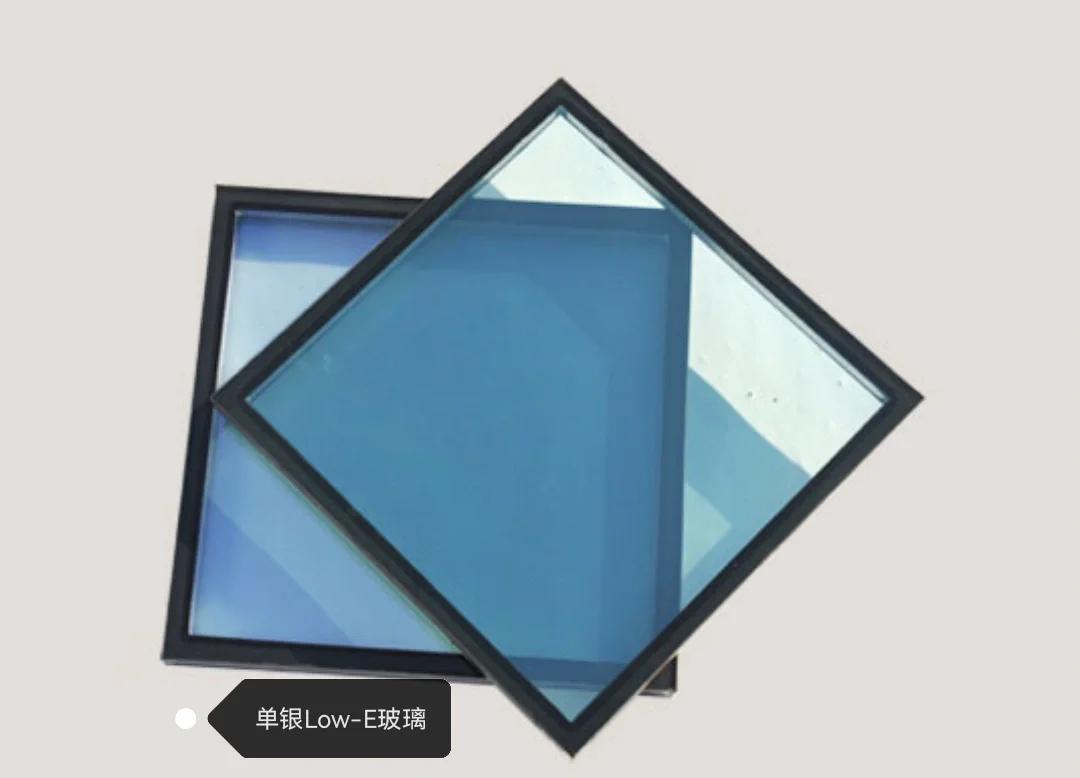
- Low-E IGU: double/triple silver, argon, warm-edge, Uw down to ~0.6–1.8 W/m²K (center-glass lower)
- Jumbo sizes: up to 3300×13000 mm IGU for curtain walls
- Climate tuning: high-SHGC cold-climate coats; low-SHGC solar-control for hot zones
- Vacuum + hybrid: U-center ~0.4 W/m²K for retrofit/slim profiles
- Compliance docs: EN 1279 / ASTM C1363 / NFRC-style data / GB/T 8484 test support / free BIM thermal sim
9. Bottom line for specifiers
Meeting building energy code glass requirements is never "buy the lowest U-value."
It is:
- Match Uw to the local code basis (NFRC / Part L / NCC / GB/T 8484)
- Tune SHGC to climate + orientation
- Engineer the whole assembly — glass, frame, spacer, shading
- Validate with certified data, not marketing numbers
- Do that, and your façade passes plan check in Dallas, London, Sydney, and Shenzhen with one coherent glazing strategy.
FAQ snippet (for JSON-LD)
Q: Does a low center-of-glass U-value guarantee code compliance?
A: No. Most codes use whole-window or total-system Uw (glass + frame + spacer). A high-performance IGU in a non-thermally-broken frame can still fail IECC, Part L, NCC, or GB 55015.
Q: How do US, UK, AU and China differ on glazing compliance?
A: US uses IECC/NFRC by climate zone; UK uses Part L whole-window Uw; Australia uses NCC climate-zone + orientation modeling; China uses GB 55015 limits verified by GB/T 8484 hot-box testing.
Q: Why does SHGC matter as much as U-value?
A: In cooling-dominated climates, high SHGC drives HVAC load even if U-value is excellent. Hot markets need low SHGC + shading; cold markets may want higher SHGC for passive solar gain.
Internal links (CMS-ready)
- Low-E Glass:
/products/low-e-glass-low-emissivity-glass - Jumbo Low-E IGU:
/products/jumbo-low-e-igu - Insulating Glass:
/products/jumbo-insulated-glass - Vacuum Glass:
/products/vacuum-glass - Curtain Wall Glazing:
/products/curtain-wall-glass-glazing-solutions-large-format-low-emissivity-igu-systems-for-commercial-facades-high-rise-towers-unitized-curtain-walls - Related: Low-E vs Vacuum vs Insulated Glass: Which Glazing Delivers the Lowest U-Value?
Related Posts