Home › Showerspace › Custom Design › Custom Colour Shower Glass
Custom Design
Custom Colour Shower Glass — Four Body Tints, and Everything Beyond
Four colours run through the glass. Everything else sits on it.
Body-tinted glass is coloured all the way through, made that way by the original glass manufacturer. That range is four colours — grey, bronze, green and blue — each in a light and a deep version, and it cannot be added to. Every other colour you might want is achieved differently: printed onto the surface and fired, or painted onto the back. Knowing which of the three you need is the whole decision.
The Three RoutesWhy Thickness Changes Colour
Three Ways to Get Colour, and Only One of Them Is Tint
These three are not variations on a theme. They are different products, made by different processes, with different capabilities and different limits. Most colour enquiries are answered by identifying which one is actually being asked for.
| | Body tint | Ceramic printing | Back painting |
|---|
| Where the colour is | Throughout the glass | On the surface, fired in | On the back face |
| Colour range | Four — grey, bronze, green, blue | Wide — including gradients and imagery | Any RAL shade |
| Light transmission | Transmits, tinted | Transmits where unprinted | None — opaque |
| Can it be a design? | No — it is a flat field of colour | Yes — this is how colour becomes pattern | Flat colour only |
| New colour developed? | No — see below | Yes, to your artwork | Yes, to a RAL reference |
| Edge appearance | Colour runs through — polished edge is the deepest read | Surface only | Back face only
|
The one-line test. If the colour is a design, it is printing. If it is a flat, transmitting field, it is body tint — provided it is one of the four. If it is a flat, opaque field in a specific colour, it is back painting.
The Four Body Tints
These are the colours available as glass coloured all the way through. Each is available in a lighter and a deeper version, giving eight standard options in total. [[CONFIRM: which tints are held as regular production stock]]
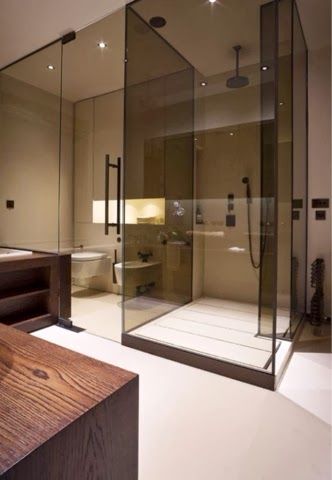
Grey — light
The most neutral of the four. Reduces contrast without introducing a cast, which is why it is the most specified.
Grey — deep
The same neutrality at higher density. Reads almost black in some light, particularly in thicker glass.
Bronze — light
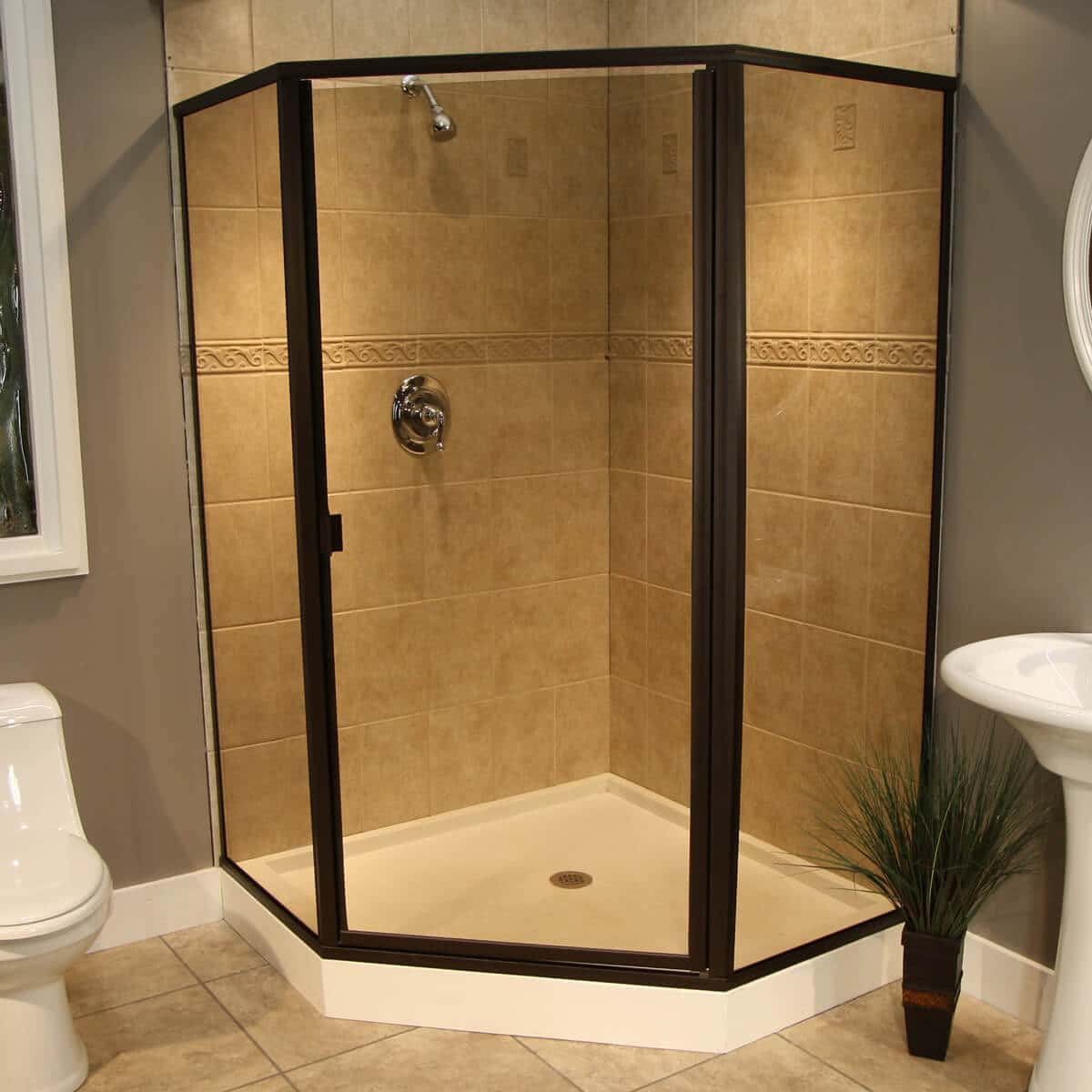
A warm cast. Pairs with brass and warm stone, and flatters low-iron combinations less well than grey does.
Bronze — deep
Strongly warm. A design decision rather than a neutral — it will be read as a colour, not as glass.
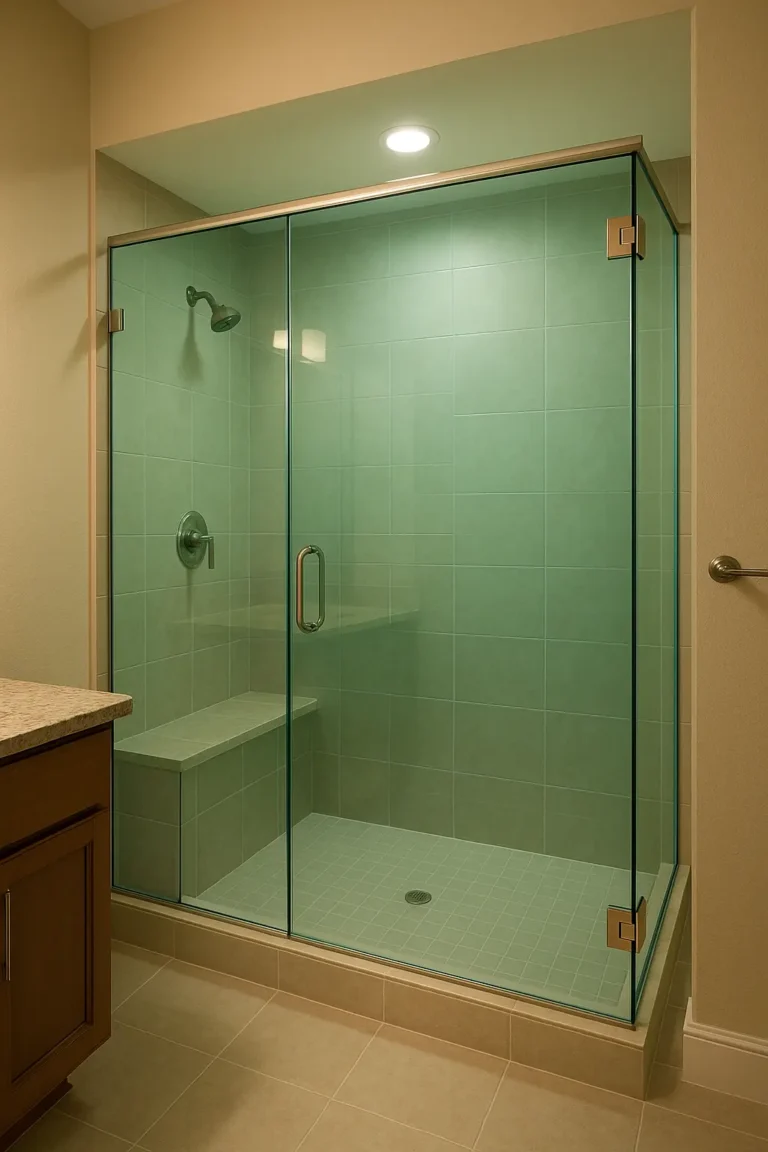
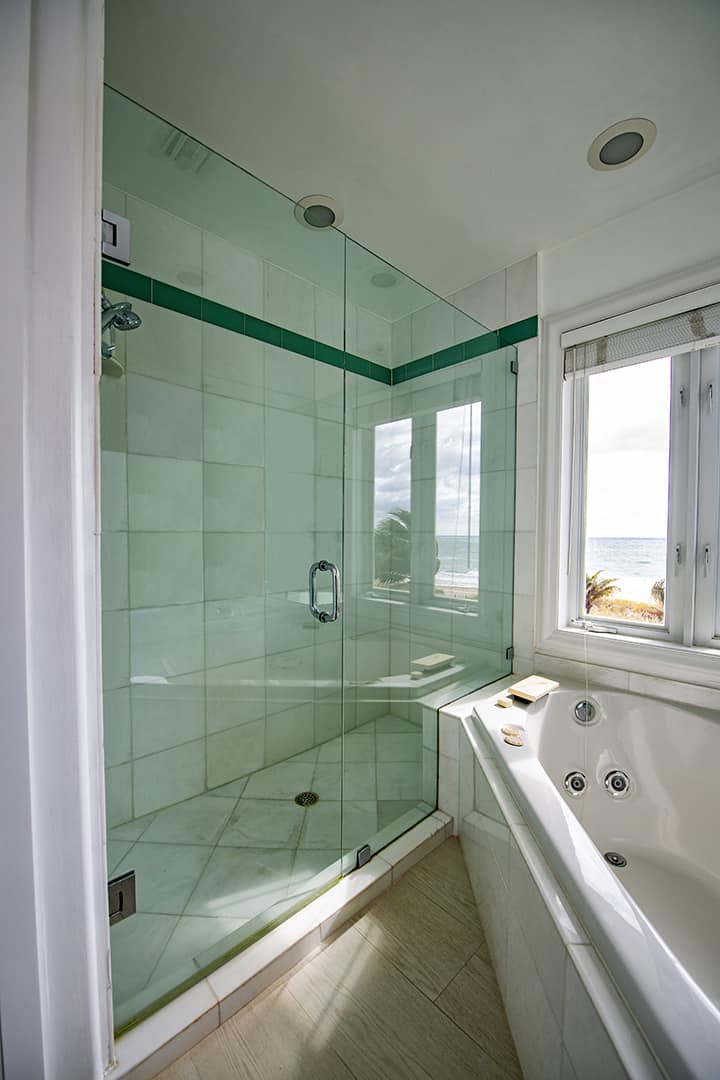
Green — light
A cooler cast that reads as a soft, natural tone. Works where the scheme already carries planting or green stone.
Green — deep
Distinctly green. Be aware it is close to the inherent cast of standard clear glass, so the difference from untinted glass is smaller than for the other three.
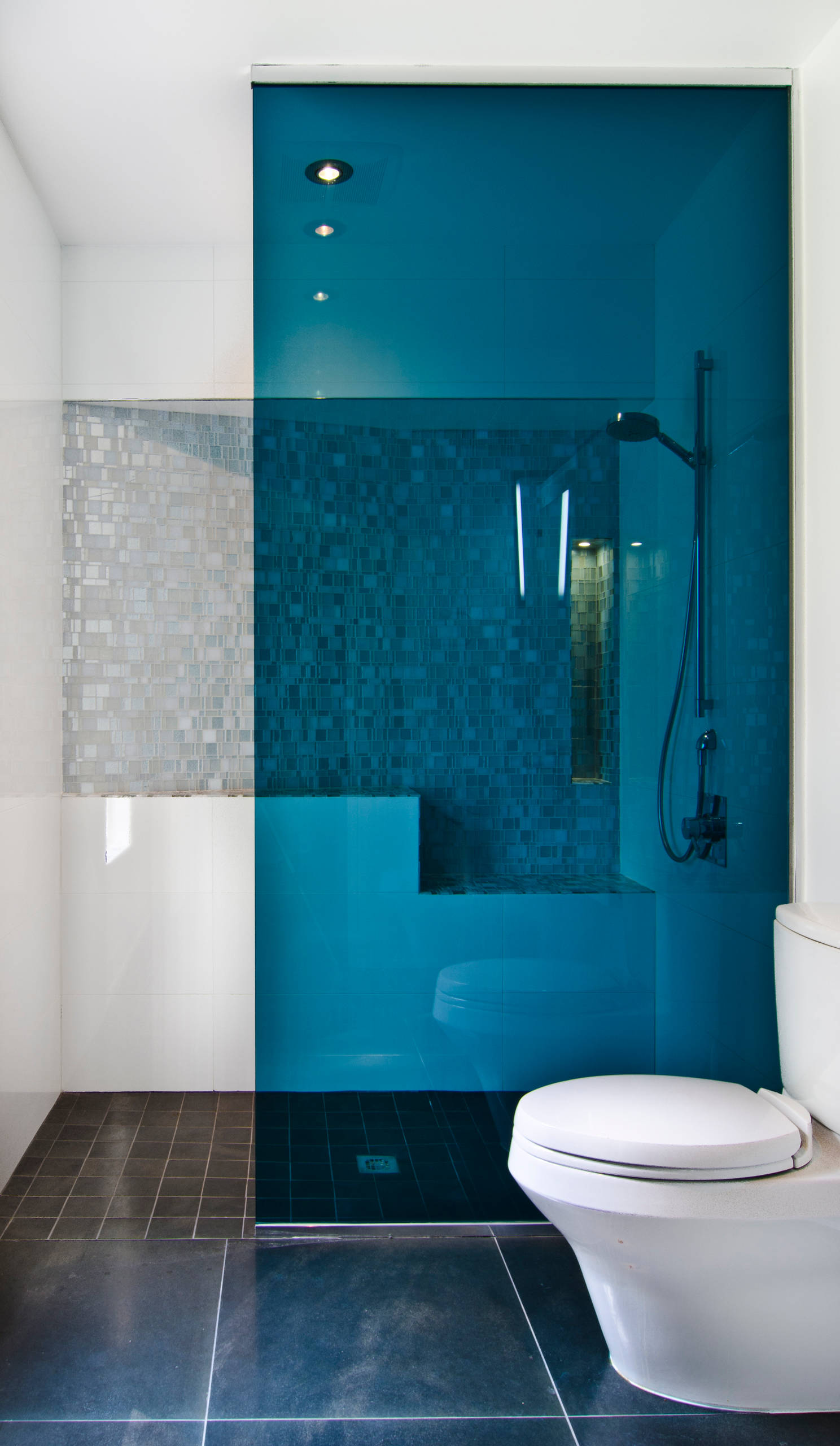
Blue — light
Cool and clean. The most contemporary-reading of the four.
Blue — deep
Strongly cool. Reads as a definite colour decision, and will dominate a small bathroom.
Read the full technical detail on tinted shower glass →
Why a Fifth Body Tint Cannot Be Developed
The reason is the same as it is for rolled patterns, and it is worth seeing the number.
Colour is introduced into the glass while it is being made. To produce a colour that is not in the standard range, the manufacturer has to run a dedicated production campaign — and a campaign is justified only at a volume that no shower programme absorbs.
| Manufacturer minimum | 100,000 – 1,000,000 m² |
| One shower panel (roughly 1.0 × 2.0 m) | about 2 m² |
| So 100,000 m² equals | about 50,000 panels |
| And 1,000,000 m² equals | about 500,000 panels |
A new body tint means committing to fifty thousand shower panels before the first one is made. So the four colours are the range, and a colour outside them is a printing or painting question rather than a glass question.
This is also why the four are worth choosing carefully. See the thickness effect below — it changes how each one reads.
Why Thickness Changes the Colour
This is the single most useful thing to know before specifying a body tint, and it is the most common cause of a colour being approved and then disputed on delivery.
Body tint is a bulk effect. Light travelling through glass passes through the colourant suspended in it. The thicker the glass, the longer that path, and the more colour is absorbed. The same nominal tint therefore reads deeper in a thicker panel.
6 mm
The lightest read of any given tint. Where a tint is being judged, this is the sample that flatters it.
8 mm
Noticeably deeper than 6 mm in the same nominal colour.
10 mm
The usual frameless door thickness, and materially deeper again.
12 mm
The deepest read. A deep tint at 12 mm can approach opaque.
Two consequences, and both are easy to act on if they are known in advance:
- Confirm the colour at the thickness you will actually use. A grey approved on a 6 mm sample is not the grey that arrives on a 10 mm door panel. Ask for samples at the specified thickness, or at two thicknesses side by side.
- Keep thickness consistent within one scheme. An 8 mm fixed panel and a 10 mm door in the same nominal tint read as two different colours — which is visible in the same room, and looks like a supply error when it is not one.
One further consequence worth planning for: because the colour runs all the way through, the polished edge is the deepest read of the colour. On a frameless panel, where the edge is exposed along its full height, that edge is what the eye judges the panel by. It is also the quickest way to tell a true body tint from a surface-applied film.
What Body Tint Does — and Does Not — Do
Worth being precise, because it is where expectations most often go wrong.
It reduces contrast
A tinted panel lowers the difference between what is behind it and the light around it. Detail becomes harder to read.
It does not obscure
Body tint is not a privacy solution. With the shower lit and the room darker, outlines remain visible — the same reason tinted car windows can be seen through at night. For obscuring, the answer is frosted, etched or a textured glass.
It can be combined
A tinted base with a reeded or fluted surface obscures considerably more than either treatment alone. This is the usual answer when both a colour and privacy are wanted.
It survives fabrication
Because the colour is throughout the glass, cutting, drilling and edge work do not expose a different material. The cut edge is the same colour as the face — unlike a film or a coating.
When the Colour Is Outside the Four
Most colour enquiries land here. The colour wanted is not grey, bronze, green or blue — it is a brand colour, a specific tone to match brassware, or a colour from an existing standard.
Colour fired onto the surface and then tempered. Handles patterns, graphics and gradients — anything where colour is a design rather than a flat field. Wide range, but ceramic inks shift in the furnace, so an exact match is not promised.
An opaque coating on the back face, in any RAL shade. The right answer for a flat, opaque coloured field — shower wall panels, back walls and fixed panels. Note that it is opaque: it transmits no light at all.
Which one
Transmitting with a design → printing. Opaque flat colour → back painting. Transmitting flat colour → body tint, if it is one of the four.
The honest caveat
Neither route promises an exact Pantone match. Both are approved against a physical sample — a fired sample for printing, a painted sample for back painting. This is stated so it is agreed before production rather than argued about after delivery.
Where a colour must be developed to a reference, it becomes a development question with its own sampling and sign-off sequence — which is handled through custom design rather than selected from a range.
Light or Deep: What the Choice Actually Does
Each of the four colours comes in a light and a deep version, and the difference between them is larger than it looks on a small sample. Four things change when the density goes up.
How much light comes through
A deeper tint transmits less. In a bathroom with one small window, a deep tint can make an already dim shower noticeably darker — which is the most common regret after installation.
How much the cast dominates
A light tint reads as glass with a tone. A deep tint reads as a colour. In a small bathroom the deep versions of green, blue and bronze will dominate every other material in the room, whether or not that was intended.
How it behaves at night
When the shower is lit and the room is dark, a deeper tint reduces the contrast more — but it still does not obscure. Going deeper for privacy is a smaller gain than most people expect; a texture delivers far more.
What it does to the view out
A tinted panel looks out as well as in. A deep tint noticeably colours what the person inside sees — the view of the room, and through it, of the window. Worth checking before choosing the deepest version.
The usual pattern. Light versions are specified for residential and hospitality work, where the enclosure should not dominate the room. Deep versions are chosen where the colour is the point — a design-led scheme, a branded interior, or a dark material palette already running through the project. Neither is better; they are doing different jobs.
Colour and Hardware Together
Tinted glass is seen together with the metal, and the two affect each other more than most schemes allow for. Three pairings come up repeatedly.
Grey with brushed finishes
Grey is the most neutral base, so it accepts almost any finish. With brushed nickel or gunmetal the whole assembly reads cool and quiet; with matte black it gains definition without changing character.
Bronze with warm metal
Bronze glass and brushed brass reinforce each other, which is either the desired effect or too much warmth in one place. Where the scheme already has brass brassware, the pairing is usually right.
Blue and green with restraint
These two carry the strongest cast, and they are the ones where the hardware should be quiet. A brushed nickel or polished chrome keeps the metal from competing with the glass.
The one to watch
Deep green is close to the inherent cast of standard clear glass. Against a polished chrome fitting it can read as untinted glass with a colour problem, rather than as a deliberate choice.
Read the full hardware finishes guide →
How to Specify a Custom Colour
- Decide which of the three routes the colour needs. Design, transmitting field, or opaque field. This determines everything that follows.
- If it is a body tint, fix the thickness first. The colour cannot be approved before the thickness is known, because the thickness is part of the colour.
- Approve against a physical sample, at the specified thickness. Two thicknesses side by side if the scheme uses more than one.
- If privacy is also required, say so at the same time. A tint alone will not provide it, and combining it with a texture changes the availability and the price.
Technical Specifications
| Body tints available | Grey, bronze, green and blue — each in a light and a deep version, eight standard options in total |
| Body tint development | Not available. A new tint requires a manufacturer campaign of 100,000–1,000,000 m² — roughly 50,000 panels at minimum |
| Thickness effect | Colour deepens with thickness. Confirm at the thickness used; keep thickness consistent within one scheme |
| Edge appearance | Colour runs through the glass — the polished edge is the deepest read of the colour |
| Privacy | Body tint does not obscure. Combine with a textured, frosted or etched surface where obscuring is required |
| Colours outside the four | Achieved by ceramic printing or back painting |
| Colour matching | Approved against a physical sample at the specified thickness. No exact Pantone match is promised for printed or painted colour |
| Glass processing | Tempered as safety glass; decorative processing applied in the sequence each type requires |
| Applications | Hotel and apartment programmes, branded schemes, projects matching an existing colour standard |
| Samples | Physical samples provided at the specified thickness — pairs at two thicknesses where the scheme uses both |
Request colour samples →
Request Custom Colour Shower Glass
Tell us the colour and the thickness. The second is not a formality — it changes what the first one looks like.
Name
Business email
Company
Which route do you think you need?
Please select…
Body tint — one of the four
Ceramic printing — colour as a design
Back painting — opaque colour in any RAL shade
A colour outside the four, not sure how
Not sure — please advise
“A colour outside the four” is a printing or painting question, not a tint question.
Body tint required
Please select…
Grey — light
Grey — deep
Bronze — light
Bronze — deep
Green — light
Green — deep
Blue — light
Blue — deep
Not one of these
Not decided — please send samples
Glass thickness
Please select…
6 mm
8 mm
10 mm
12 mm
More than one thickness in this scheme
Not decided — please advise
The colour cannot be approved before this is known — thickness is part of the colour.
Is obscuring also required?
Please select…
No — tint only
Yes — combine with a textured surface
Yes — combine with frosted or etched
Yes — also needed after dark
Not sure — please advise
A body tint alone does not obscure. This is stated so it is agreed before production.
RAL or colour reference (optional)
Relevant for back painting, which can be produced in any RAL shade.
Quantity
Destination country
Colour reference upload (optional)
PDF, AI, EPS, DWG, DXF, SKP, JPG or PNG. A photo of the colour to match is genuinely useful here.
Project notesRequest a Quote
We use your details to respond to this enquiry only. See our privacy policy.
Approve the Colour at the Right Thickness
Ask for samples in the thickness you will actually use — or in two thicknesses side by side, if the scheme uses both. It is the only way to approve a body tint properly.
Request Colour SamplesRead About Tinted Glass
© Jumbo Glass Group · Showerspace — decorative shower glass and custom shower enclosure systems