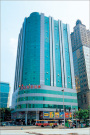
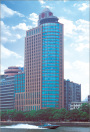
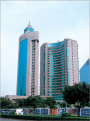
Green Reflective Glass | French Green, Dark Green & F-Green Solar Control Glass
Natural Solar Control for Sustainable Architecture – French Green, Dark Green & F-Green
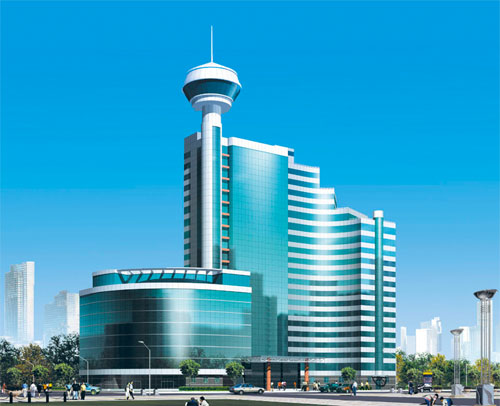
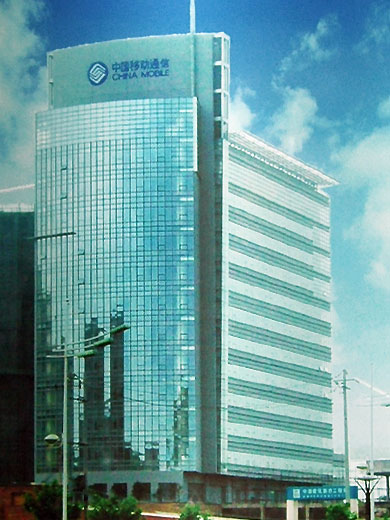
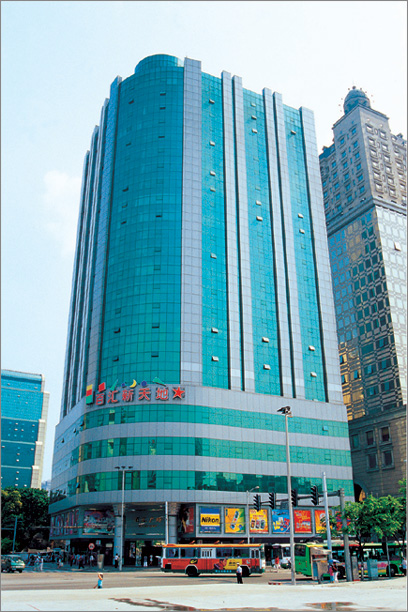
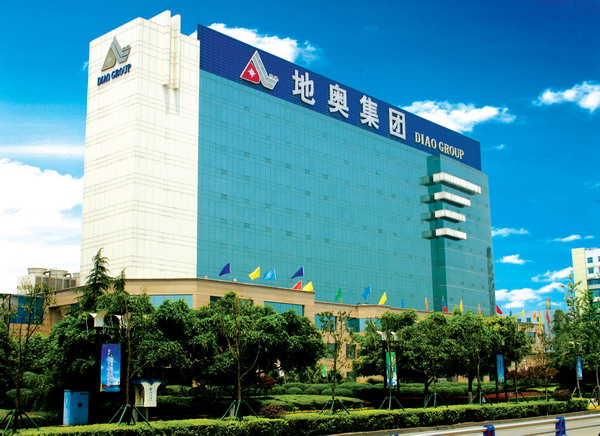
Green reflective glass is an online hard‑coat reflective glass produced by chemical vapor deposition (CVD), where a uniform metal oxide layer is chemically fused to high‑quality float glass. The result is a natural, earthy green appearance that connects buildings to their environment while providing effective solar control. Green reflective glass has historically been one of the most popular choices for curtain wall construction, especially in the 1980s–2000s era of "green glass cities," and remains a staple specification for projects seeking a connection to nature, sustainability, and tropical aesthetics.
Within the green family, several distinct tones serve different architectural visions:
- French Green — a classic, warm olive‑green tone with balanced daylight (most popular worldwide)
- Dark Green — a deep forest‑green tone for maximum solar control and dramatic presence
- F‑Green — a lighter, cooler green with higher visible light transmittance
- Light Green — a pale, translucent green for soft, airy aesthetics
- Green reflective glass uniquely combines solar control performance with a biophilic design language — it is the preferred choice for eco‑conscious developments, resort architecture, and buildings that aim to blend into landscaped surroundings.
| Key Specification | Value |
|---|
| Glass Type | Online hard‑coat reflective float glass |
| Color Family | French Green, Dark Green, F‑Green, Light Green |
| Thickness Range | 4mm, 5mm, 6mm, 8mm, 10mm |
| Maximum Size | 3300 × 6600 mm (jumbo); standard 2440 × 3700 mm |
| Coating Position | #2 surface (outboard) recommended for exterior installation |
| Visible Light Transmittance (French Green 6mm) | ~22.0% |
| Visible Light Reflectance (French Green 6mm) | ~45.0% |
| Solar Reflectance (French Green 6mm) | ~36.0% |
| Shading Coefficient (SC) | 0.38 – 0.60 (depending on tone & thickness) |
| Emissivity (ε) | < 0.1 |
| Processing | Cutting, tempering, heat strengthening, bending, laminating, IGU assembly |
| Certifications | CE, ISO 9001, CCC, SGS |
| MOQ | 1 × 20′ FCL (~20–27 tons) |
| Lead Time | 2–4 weeks after deposit |
💡 Green reflective glass holds a unique position in the reflective glass family: it is simultaneously a solar control product and a biophilic design element. Studies show that green‑tinted glazing can improve occupant well‑being by visually connecting interior spaces to nature, even in dense urban environments.
Why Green Reflective Glass – The Performance Story
1. Biophilic Connection – Bringing Nature Into Architecture
Green is the color of life, growth, and sustainability. Green reflective glass allows buildings to harmonize with their surroundings — whether set against a forested hillside, a manicured campus, or a tropical coastline. The green tint softens the transition between built and natural environments, making it the preferred choice for:
- Eco‑friendly office parks and corporate campuses
- Resort hotels and spa retreats
- Botanical gardens and conservatories
- Healthcare facilities focused on healing environments
- Educational campuses integrating with landscape
2. Superior Solar Control – Especially in Hot Climates
Green reflective glass excels at rejecting solar heat while admitting comfortable daylight:
| Tone (6mm) | Visible Light Transmittance | Solar Heat Gain Coefficient | Shading Coefficient |
|---|
| French Green | ~22.0% | ~0.42 | ~0.48 |
| Dark Green | ~15.0% | ~0.33 | ~0.38 |
| F‑Green | ~32.0% | ~0.48 | ~0.55 |
| Light Green | ~35.0% | ~0.52 | ~0.60
The Dark Green variant achieves a shading coefficient as low as 0.38, making it one of the most effective solar control glasses in the reflective family — comparable to some high‑performance Low‑E coatings. |
3. Natural Daylight Quality
Unlike blue or grey reflective glass, green reflective glass transmits light with a warmer, more natural spectral distribution. This creates interiors that feel closer to outdoor daylight — beneficial for workplaces, learning environments, and healthcare settings where circadian rhythm alignment matters.
4. Privacy & Glare Control
The reflective coating provides daytime privacy: exterior viewers see a mirrored green surface, while occupants enjoy clear outward views with reduced glare. This is especially valuable for ground‑floor retail, hotel guestrooms, and office spaces near pedestrian areas.
5. UV Protection
Green reflective glass blocks >92% of UV radiation, protecting interior furnishings, artwork, and merchandise from fading — a critical benefit for museum display windows, retail showcases, and hospitality interiors.
6. Durability & Processability
The online CVD coating is chemically fused to the glass, offering:
- High scratch resistance – withstands normal handling and cleaning
- Stable optical performance – no coating degradation over decades
- Full processability – can be tempered, bent, laminated, and assembled into IGU without coating damage
Optical Performance Data (Typical Values)
| Glass Type | Thickness | Visible Light Trans. | Visible Light Ref. | Direct Solar Trans. | Direct Solar Ref. | Total Solar Energy Trans. | Shading Coeff. |
|---|
| French Green | 5mm | 25.0% | 42.0% | 36.0% | 34.0% | 45.0% | 0.52 |
| French Green | 6mm | 22.0% | 45.0% | 32.0% | 36.0% | 42.0% | 0.48 |
| French Green | 8mm | 18.0% | 48.0% | 28.0% | 38.0% | 39.0% | 0.45 |
| Dark Green | 5mm | 17.0% | 50.0% | 26.0% | 40.0% | 36.0% | 0.41 |
| Dark Green | 6mm | 15.0% | 53.0% | 23.0% | 42.0% | 33.0% | 0.38 |
| F‑Green | 5mm | 34.0% | 38.0% | 40.0% | 32.0% | 48.0% | 0.55 |
| F‑Green | 6mm | 32.0% | 40.0% | 38.0% | 33.0% | 46.0% | 0.53 |
| Light Green | 5mm | 38.0% | 35.0% | 42.0% | 30.0% | 50.0% | 0.58 |
| Light Green | 6mm | 35.0% | 37.0% | 40.0% | 31.0% | 48.0% | 0.55
Values are indicative based on industry standard formulations from major Chinese float glass manufacturers (CSG, Xinyi, Kibing). Exact performance depends on manufacturer composition and glass substrate. Request project‑specific IGU calculations for final specifications. |
Available Thicknesses & Maximum Sizes
| Thickness | Max Size | Typical Application |
|---|
| 4mm | 2500 × 3800 mm | Interior partitions, decorative glazing |
| 5mm | 2600 × 4200 mm | Windows, doors, shopfronts |
| 6mm | 2700 × 4600 mm | Curtain walls, façade panels (most popular) |
| 8mm | 3100 × 5500 mm | Structural glazing, spandrel panels |
| 10mm | 3400 × 6400 mm | High‑performance façades, laminated IGU
Standard stock sizes: 1220×1830mm, 1650×2200mm, 1850×2450mm, 2150×3350mm, 2300×3250mm, 2460×3700mm, 2750×4650mm. Custom jumbo sizes up to 3500×7000mm available on request. |
Applications
Sustainable Curtain Walls & Eco‑Facades ⭐ Primary Application
Green reflective glass is the defining material for environmentally conscious architecture. Its natural tone signals a commitment to sustainability before visitors even enter the building. From LEED‑certified office towers to net‑zero energy homes, green reflective glass communicates "green" in the truest sense.
Resort Hotels & Tropical Architecture
Beach resorts, jungle lodges, and island villas use green reflective glass to blur the boundary between indoors and outdoors. The green tint echoes the surrounding foliage and ocean, creating a seamless visual experience.
Corporate Campuses & Business Parks
Large corporate campuses — especially those with extensive landscaping — choose green reflective glass to integrate buildings with their park‑like settings. The result is a unified, campus‑wide aesthetic that feels connected to nature.
Healthcare Facilities
Hospitals and clinics increasingly adopt biophilic design principles. Green reflective glass reduces patient stress, improves staff well‑being, and lowers energy costs — a triple benefit for healthcare operators.
Educational Institutions
Schools, universities, and research centers use green reflective glass to create inspiring learning environments. The natural daylight quality supports student concentration and academic performance.
Conservatories & Botanical Gardens
Greenhouses, botanical garden pavilions, and conservatories naturally gravitate toward green reflective glass — the color harmony with plant life is instinctive.
Museums & Cultural Centers
Museums featuring natural history, ecology, or indigenous cultures use green reflective glass to reinforce their thematic narrative while protecting artifacts from UV damage.
Residential High‑Rises (Eco‑Luxury)
Premium residential towers targeting environmentally aware buyers specify green reflective glass for balconies, winter gardens, and façade panels. The green tint adds a distinctive, nature‑inspired identity.
Processing Capabilities
Green reflective glass (online hard‑coat) can be fully processed:
- Cutting & Sizing – CNC cutting to project dimensions
- Edgework – polished, beveled, seamed, or arrissed edges
- Tempering – fully tempered after cutting (surface stress ≥ 95 MPa)
- Heat Strengthening – partial tempering for specific applications
- Bending – cylindrical or conical bending for curved curtain wall elements
- Laminating – PVB or SGP lamination for safety/overhead glazing
- Insulating Glass Units (IGU) – assemble with air or argon gap for enhanced thermal performance
- Ceramic Frit Printing – custom patterns, gradients, or logos
- Further Coating – can serve as substrate for additional Low‑E or AR coatings
⚠️ Installation note: The coated surface should face outward (toward the exterior) during installation, while the uncoated surface faces inward.
Technical Specifications
| Parameter | Specification |
|---|
| Glass Substrate | High‑quality float glass |
| Coating Type | Online CVD metal oxide hard coat |
| Color Options | French Green, Dark Green, F‑Green, Light Green |
| Thickness | 4mm, 5mm, 6mm, 8mm, 10mm |
| Maximum Size | 3300 × 6500 mm (standard); up to 3450 × 6900 mm (jumbo) |
| Minimum Size | 200 × 300 mm |
| Emissivity (ε) | < 0.1 |
| Visible Light Transmittance | 15–38% (varies by tone & thickness) |
| Solar Reflectance | Up to 68% (Dark Green, certain angles) |
| Shading Coefficient (SC) | 0.38–0.60 |
| UV Blockage | > 94% |
| Processing | Cut, temper, heat‑strengthen, bend, laminate, IGU |
| Edgework | Polished, beveled, seamed, arrissed |
| Standards | EN 1296, CE, ISO 9001, CCC, SGS |
| Packaging | Seaworthy plywood crates with paper interleave |
| MOQ | 1 × 20′ FCL (~20–27 tons) |
| Lead Time | 2–4 weeks |
Why Choose Our Green Reflective Glass?
- Complete green spectrum – French Green, Dark Green, F‑Green, Light Green
- Online hard‑coat technology – coating fused to glass, fully processable
- Jumbo size capability – up to 3450 × 6950 mm
- Thickness flexibility – 4mm through 10mm
- Energy‑efficient performance – shading coefficients as low as 0.38
- Biophilic aesthetic – connects buildings to nature
- Privacy & glare control – one‑way mirror effect during daytime
- UV protection – blocks >94% of harmful UV radiation
- Certified quality – CE, ISO 9001, CCC
- One‑stop processing – tempering, laminating, IGU assembly in‑house
- Global track record – supplied to 100+ countries, 5000+ projects worldwide
- Competitive FOB pricing – direct from manufacturer
Pricing Guidance
Indicative FOB pricing (USD per m², bulk packaging included):
| Thickness | Green Reflective Glass | FOB Indicative Range |
|---|
| 4mm | $3.20 – $4.80 | $4–7 |
| 5mm | $4.00 – $6.00 | $5–9 |
| 6mm | $4.80 – $7.00 | $6–11 |
| 8mm | $6.40 – $9.00 | $9–15 |
| 10mm | $8.50 – $12.50 | $12–20 |
Final FOB pricing varies with: Color tone (French Green, Dark Green, F‑Green, Light Green) Thickness and jumbo size requirements Processing complexity (tempering, laminating, IGU) Order volume (FCL vs. LCL) 💡 For a precise project quotation, send us your curtain wall elevation drawings or glass schedule.
Frequently Asked Questions
Q1: What is the difference between green reflective glass and green tinted glass?
Green reflective glass has a metal oxide coating that actively reflects solar radiation, providing superior solar control and a mirror‑like appearance. Green tinted glass is body‑tinted throughout the glass thickness; it absorbs solar heat rather than reflecting it, resulting in higher heat gain and a darker appearance from both sides.
Q2: Can green reflective glass be tempered?
Yes. The online CVD coating is chemically fused to the glass and withstands the tempering process without degradation.
Q3: Which side should the coating face?
The coated surface should face outward (exterior) to maximize solar reflection. The uncoated surface faces inward.
Q4: What is the typical visible light transmittance?
French Green 6mm: ~22%; Dark Green 6mm: ~15%; F‑Green 6mm: ~32%; Light Green 6mm: ~35%.
Q5: How much solar heat can green reflective glass block?
Shading coefficients range from 0.38 (Dark Green) to 0.60 (Light Green). Dark Green blocks up to 62% of solar heat — among the highest in the reflective glass category.
Q6: Can green reflective glass be used in insulating glass units (IGU)?
Yes. It is commonly used as the exterior lite (#2 surface) in double or triple IGUs, combined with Low‑E glass on interior surfaces for maximum energy efficiency.
Q7: What is the maximum size?
Standard jumbo size up to 3330 × 6550 mm. Larger sizes up to 3480 × 6980 mm available on request.
Q8: Which green tone should I choose for my project?
- French Green – classic, warm olive‑green; best balance of daylight and solar control (most popular)
- Dark Green – deep forest‑green; for maximum solar control and dramatic, nature‑inspired aesthetics
- F‑Green – lighter, cooler green; for higher daylight transmission and modern, fresh appearance
- Light Green – pale, translucent green; for soft, airy aesthetics in tropical or coastal projects
- Q9: Does green reflective glass provide privacy?
- Yes, during daytime. The one‑way mirror effect provides privacy from the exterior while maintaining clear outward views. At night, interior lighting reverses the effect.
- Q10: What certifications do you provide?
- CE, ISO 9001, CCC, SGS. Additional certifications (e.g., EN 13196 for coated glass) available on request.
- Q11: Can I get a sample?
- Yes. We provide free samples (typically A4‑size or 304×304mm); customer covers courier freight.
- Q12: What is the lead time?
- 2–4 weeks after deposit for standard FCL orders. Custom jumbo sizes or extensive processing may extend to 4–6 weeks.
Get a Quote for Green Reflective Glass
Tell us your project requirements and we'll respond within 48 hours with a competitive FOB quotation.
Please provide:
- Glass color tone (French Green / Dark Green / F‑Green / Light Green)
- Thickness (4mm / 5mm / 6mm / 8mm / 10mm)
- Panel dimensions (width × height × quantity)
- Processing requirements (tempered, laminated, IGU, etc.)
- Coating placement (single‑glaze or IGU configuration)
- Certifications required
- Target delivery date
- Project name and location
- 📧 Email your specification to: sales@jumbotemperedglass.com
- 🌐 Or visit: www.jumbotemperedglass.com
Related Products
- Blue Reflective Glass – Ford Blue, Dark Blue, Lake Blue
- Grey Reflective Glass – Euro Grey, Dark Grey, Silver Grey
- Bronze Reflective Glass – Euro Bronze, Golden Bronze
- Silver Reflective Glass – High‑transmission neutral reflective
- Gold Reflective Glass – Luxury decorative reflective
- Low‑E Glass – Offline soft‑coat thermal insulation
- Insulated Glass Units – Double & triple glazing with reflective lites
- Tempered Glass – Jumbo tempered glass up to 3320×20300mm