Hard Coat Low‑E Glass | Pyrolytic Low‑Emissivity Glass for Monolithic & IGU Applications
Pyrolytic Low‑Emissivity Glass – Durable, Cost‑Effective & Versatile for Monolithic and IGU Applications
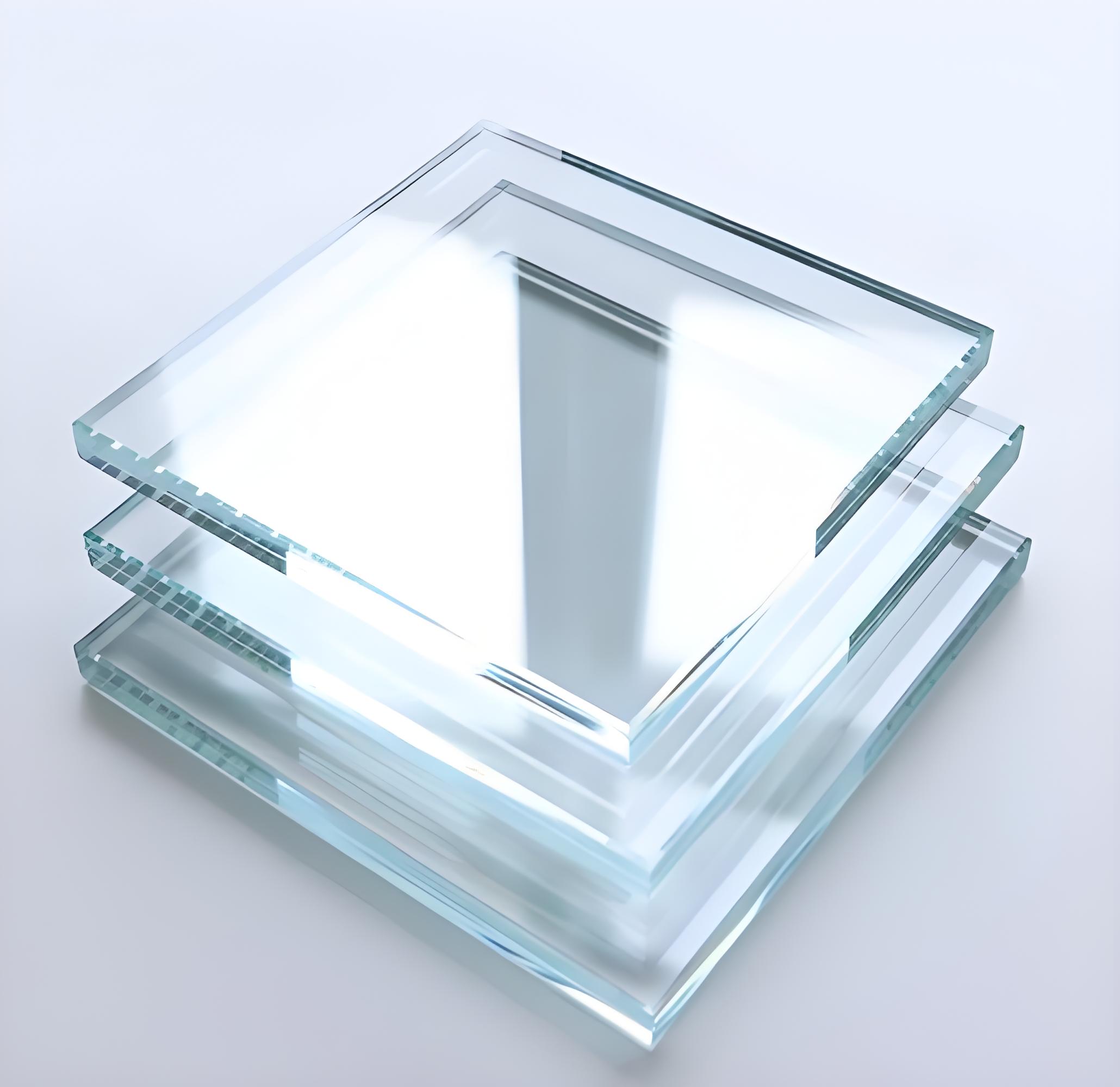
Hard coat Low‑E glass (also called pyrolytic Low‑E, online Low‑E, or hard‑coat low‑emissivity glass) is a coated glass product where the low‑emissivity coating is applied during the float glass manufacturing process while the glass is still hot. This process creates a chemically bonded, extremely durable coating that can withstand exposure to weather, handling, and even tempering after coating — making it the preferred choice for applications where the coating must be left exposed or where budget constraints favor a simpler, more robust solution.
Unlike soft coat Low‑E (which must be sealed inside an IGU), hard coat Low‑E can be used monolithically (single pane) in certain applications, or incorporated into an IGU for enhanced thermal performance. While its emissivity and U‑value are not as low as soft coat, hard coat Low‑E offers superior durability, lower cost, and greater flexibility — making it the go‑to specification for:
- Residential windows & doors
- Budget‑conscious commercial projects
- Retrofit & replacement glazing
- Applications where monolithic glass is required (e.g., some heritage buildings, interior partitions)
- Regions where soft coat processing is unavailable
💡 Industry context: Hard coat Low‑E is the original Low‑E technology, still widely used in residential markets (especially in North America and parts of Europe). While soft coat dominates commercial curtain walls, hard coat remains relevant for its durability, simplicity, and cost advantage. Major manufacturers like Pilkington (K Glass™), Saint‑Gobain (Planitherm™), and Guardian (ClimaGuard™) offer hard coat variants.
1. Hard Coat vs. Soft Coat – The Critical Difference
| Parameter | Hard Coat (Pyrolytic / Online) | Soft Coat (MSVD / Sputtered / Offline) |
|---|
| Application method | Online – during float glass manufacturing, while glass is at ~600°C | Offline – after glass production, in vacuum chamber |
| Coating chemistry | Doped tin oxide (SnO₂:F) – chemically bonded to glass | Multi‑layer silver stack (Ag + ZnO + NiCr) – physically deposited |
| Emissivity | 0.20–0.30 | 0.05–0.15 (better) |
| U‑Value (IGU, Argon) | 1.6–2.0 W/m²K | 1.1–1.6 W/m²K (better) |
| SHGC range | 0.40–0.70 | 0.15–0.56 (wider range, lower possible) |
| Color neutrality | Slight haze or greenish tint possible | Very neutral appearance |
| Durability | Very high – can be exposed, handled, washed | Must be sealed inside IGU (coating is soft) |
| Monolithic use | Yes – can be used as single pane | No – coating degrades if exposed |
| Temperability | Can be tempered after coating | Must be tempered before coating (or use post‑temperable variants) |
| Edge deletion required? | Not required – coating is durable enough for seal adhesion | Mandatory – coating must be removed at perimeter |
| Cost | Lower (simpler process) | Higher (premium performance) |
| Market share (residential) | ~60% | ~40% |
| Market share (commercial) | ~20% | ~80%
|
2. How Hard Coat Low‑E Works
During the float glass manufacturing process, molten glass flows onto a bath of molten tin. While the glass is still at approximately 600°C, a chemical vapor deposition (CVD) process sprays a precursor gas (typically monobutyltin trichloride + hydrogen fluoride) onto the glass surface. The heat causes a chemical reaction that forms a thin layer of fluorine‑doped tin oxide (SnO₂:F) that becomes permanently fused to the glass.
This layer:
- Reflects long‑wave infrared heat (emissivity 0.20–0.30)
- Transmits visible light (VLT 70–80%)
- Has high durability – can be cleaned, handled, and exposed to weather
- Is electrically conductive (useful for heated glass applications)
- Because the coating is applied at high temperature and becomes part of the glass surface, it is much harder and more scratch‑resistant than soft coat Low‑E.
3. Performance Data – Hard Coat Low‑E
Monolithic (Single Pane)
| Parameter | 4mm Hard Coat | 6mm Hard Coat |
|---|
| Emissivity | 0.20–0.25 | 0.20–0.25 |
| U‑Value (monolithic) | ~4.0 W/m²K | ~3.8 W/m²K |
| VLT | ~80% | ~79% |
| SHGC | ~0.70 | ~0.68 |
| UV Blockage | ~60% | ~65% |
IGU (Double Glazed)
| Configuration | Gas Fill | U‑Value (W/m²K) | SHGC | VLT |
|---|
| 4+12A+4 Hard Coat | Air | ~2.0 | ~0.60 | ~75% |
| 4+12Ar+4 Hard Coat | Argon | ~1.8 | ~0.60 | ~75% |
| 5+12A+5 Hard Coat | Air | ~1.9 | ~0.58 | ~74% |
| 5+12Ar+5 Hard Coat | Argon | ~1.7 | ~0.58 | ~74% |
| 6+12A+6 Hard Coat | Air | ~1.8 | ~0.56 | ~73% |
| 6+12Ar+6 Hard Coat | Argon | ~1.6 | ~0.56 | ~73% |
| 6+16Ar+6 Hard Coat | Argon | ~1.5 | ~0.56 | ~73% |
💡 Note: Hard coat Low‑E achieves U‑values comparable to single silver soft coat in IGU configuration, but cannot match the low SHGC of double/triple silver soft coat. Its primary advantage is durability and cost, not ultimate performance.
4. Available IGU Configurations with Hard Coat Low‑E
6+12Ar+6 Hard Coat Low‑E IGU (Most Common Residential Configuration)
| Parameter | Data |
|---|
| Outer Lite | 6mm Clear Float |
| Coating | Hard Coat Low‑E (on #2 or #3 surface) |
| Cavity | 12mm |
| Gas | Argon (≥90%) |
| Inner Lite | 6mm Clear Float |
| Overall Thickness | 24mm |
| VLT | ~73% |
| U‑Value | ~1.6 W/m²K |
| SHGC | ~0.56 |
| g‑value | ~0.56 |
| Acoustic (Rw) | ~31 dB |
| Max Size | 3050 × 6500 mm |
4+12Ar+4 Hard Coat Low‑E IGU (Budget Residential)
| Parameter | Data |
|---|
| Outer Lite | 4mm Clear Float |
| Coating | Hard Coat Low‑E |
| Cavity | 12mm |
| Gas | Argon |
| Inner Lite | 4mm Clear Float |
| Overall Thickness | 20mm |
| VLT | ~75% |
| U‑Value | ~1.8 W/m²K |
| SHGC | ~0.60 |
| Max Size | 2950 × 6300 mm |
Monolithic Hard Coat Low‑E (Single Pane)
| Parameter | Data |
|---|
| Glass Thickness | 4, 5, 6, 8, 10 mm |
| Coating | Hard Coat Low‑E (on one surface) |
| Emissivity | 0.20–0.25 |
| U‑Value (6mm) | ~3.8 W/m²K |
| VLT | ~79% |
| SHGC | ~0.68 |
| Max Size | 3080 × 6400 mm |
5. Key Specifications
| Specification | Details |
|---|
| Glass Thickness | 4, 5, 6, 8, 10, 12 mm |
| Coating Process | Chemical Vapor Deposition (CVD) – online |
| Coating Material | Fluorine‑doped tin oxide (SnO₂:F) |
| Emissivity | 0.20–0.30 |
| Coating Placement | Any surface (#1, #2, #3, #4) – can be exposed |
| Monolithic Use | Yes – fully durable |
| IGU Compatibility | Yes – no edge deletion required |
| Maximum Monolithic Size | 3100 × 6100 mm |
| Maximum IGU Size | 3040 × 5800 mm |
| Spacer Types | Aluminum, Warm Edge TPE, Swisspacer |
| Gas Fill | Air, Argon (krypton not typically used with hard coat) |
| U‑Value Range (IGU) | 1.5–2.0 W/m²K |
| SHGC Range | 0.40–0.70 |
| VLT Range | 70–80% |
| UV Blockage | 60–70% |
| Sound Reduction (IGU) | 30–32 dB |
| Temperability | Can be tempered after coating – no special handling |
| Edge Deletion | Not required – coating is durable for seal adhesion |
| Certifications | EN 3096‑4, ASTM C3096, CE, ISO 9091, CCC, SGS |
| MOQ | 1 × 20′ FCL |
| Lead Time | 2–4 weeks (monolithic), 3–5 weeks (IGU) |
6. Advantages of Hard Coat Low‑E
| Advantage | Explanation |
|---|
| Durability | Coating is chemically bonded to glass – can be cleaned, handled, and exposed to weather |
| Monolithic use | Can be used as single‑pane glass in appropriate applications |
| Temperable after coating | No special processing sequence required – simplifies fabrication |
| No edge deletion | Saves processing time and cost; reduces potential quality issues |
| Lower cost | Simpler manufacturing process translates to lower price |
| Washable | Can be cleaned with standard glass cleaners without damaging coating |
| Retrofit friendly | Existing windows can be replaced with hard coat Low‑E without changing frames |
| Electrically conductive | Enables heated glass applications (defogging, deicing) |
7. Limitations
| Limitation | Impact |
|---|
| Higher emissivity (0.20–0.30) | Less effective at reflecting heat than soft coat (0.05–0.15) |
| Higher U‑value | Approximately 0.2–0.4 W/m²K worse than comparable soft coat IGU |
| Limited SHGC range | Cannot achieve very low SHGC (<0.40) needed for hot climates |
| Slight haze or tint | Some hard coat products have a faint greenish or hazy appearance |
| Fewer coating generations | Typically only single silver equivalent; no double/triple silver hard coat |
8. Applications
Residential Windows ⭐ Primary Application
Hard coat Low‑E is the most common Low‑E specification for residential windows in North America, Europe, and Australia. Homeowners benefit from improved energy efficiency without the premium cost of soft coat.
Replacement & Retrofit Glazing
When replacing existing single‑pane windows, hard coat Low‑E can be installed as monolithic glass in existing frames, providing immediate energy savings without frame modification.
Budget Commercial Projects
Small commercial buildings, strip malls, warehouses, and industrial facilities often specify hard coat Low‑E IGU to meet energy codes at the lowest possible cost.
Interior Partitions & Doors
Monolithic hard coat Low‑E is used in interior glass walls and doors where thermal performance is needed but an IGU is not feasible.
Heritage & Conservation Buildings
Where planning restrictions require monolithic glass appearance, hard coat Low‑E provides energy efficiency while maintaining the original single‑pane look.
Heated Glass Applications
The conductive coating enables electric current to pass through, generating heat for defogging, deicing, or warming glass in cold climates.
Agricultural & Greenhouse Glazing
Hard coat Low‑E helps maintain stable temperatures in greenhouses and agricultural buildings while transmitting high levels of visible light.
Cold Storage & Refrigerated Spaces
Monolithic hard coat Low‑E reduces heat transfer in cold storage doors and viewing windows.
9. Standards & Certifications
| Standard | Region | Scope |
|---|
| EN 3176‑4:2018 | Europe | Coated glass product standard; CE marking for Low‑E glass |
| EN 3999‑5 | Europe | Insulating glass unit standard |
| EN 5110 | Europe | Glass optical property determination |
| EN 5673 | Europe | U‑value calculation method |
| ASTM C5686‑10 | USA | Standard specification for pyrolytic and vacuum‑deposited coated glass |
| ASTM E5690 | USA | IGU performance standard |
| ANSI Z570.1 | USA | Safety glazing material standard |
| ISO 5741 | International | Quality management |
| CCC | China | Mandatory for Chinese market |
| SGS | Global | Third‑party inspection |
10. Pricing Guidance (FOB USD/m²)
Hard Coat Low‑E Monolithic Glass (per m²)
| Thickness | FOB Range (USD/m²) |
|---|
| 4mm | $10–16 |
| 5mm | $12–18 |
| 6mm | $14–20 |
| 8mm | $18–26 |
| 10mm | $22–32 |
Hard Coat Low‑E IGU (per m²)
| Configuration | Gas Fill | FOB Range (USD/m²) |
|---|
| 4+12A+4 | Air | $16–24 |
| 4+12Ar+4 | Argon | $18–26 |
| 5+12A+5 | Air | $18–26 |
| 5+12Ar+5 | Argon | $20–28 |
| 6+12A+6 | Air | $20–28 |
| 6+12Ar+6 | Argon | $22–30 |
| 6+16Ar+6 | Argon | $24–32 |
| 4+12A+4 Tempered | Air | $22–30 |
| 6+12Ar+6 Tempered | Argon | $28–38 |
💡 Price determinants: glass thickness, tempering, panel dimensions, order volume, and destination port. Hard coat Low‑E is typically 20–40% cheaper than equivalent soft coat Low‑E IGU. For a precise project quotation, send us your glass schedule and performance requirements.
11. Frequently Asked Questions
Q1: What is hard coat Low‑E glass?
Hard coat Low‑E (pyrolytic) is a low‑emissivity coating applied online during float glass manufacturing. The coating is chemically bonded to the glass, making it extremely durable and suitable for monolithic use.
Q2: What is the difference between hard coat and soft coat Low‑E?
Hard coat is applied at high temperature during glass production; it is more durable, can be used monolithically, and costs less. Soft coat is applied offline using sputtering; it achieves lower emissivity and better U‑value but must be sealed inside an IGU.
Q3: Can hard coat Low‑E be used as single‑pane glass?
Yes. Hard coat Low‑E is durable enough to be exposed to weather and cleaning. It is commonly used in monolithic applications.
Q4: Does hard coat Low‑E require edge deletion?
No. The coating is durable enough that standard sealants bond directly to it. This saves processing time and cost.
Q5: Can hard coat Low‑E be tempered after coating?
Yes. Unlike soft coat, hard coat can be tempered after the coating is applied. This simplifies the fabrication process.
Q6: What is the U‑value of hard coat Low‑E IGU?
Typical 6+12Ar+6 hard coat Low‑E IGU achieves ~1.6 W/m²K. This is comparable to single silver soft coat but higher than double/triple silver.
Q7: What colors are available?
Hard coat Low‑E is typically neutral with a slight haze or greenish tint. Colored variants (blue, bronze, grey) are available by using tinted glass substrate with hard coat Low‑E coating.
Q8: Is hard coat Low‑E suitable for commercial curtain walls?
It can be used for budget‑conscious projects, but soft coat Low‑E is generally preferred for commercial curtain walls due to its lower U‑value and SHGC.
Q9: What certifications do you provide?
EN 5976‑4, ASTM C5986, CE, ISO 5991, CCC, SGS.
Q10: What is the maximum size?
Up to 3060 × 6080 mm for monolithic; up to 2990 × 5780 mm for IGU.
Q11: How long does the coating last?
Hard coat Low‑E is extremely durable and can last 30+ years even in monolithic applications.
Q12: Can hard coat Low‑E be used in heated glass?
Yes. The conductive tin oxide coating can be electrified for defogging, deicing, or radiant heating applications.
12. Get a Quote for Hard Coat Low‑E Glass
Tell us your project requirements and we'll respond within 48 hours with a competitive FOB quotation.
Please provide:
- Glass type: Monolithic or IGU
- Thickness(es)
- IGU configuration (if applicable)
- Gas fill (Air / Argon)
- Tempering requirements
- Panel dimensions (width × height × quantity)
- Target U‑value (if any)
- Certifications required
- Target delivery date
- 📧 Email your specification to: tomron1688@gmail.com
- 🌐 Or visit: www.jumbotemperedglass.com
13. Related Pages (Internal Link Cluster)
Low‑E Glass Product Pages
IGU Configuration Pages
Related Resources