Home / Resources / Glass Selection Guides /IGU Selection Guide
IGU Selection Guide
Argon Fill · Warm-Edge Spacer · Double & Triple Glazing · Jumbo up to 13000×3000 mm
Specification guidance for architects, façade consultants, glazing contractors and procurement teams specifying insulating glass units (IGUs) for curtain walls, windows and façades. This guide covers gas fill, cavity width, spacer technology, double vs triple glazing, U-value, seal warranty, jumbo/oversize limits and an RFQ data pack. All values are starting points; final make-up must be confirmed by IGU calculation, energy model, local code and approved shop drawings.
1. What an IGU Actually Is
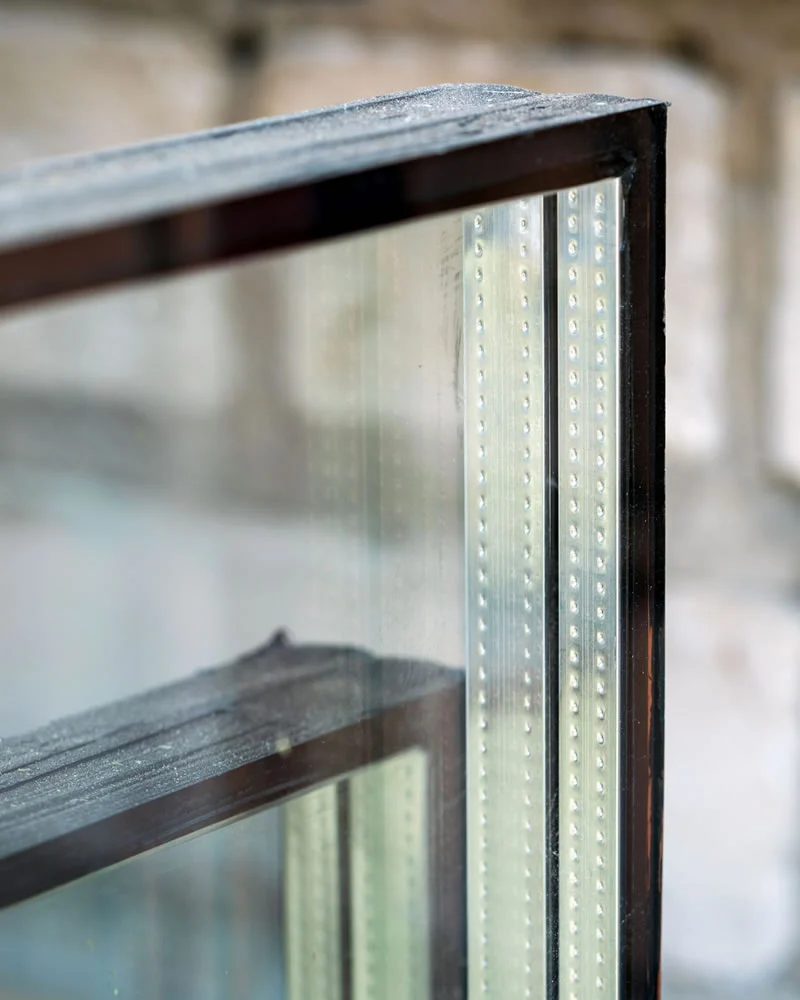
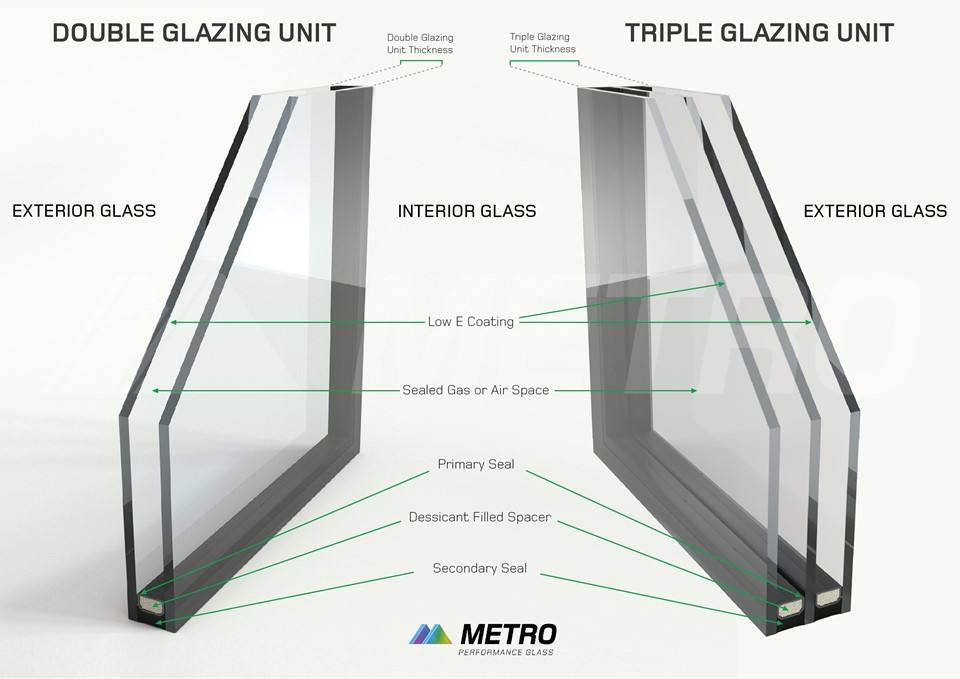
An insulating glass unit (IGU) is two or more lites hermetically sealed around a spacer to create one or more gas-filled cavities. The cavity — not the glass alone — is what resists heat flow. A standard double-glazed IGU has four countable surfaces; a triple-glazed unit has six.
Rule one: specify the complete sealed unit, not just thickness and coating. Edge seal, spacer, gas fill, cavity width and desiccant are part of the performance and warranty.
2. The Purchasing Reality
Procurement teams usually lose time on four avoidable issues:
- Confusing glass size with IGU size. A 3300×20000 mm monolithic sheet is not a 13000×3000 mm sealed unit — the IGU has a smaller manufacturing envelope.
- Assuming argon. Gas fill must be written into the spec, verified at filling and protected by a quality edge seal.
- Forgetting the spacer. Warm edge is often the lowest-cost U-value improvement and the biggest condensation-risk reducer.
- Buying on unit price. Seal warranty, edge integrity and project-specific IGU calculation matter more than the lowest $/m².
3. Build-up Decision Matrix
Value note: figures below are design starting points. Final U-value, SHGC and VLT require IGU calculation and local energy-code confirmation.
| IGU build-up | Best for | Upgrade when… |
|---|
| Double glazing, air cavity, standard spacer | Budget windows, mild climates | Energy code or comfort target requires lower U / SHGC |
| Double glazing + low-e + argon + warm edge | Most commercial façades and curtain walls (cost-performance default) | Whole-façade model demands U below ~1.0 W/m²K |
| Double glazing + double/triple-silver low-e | Solar control + daylight balance | See Low-E Glass Selection Guide |
| Laminated + IGU (e.g. 8+1.52PVB+8)+12A+12 | Safety, acoustic, post-breakage retention | Impact, acoustic or overhead-risk zone requires laminated lite |
| Triple glazing + argon/krypton + warm edge | Cold climates, aggressive U-value targets, skyscrapers | Double IGU cannot reach the required U at acceptable VLT |
| Jumbo / oversize IGU | Large-format curtain walls, minimal joints | Confirm handling, edge seal, transport and crane access |
4. Typical IGU Build-ups
Standard double IGU: 6mm + 16Ar + 6mm with low-e on surface #2, argon fill, warm-edge spacer → U ≈ 1.0 W/m²K, SHGC ≈ 0.28–0.35, VLT ≈ 55–65%.
Laminated-low-e IGU (safety + energy): (8+1.52PVB+8) + 12Ar + 12mm or (10+1.90PVB+10)+12A+15mm style — common in unitized curtain walls combining post-breakage retention with thermal control.
Triple glazing: 6 + 12Ar + 6 + 12Ar + 6 with low-e surfaces, warm edge → U ≈ 0.5–0.7 W/m²K depending on gas, coating and cavity.
Cavity width, gas fill, spacer and edge seal all change the final U/SHGC/VLT. A coating datasheet is not a full IGU performance certificate.
5. Gas Fill: Argon vs Air
| Fill | Thermal performance | Cost | Specification note |
|---|
| Air | Baseline | Lowest | Budget spec only; higher U, no long-term retention concern beyond seal integrity |
| Argon | U ≈ 0.1–0.3 W/m²K lower than air cavity | Moderate | Recommended for every low-e IGU; must be sealed and verified |
| Krypton | Highest (especially thin cavities) | High | Premium triple glazing, tight cavities, aggressive U target |
Argon is an inert, non-toxic gas. Its thermal benefit disappears if the edge seal fails and gas escapes — which is why seal quality and warranty are non-negotiable on high-performance IGU.
6. Cavity Width & Warm-Edge Spacer
- Cavity width: 12–20 mm typical. 12–16 mm is the common range for double glazing with argon; too wide and internal convection can reduce benefit.
- Spacer: the perimeter element holding the lites apart. Standard aluminium spacers conduct heat; warm-edge spacers use low-conductivity materials.
- Why warm edge matters: reduces thermal bridging at the glass edge → improves whole-unit U-value, cuts condensation risk and supports longer seal life.
- Dual seal: primary (butyl) + secondary (structural) seal with desiccant protects the cavity and gas fill.
7. Performance Numbers That Hold Up
| Metric | Jumbo Glass Group range / capability | Specification note |
|---|
| U-value | **1.2–1.8 W/m²K** (Low-E IGU with argon fill) | Confirm complete IGU calculation, not coating alone |
| SHGC | 0.15 – 0.5 (with low-e coating family) | Balance against VLT and orientation |
| VLT | Depends on coating and tint | Aim for useful daylight, not maximum % |
| Max IGU size | 13000 × 3000 mm | Sealed-unit envelope; handling and logistics limited |
| Gas fill | Argon (air optional on budget spec) | Argon recommended; verify at filling |
| Spacer | Warm-edge technology | Strongly recommended on every low-e IGU |
| Seal warranty | 20-year IGU seal warranty | Confirm scope and conditions in writing |
These are manufacturing and product capabilities, not a substitute for project-specific energy modelling or approved shop drawings.
8. Double vs Triple Glazing
| Double glazing | Triple glazing |
|---|
| Cavities | 1 | 2 |
| Typical U | ~1.0 W/m²K (low-e + argon + warm edge) | U = 1.2–1.8 (Low-E IGU) |
| Weight / thickness | Lower | Higher — affects frame, handling, cost |
| Best for | Most commercial façades (sweet spot) | Cold climates, aggressive energy targets, iconic towers |
Rule: use double glazing as the default; move to triple only when the energy model or code makes the U-value payback real. Over-specifying adds weight, frame cost and replacement complexity.
9. Jumbo / Oversize IGU
Sizing note: insulating glass manufacturing capacity is up to 13000 × 3000 mm. This is the sealed-unit envelope. By contrast, monolithic and laminated sheets reach up to 3300 × 20000 mm — but the IGU format is the limiting factor for oversize sealed units because gas fill, edge seal, handling and transportation become more demanding.
- Confirm crating, site crane/hoist, replacement access and edge protection.
- Larger sealed units increase responsibility for long-term gas retention and seal integrity.
- For unitized curtain walls, panel size is set by framing geometry, wind load, deflection and approved shop drawings — not manufacturing capacity alone.
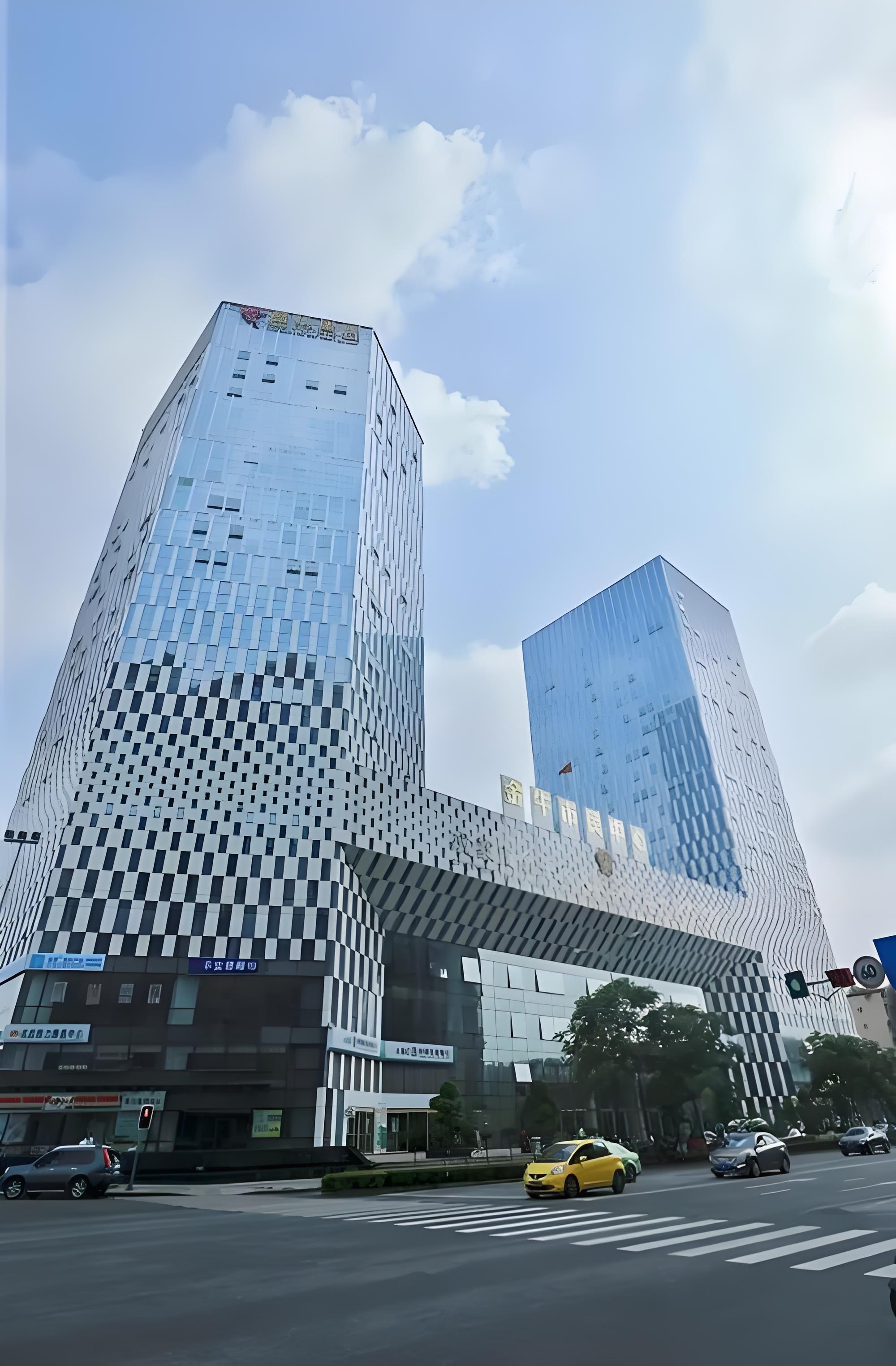
Reference: the Qianhai Chuangjin Tower case study used real double-silver laminated IGU make-up with panels up to 1800×4300 mm — chosen by the unitized framing system rather than the maximum manufacturing envelope.
10. Seal System & Warranty
- Dual seal: primary butyl seal + secondary structural seal.
- Desiccant: integrated in the spacer to absorb residual and penetrated moisture.
- IGCC-referencing certification: request test reports and certification where claimed.
- 20-year seal warranty: available on qualifying IGU units — confirm scope, exclusions and claim conditions in writing.
- Quality control: sealant application, gas filling, edge grinding and HST (where applicable) should be documented per project.
11. Codes & Compliance
- Energy code: U, SHGC, VLT and whole-façade performance per local jurisdiction (ASHRAE 90.1 / IECC / GB 50189 / EU EPBD as applicable).
- IGU performance: EN 1279 (durability, gas retention, moisture penetration), IGCC / CPSC referencing practice.
- Glass safety: EN 12150 / ASTM C1048 (tempered), EN 14449 / ASTM C1172 (laminated), local glazing safety rules.
- Façade integration: EN 13830 (curtain walling), ASTM E330 (structural pressure), CWCT guidance as adopted.
- Documentation: IGU calculation, coating datasheet, gas-fill record, seal warranty, HST logs and shop drawings.
12. Selection Decision Flow & RFQ Data Pack
Decision Flow
- Define climate zone and orientation.
- Set U-value, SHGC and VLT targets from energy code / model.
- Choose double vs triple glazing.
- Select low-e coating family and surface position (usually #2).
- Fix cavity width (12–20 mm), gas fill (argon recommended) and warm-edge spacer.
- Add safety requirement (tempered / laminated / HST).
- Check jumbo / oversize feasibility (IGU ≤ 13000×3000 mm).
- Run whole-façade energy model and confirm appearance.
- Lock IGU schedule, samples and mock-up.
- Issue RFQ data pack and review shop drawings.
RFQ Data Pack
- Project location, climate zone and façade orientation.
- Glass sizes, quantities, vision/spandrel split.
- Performance targets: U-value (U-values of **1.2–1.8 W/m²K** are typical for Low-E IGU with argon fill.), SHGC, VLT.
- Build-up: double or triple glazing; lite thicknesses.
- Coating: single/double/triple silver, surface position.
- Cavity width, gas fill (argon/air/krypton), warm-edge spacer, seal type.
- Safety: tempered / laminated (PVB/SGP), HST requirement.
- Max size and handling constraints (IGU ≤ 13000×3000 mm).
- Drawings, sample/mock-up needs, delivery window and warranty expectations.
Frequently Asked Questions
What is the difference between argon and air filled IGU?
Air-filled IGU is the budget baseline; argon is a heavier inert gas that reduces convective and conductive heat transfer, lowering U-value by roughly 0.1–0.3 W/m²K depending on cavity and coating. Argon is recommended for any low-e or high-performance IGU; air is acceptable only where cost dominates and the performance target is modest.
Why specify a warm-edge spacer in an IGU?
Warm-edge spacers use low-conductivity materials at the edge of the sealed unit, cutting thermal bridging where the glass meets the frame. This improves U-value, reduces edge-condensation risk and supports longer seal life—strongly recommended on every low-e IGU.
What cavity width should an IGU use?
Common sealed cavities are 12–20 mm. 12–16 mm is typical for double glazing with argon; wider cavities help up to a point but can allow internal convection if too large. Cavity must be matched to the spacer, gas fill, coating and whole-façade thermal model.
How big can a jumbo IGU be?
Our insulating glass manufacturing capacity is up to 13000×3000 mm. This is the sealed-unit envelope; actual project size is limited further by handling, transportation, edge-seal integrity, crane access and approved shop drawings. Monolithic and laminated sheets can be larger (up to 3300×20000 mm), but the IGU format is the limiting factor for oversize sealed units.
What U-value can a high-performance IGU reach?
With Jumbo Glass Group high-performance IGU (low-e coating, argon fill, warm-edge spacer, optimized cavity), U-values down to 0.7 W/m²K are achievable. Triple glazing with krypton/argon can approach 0.5–0.6 W/m²K. Final values require an IGU calculation and energy-model confirmation, not coating data alone.
How long does an IGU seal last?
We offer a 20-year IGU seal warranty on qualifying units, backed by dual-seal construction, desiccant integrity and IGCC-referencing certification. Warranty scope and conditions should be confirmed in writing for each project.
Need an IGU specification review or quotation?
Send your RFQ data pack or IGU schedule and we will cross-check build-up, gas fill, warm-edge option, U-value target, jumbo/oversize feasibility and warranty terms against your project specification.
Contact us / Request a quotation
Related Guides & Projects
Low-E Glass Selection Guide
Coating family, SHGC/VLT, surface position and double vs triple silver.
Curtain Wall Glass Selection Guide
Make-up, vision/spandrel, structural and RFQ decisions for façades.
Qianhai Chuangjin Tower Case
Real double-silver laminated IGU curtain wall: (10+1.90PVB+10)+12A+15 / (8+1.52PVB+8)+12A+12.
Continue Reading
Jumbo Glass Family
Related Products
Resources
Back to the full selection-guide index.
Glass Skylight Selection Guide →
Sloped overhead glazing taken to the extreme — atrium & skylight rules.
Glass Bridge / Deck Guide →
When your canopy becomes walkable — concentrated load rules.
Jumbo Laminated Glass →
The product page behind every PVB / SGP canopy build-up.
Jumbo Tempered Glass →
Monolithic tempered plies (pre-lamination) and material spec.
Jumbo Glass / Oversize Glass →
Size definitions, capability and engineering overview.
Source & spec basis: Jumbo Tempered Glass Group manufacturing capabilities (Low-E IGU U-value 1.2–1.8 W/m²K; SHGC 0.15–0.5; max IGU 13000×3000 mm; argon fill; warm-edge spacer; 20-year seal warranty; IGCC-certified IGU factory; monolithic/laminated up to 3300×20000 mm), EN 12150 / ASTM C1048 / EN 14449 / EN 1279 / IGCC referencing practice, and disclosed project data from Qianhai Chuangjin Tower façade specification. Final values must be confirmed by approved shop drawings, IGU calculation, energy model, design institute/engineer and local authority requirements.