Home / Resources / Glass Selection Guides / Jumbo Glass Procurement Guide
Jumbo Glass Procurement Guide
How to Specify, Order & Deliver Oversize Architectural Glass
Practical guidance for architects, façade consultants, glazing contractors and procurement teams buying jumbo-format architectural glass. This guide turns a vague request — “we need big glass” — into a predictable order: define the system, lock the specification, plan fabrication, protect the panels in transit and be ready to receive them on site. All values are starting points; final size, make-up and programme must be confirmed by approved shop drawings, supplier capability and project logistics.
1. What “Jumbo Glass” Means in Procurement
Jumbo glass is not a product name. It is a manufacturing and logistics envelope for oversize architectural glass — monolithic, tempered, laminated, Low-E or insulating glass units supplied at dimensions beyond standard stock sheet sizes. The procurement challenge is that size multiplies every other risk: handling, edge quality, thermal stress, crate weight, transport routing and replacement strategy.
Work to two rules from the start:
- Rule one: maximum manufacturing size is not the same as maximum shippable or installable size.
- Rule two: glass specification and framing/system design must be locked together before cutting.
2. The Five Failure Points in Jumbo Orders
Most delays and cost overruns come from the same five issues:
- Vague RFQ: sizes quoted without make-up, coating position, edge finish or tolerance.
- Late system coordination: frame, gasket, pressure plate or unitized cassette geometry changes after glass is cut.
- Underestimated logistics: crate dimensions, crane access, road route or elevator size not checked.
- Incomplete quality evidence: HST, IGU seal, coating or lamination records requested only at shipping.
- No replacement plan: breakage or site damage has no pre-agreed spare-panel allowance.
These five are avoidable with the process in this guide.
3. Sizing & Capability Decision Matrix
Design-starting points. Actual shippable size depends on thickness, make-up, crate design, transport route, handling equipment and site access.
| Product form | Manufacturing capacity | Procurement implication |
|---|
| Monolithic / tempered sheet | up to 3300 × 20000 mm | Largest single-sheet envelope; handling and transport dominate |
| Laminated sheet (PVB/SGP/EVA) | up to 3300 × 20000 mm | Interlayer, post-breakage retention and edge sealing to be specified |
| Insulating glass unit (IGU) | up to 3300 × 12000 mm | Sealed-unit limits: edge seal, gas fill and handling take precedence |
| Low-E / double-silver / triple-silver | within the above envelopes | Confirm coating family, surface position, U/SHGC/VLT and IGU calculation |
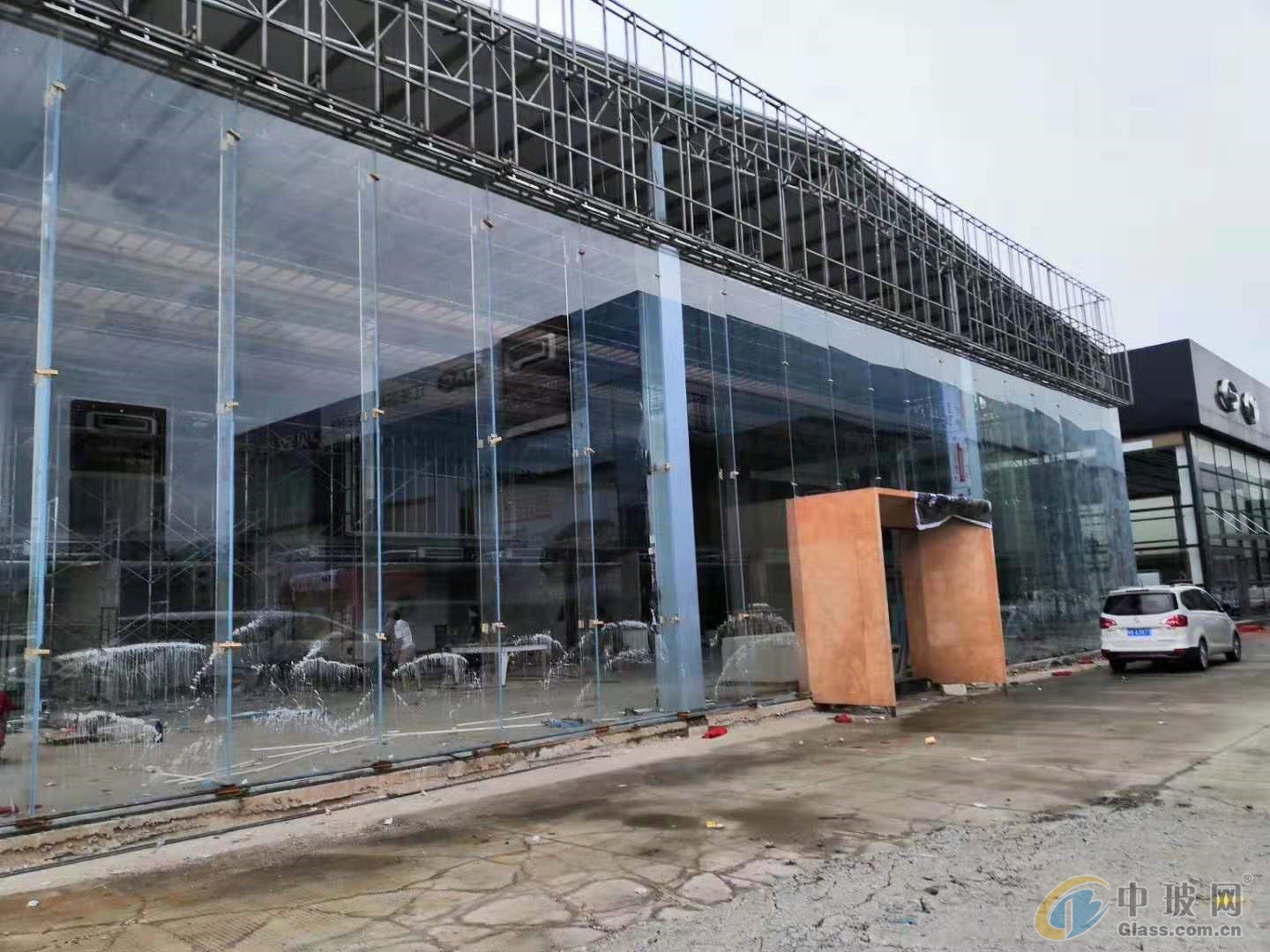
| Jumbo IGU for curtain wall | ≤ 3300 × 12000 mm | Frame module, wind load, deflection and logistics must be aligned early |
| Project panel (real system example) | e.g. 1800 × 4300 mm / 7.74 m² | System/framing design result, not the manufacturing maximum |
4. Before You Issue the RFQ
A strong jumbo-glass RFQ removes ambiguity and lets suppliers compare like for like. Collect the following before sending drawings:
- Project location, climate zone, site access and delivery window.
- Glass sizes, quantities, vision/spandrel or function split.
- Performance targets: U-value, SHGC, VLT, acoustic if required.
- Make-up intent: tempered / laminated / Low-E / IGU, coating side, gas, spacer.
- Structural: wind load, allowable deflection, safety/impact class.
- Edge work, hole/ notch requirements, HST and certification needs.
- Crating, shipping terms, unloading method and replacement/spare-panel allowance.
Use the full RFQ Data Pack in Section 11 below as your checklist.
5. Locking the Specification
The specification must be fixed before cutting because jumbo panels are expensive to rework. Confirm in this order:
- System type: curtain wall, window, skylight, balustrade, partition, door or furniture.
- Glass make-up: monolithic, laminated, IGU or laminated-IGU.
- Heat treatment: annealed, heat-strengthened or tempered (HST if required).
- Coating and solar control: low-E family, surface position, reflectance target.
- Structural/thermal: loads, deflection, U/SHGC/VLT, cavity, gas and spacer.
- Edge, hole and fabrication details; tolerances aligned to framing.
- Procurement rule: if the framing supplier, façade engineer and glass supplier are not reviewing the same revision of the same drawing, do not release production. A 2 mm tolerance error at 12 m becomes a site crisis.
6. Fabrication Planning & Lead Time
Jumbo-glass lead time is the sum of dependent operations. A typical planning envelope is 4–10 weeks after approved shop drawings, plus transit time. This is a planning range, not a fixed quotation — confirm project-specific schedule at RFQ stage.
| Stage | What affects duration |
|---|
| Material & cutting | Stock availability, jumbo sheet size, cutting plan yield |
| Edge / hole fabrication | Polished edges, notches, drilled holes, tolerances |
| Tempering / heat soak | Thickness, HST requirement, oven capacity |
| Lamination | PVB/SGP/EVA, autoclave cycle, interlayer handling |
| Low-E coating / IGU assembly | Coating, cavity, gas fill, warm-edge spacer, seal cure |
| QC & documentation | Inspection, test reports, HST logs, certification |
| Crating & shipping | Crate design, consolidation, ocean/road freight, customs |
7. Heat Soak Testing (HST) & Quality Control
For tempered glass, HST (heat soak test) reduces the risk of spontaneous breakage from nickel sulphide (NiS) inclusions. Our process-control example: 554°F for 4 hours, with documented breakage rate below 0.08% where applicable to the process.
Important distinctions for procurement:
- HST addresses NiS spontaneous breakage — it does not give post-breakage retention.
- For overhead or fall-risk locations, laminated glass is the safety strategy; HST and lamination can be specified together.
- Request HST records, heat-treatment records and inspection reports as part of the documentary package.
8. Packaging, Crating & Handling
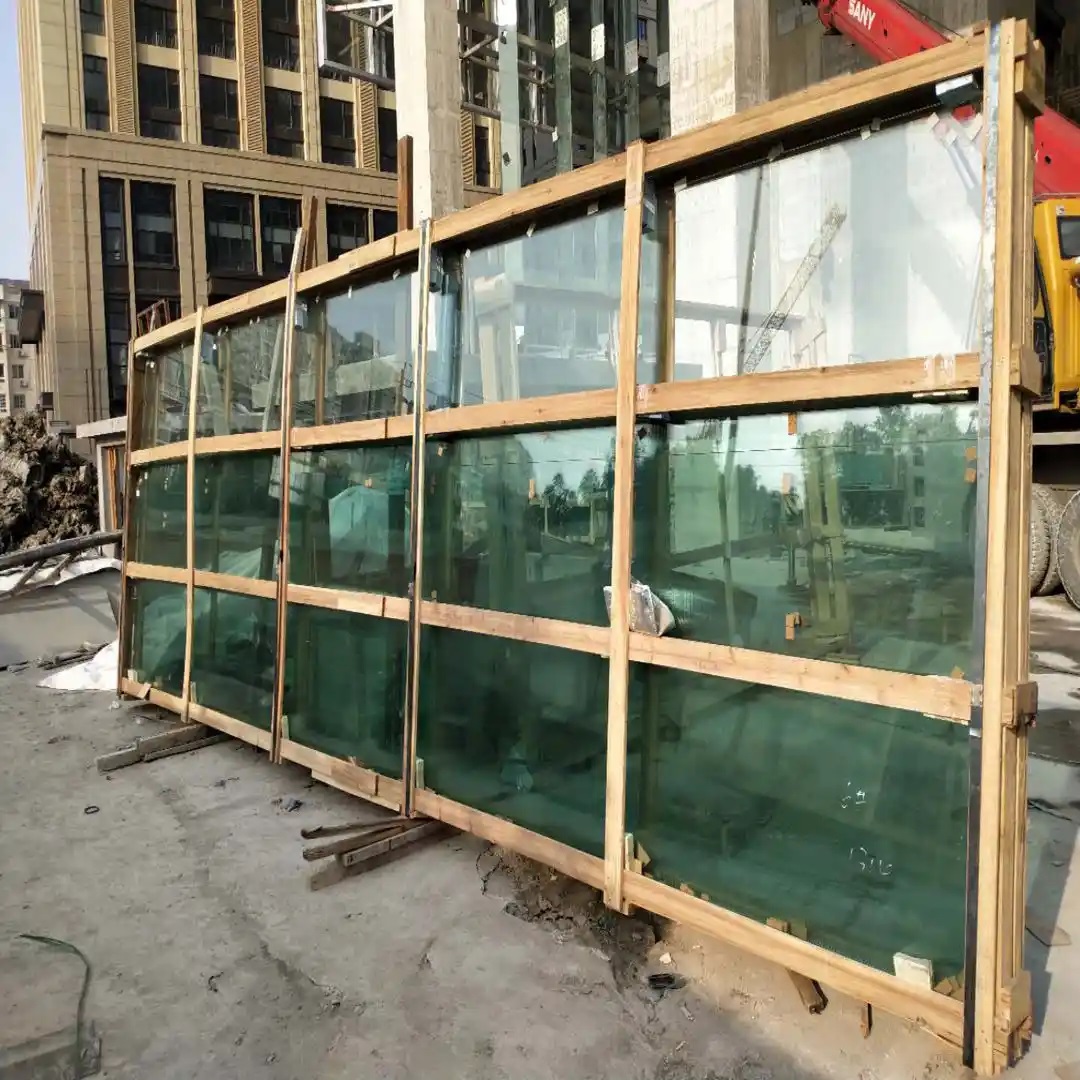
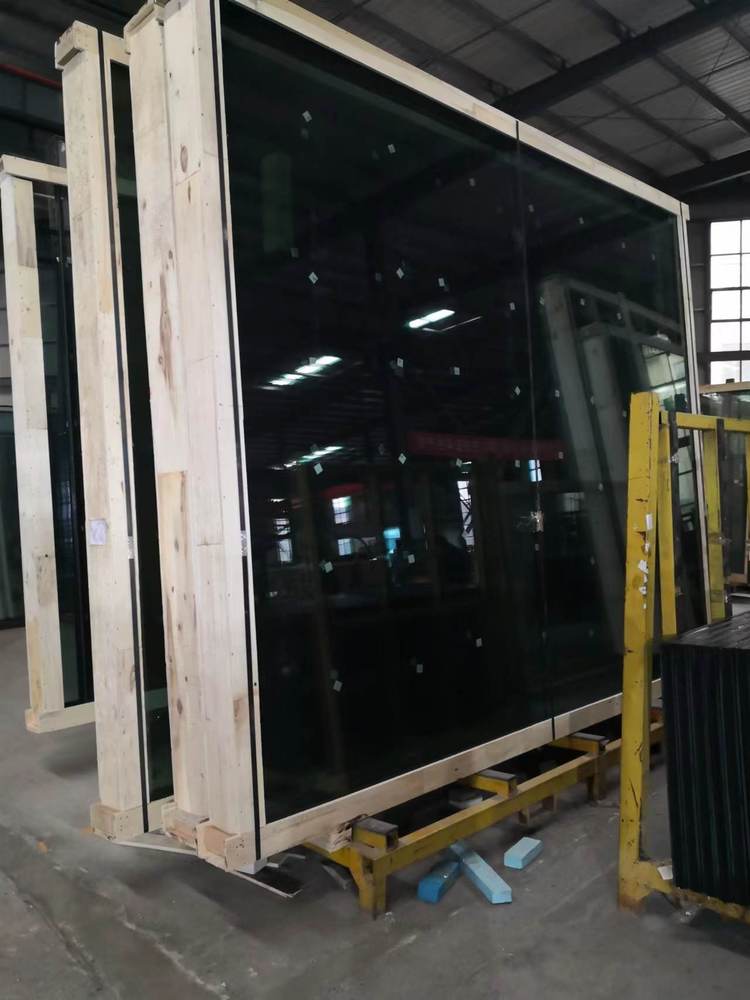
Packaging is part of the product for jumbo glass. Typical engineered wooden crates include:
- Vertical or A-frame configuration matched to panel size and weight.
- Edge and corner protection, anti-slip separation between panes.
- Moisture control and desiccant where appropriate.
- Clear labels: panel ID, orientation, weight, handling warnings.
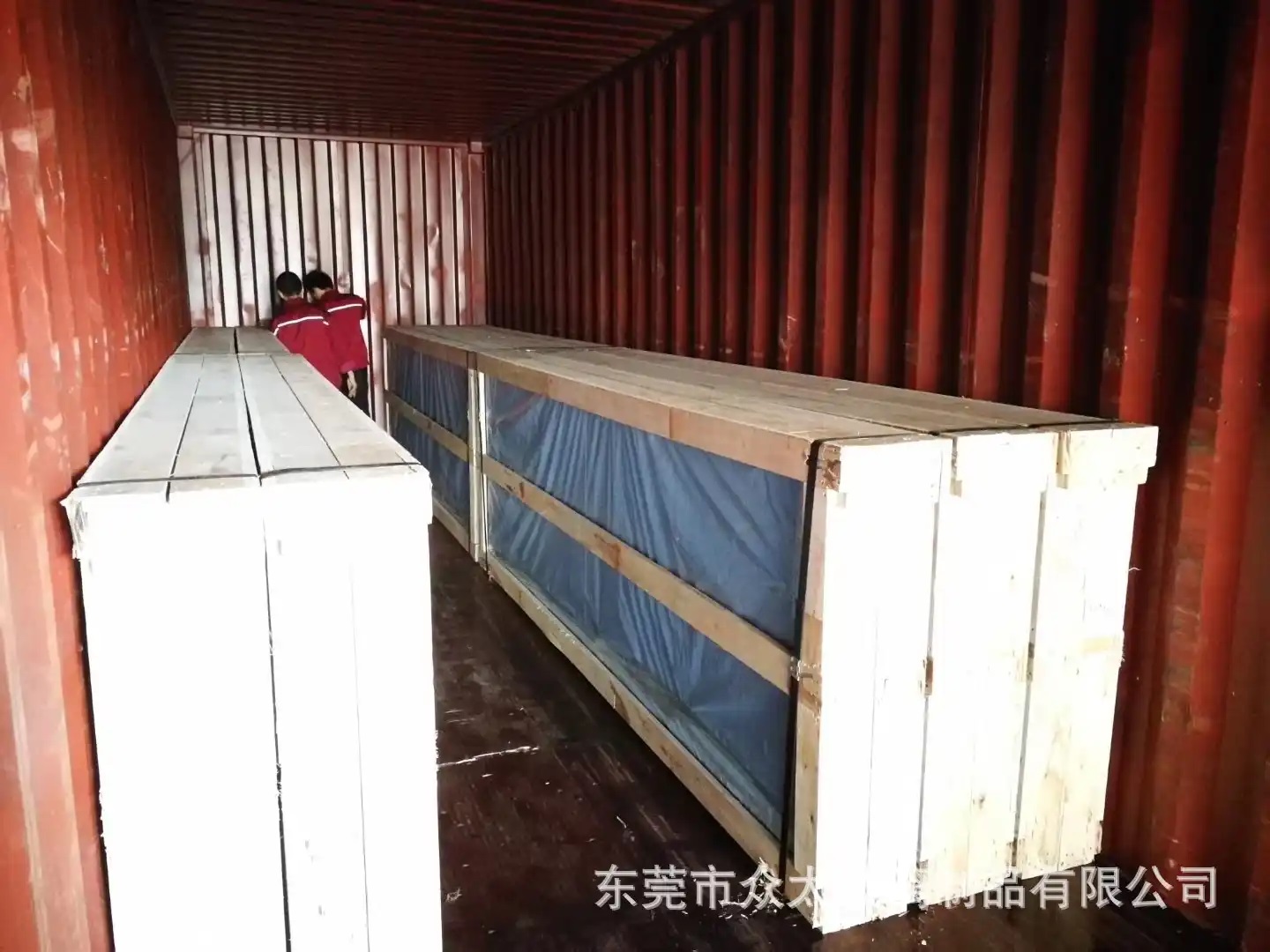
Before dispatch, confirm crate dimensions against the full path: truck → port → vessel → destination → site gate → elevator/hoist → installation zone. A crate that cannot turn a corner is a reorder.
9. Shipping, Customs & Site Delivery
- Choose Incoterms and insurance responsibility early (EXW, FOB, CIF, DAP, DDP as applicable).
- Share crate count, gross/net weight, dimensions and stacking restrictions with freight forwarder and site.
- Confirm port, road-route and site-access permits for oversize loads.
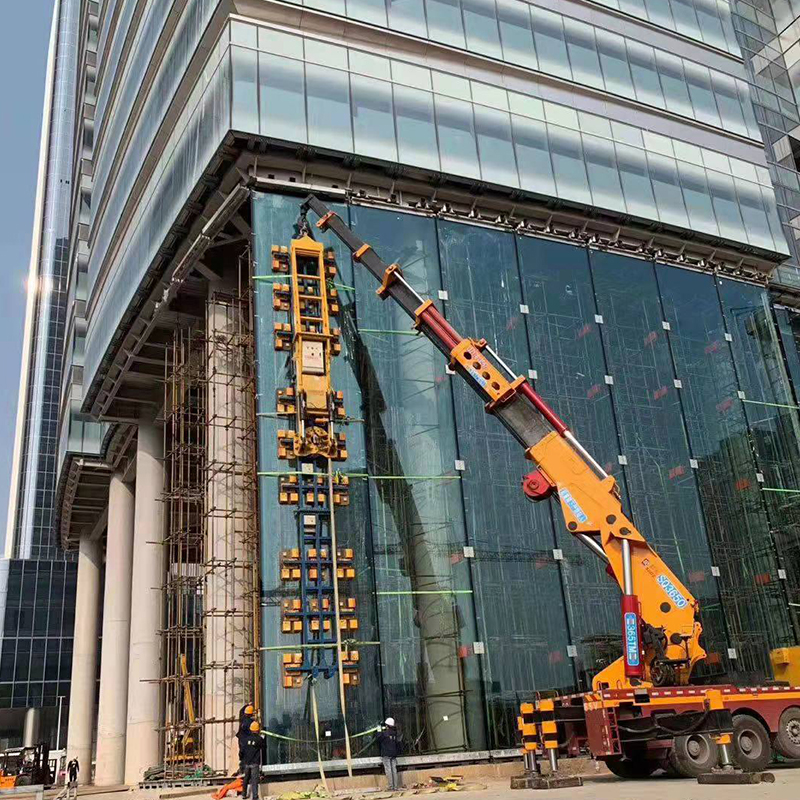
- Plan unloading equipment: crane, forklift, vacuum lifter and trained crew.
- Agree receiving inspection: count, visible damage, crate condition, document sign-off.
Jumbo IGU panels are particularly sensitive to edge-seal damage during transit; seal integrity should be part of receiving and installation inspection.
10. Receiving, Storage & Replacement Strategy
- Store crates on level ground, upright and off direct ground contact; protect from standing water.
- Keep identification visible; rotate stock so earliest crates are installed first.
- Never slide panels against each other; use proper glass-handling equipment.
- Pre-agree a spare-panel allowance (typical projects hold a documented percentage or critical-panel reserve).
- Document any transit or site damage immediately for claim and replacement lead-time purposes.
- Best practice: include spare panels and a replacement lead-time commitment in the original contract. Replacement is always longer than first supply because it competes with production scheduling.
11. RFQ Data Pack & Decision Flow
RFQ Data Pack — send this minimum set:
- Project location, climate, site access and delivery window.
- Glass sizes, quantities, function (vision/spandrel/etc.).
- Performance: U, SHGC, VLT, acoustic.
- Make-up: tempered/laminated/Low-E/IGU, coating side, gas, spacer.
- Structural: wind load, deflection, safety/impact class.
- Edge, hole and fabrication details; HST requirement.
- Standards/certifications and test/mock-up requirements.
- Packaging, shipping terms, crate and unloading constraints.
- Spare-panel/reserve allowance and replacement terms.
- Drawings, specification sections and expected shop-drawing format.
Decision Flow:
- Define application and system.
- Set performance and safety targets.
- Choose make-up and heat treatment.
- Confirm jumbo sizing and logistics envelope.
- Align framing, tolerances and shop drawings.
- Plan HST, QC and certification.
- Design crate and site-handling route.
- Lock lead time, terms and spares.
- Issue PO against approved drawings.
- Receive, inspect, store and install to programme.
12. FAQ
What is the maximum size of jumbo glass you can supply?
Monolithic and laminated jumbo sheet capacity is up to 3300×20000 mm. Insulating glass units (IGU) are limited by the sealed unit to 3300×12000 mm. Actual shippable and installable size also depends on thickness, make-up, handling route, crate design and site access.
How long does a jumbo glass order take?
Lead time depends on glass make-up, coating, tempering/lamination/IGU processing, HST, quality control, crating and shipping. A typical planning envelope is 4–10 weeks after approved shop drawings, with ocean freight adding transit time. Confirm a project-specific schedule at RFQ stage.
Is heat soak testing (HST) included?
HST is specified per project. For tempered glass, our process-control example is HST at 554°F for 4 hours with a documented breakage rate below 0.08%. HST reduces NiS spontaneous-breakage risk but does not replace laminated post-breakage retention where the design requires it.
How is jumbo glass packed and shipped?
Panels are packed in project-engineered wooden crates with edge and corner protection, anti-slip separation, moisture control and clear labelling. Crate layout, panel orientation, weight and unloading method must be coordinated with the site crane, forklift and access route before dispatch.
What documents come with a jumbo glass order?
Typical documents include shop drawings, coating/IGU calculation data, heat-treatment records, HST logs where applicable, inspection and test reports, packing list, bill of lading, certificate of compliance and warranty terms. Exact documentation is locked at contract and RFQ stage.
Can I order a small sample or mock-up first?
Yes. Samples and mock-ups are strongly recommended for coating appearance, edge finish, colour, reflectance and sealing verification before full production. Request sample size, make-up and test intent in the RFQ data pack.
Ready to scope your jumbo glass order?
Send your RFQ data pack or drawings and we will review sizing, make-up, logistics, HST, lead time and documentation against your project programme.
Contact us / Request a quotation
Related Guides
Low-E Glass Selection Guide
Coating family, SHGC/VLT, surface position and double vs triple silver.
Curtain Wall Glass Selection Guide
Make-up, vision/spandrel, structural and RFQ decisions for façades.
Overhead & Skylight Safety Guide
Laminated safety, HST, thermal stress and sloped-glazing codes.
Continue Reading
Jumbo Glass Family
Related Products
Resources
Back to the full selection-guide index.
Glass Skylight Selection Guide →
Sloped overhead glazing taken to the extreme — atrium & skylight rules.
Glass Bridge / Deck Guide →
When your canopy becomes walkable — concentrated load rules.
Jumbo Laminated Glass →
The product page behind every PVB / SGP canopy build-up.
Jumbo Tempered Glass →
Monolithic tempered plies (pre-lamination) and material spec.
Jumbo Glass / Oversize Glass →
Size definitions, capability and engineering overview.
Source & spec basis: Jumbo Tempered Glass Group manufacturing capabilities (monolithic/laminated up to 3300×20000 mm; IGU up to 3300×12000 mm; HST 554°F × 4 hrs; documented breakage rate <0.08% where applicable; EN/ISO and ASTM referencing practice). Lead times, documentation and logistics terms are planning ranges to be confirmed by project-specific RFQ, approved shop drawings and supplier contract. Final values must be confirmed by the design institute/engineer, local authority requirements and site logistics review.