Soft Coat Low‑E Glass | MSVD Sputtered Low‑Emissivity Glass for High‑Performance IGU
MSVD Sputtered Low‑Emissivity Glass – The Preferred Choice for High‑Performance Insulating Glass Units
Soft coat Low‑E glass (also called sputtered Low‑E, MSVD Low‑E, or soft‑coat low‑emissivity glass) is a coated glass product where the low‑emissivity coating is applied after glass manufacturing using magnetron sputtering (MSVD) technology. This process deposits multiple ultra‑thin layers of silver and metal oxides onto the glass surface, creating a coating that delivers superior thermal and solar control performance compared to hard coat (pyrolytic) alternatives.
Soft coat Low‑E is the industry standard for commercial curtain walls, high‑rise facades, and energy‑efficient buildings worldwide. Because the coating is sensitive to exposure, it must be encapsulated inside a sealed insulating glass unit (IGU) — but this encapsulation also protects the coating and ensures decades of reliable performance.
💡 Why soft coat dominates commercial glazing: Soft coat Low‑E can achieve emissivity as low as 0.10 (vs. 0.20–0.30 for hard coat), enabling U‑values down to 1.1 W/m²K in a double‑glazed IGU. This performance is essential for meeting modern energy codes (ASHRAE 90.1, Title 24, EPBD) and green building certifications (LEED, BREEAM, Passive House).
1. Soft Coat vs. Hard Coat – The Critical Difference
| Parameter | Soft Coat (MSVD / Sputtered) | Hard Coat (Pyrolytic) |
|---|
| Application method | Offline – after glass production, in vacuum chamber | Online – during float glass manufacturing |
| Coating structure | Multiple layers (up to 13+ layers) including silver | Single layer of doped tin oxide |
| Emissivity | 0.05–0.15 (can be as low as 0.10) | 0.20–0.30 |
| U‑Value potential (IGU) | 1.1–1.6 W/m²K | 1.6–2.0 W/m²K |
| SHGC range | 0.15–0.56 (coating dependent) | 0.40–0.70 |
| Color neutrality | Excellent – very neutral appearance | Slight haze or tint possible |
| Durability | Must be sealed inside IGU (coating is soft) | Can be used monolithically (durable) |
| Temperability | Must be tempered before coating (or use post‑temperable variants) | Can be tempered after coating |
| Cost | Higher (premium performance) | Lower (budget option) |
| Market share (commercial) | >80% | <20% |
2. How Soft Coat Low‑E Works
Soft coat Low‑E coatings are deposited in a vacuum chamber using magnetron sputtering. The glass passes under multiple cathodes that spray atoms of silver, zinc oxide, tin oxide, and other materials onto the surface. The result is a precisely engineered multilayer stack that:
- Reflects long‑wave infrared heat (emissivity <0.15)
- Selectively transmits visible light (VLT 40–72%)
- Reflects solar infrared radiation (reduces SHGC)
- Blocks ultraviolet radiation (UV transmission <5%)
Typical Multilayer Stack (Double Silver)
Glass substrate
ZnO (zinc oxide) – protective layer
Ag (silver) – functional IR reflector
NiCr (nichrome) – barrier layer
ZnO (zinc oxide) – dielectric
Ag (silver) – second IR reflector
NiCr (nichrome) – barrier
SnO₂ (tin oxide) – anti‑reflection
Each silver layer contributes to heat reflection; more layers (double, triple) increase solar control performance.
3. Coating Generations Available in Soft Coat
Single Silver Soft Coat Low‑E
| Parameter | Value |
|---|
| Silver layers | 1 |
| Emissivity | 0.12–0.15 |
| VLT | 51–72% |
| SHGC | 0.29–0.56 |
| U‑Value (6+12Ar+6) | ~1.7 W/m²K |
| Best for | Cold climates, maximum daylight, budget commercial |
Double Silver Soft Coat Low‑E ⭐ (Commercial Standard)
| Parameter | Value |
|---|
| Silver layers | 2 |
| Emissivity | 0.06–0.10 |
| VLT | 41–72% |
| SHGC | 0.22–0.44 |
| U‑Value (6+16Ar+6) | ~1.4 W/m²K |
| Best for | Commercial curtain walls, offices, hotels – most specified |
Triple Silver Soft Coat Low‑E ⭐ (High Performance)
| Parameter | Value |
|---|
| Silver layers | 3 |
| Emissivity | 0.03–0.07 |
| VLT | 41–63% |
| SHGC | 0.15–0.29 |
| U‑Value (8+16Kr+8) | ~1.1 W/m²K |
| Best for | Hot climates, Passive House, net‑zero, super‑tall towers |
4. Available IGU Configurations with Soft Coat Low‑E
Soft coat Low‑E must be used in a sealed IGU. The coating is always placed on a cavity‑facing surface (never on exposed #1 or #4 surfaces).
6+16Ar+6 Double Silver Soft Coat Low‑E IGU ⭐ (Commercial Curtain Wall Standard)
| Parameter | Data |
|---|
| Outer Lite | 6mm Clear or Tempered |
| Coating | Double Silver Soft Coat Low‑E (on #2 or #3 surface) |
| Cavity | 16mm |
| Gas | Argon (≥90%) |
| Inner Lite | 6mm Clear or Tempered |
| Overall Thickness | 28mm |
| VLT | ~70% |
| U‑Value | ~1.4 W/m²K |
| SHGC | ~0.35 |
| g‑value | ~0.35 |
| Acoustic (Rw) | ~32 dB |
| Max Size | 3280 × 7000 mm |
8+16Kr+8 Triple Silver Soft Coat Low‑E IGU (Passive House Grade)
| Parameter | Data |
|---|
| Outer Lite | 8mm Tempered |
| Coating | Triple Silver Soft Coat Low‑E (on #2 surface) |
| Cavity | 16mm |
| Gas | Krypton (≥90%) |
| Inner Lite | 8mm Tempered |
| Overall Thickness | 32mm |
| VLT | ~60% |
| U‑Value | ~1.1 W/m²K |
| SHGC | ~0.22 |
| Acoustic (Rw) | ~34 dB |
| Max Size | 3260 × 6900 mm |
Other Common Configurations
| Configuration | Coating | Gas | U‑Value | SHGC | Typical Use |
|---|
| 5+12Ar+5 | Single Silver | Argon | ~1.7 | 0.40–0.55 | Residential, light commercial |
| 6+12Ar+6 | Double Silver | Argon | ~1.6 | 0.30–0.44 | Budget commercial |
| 6+16Ar+6 | Triple Silver | Argon | ~1.3 | 0.20–0.28 | High‑performance commercial |
| 6+16Ar+8 | Double Silver | Argon | ~1.4 | 0.30–0.40 | Asymmetric high‑rise |
| 8+16Ar+8 | Triple Silver | Argon | ~1.2 | 0.18–0.25 | Super‑tall, blast resistant |
| 10+16Kr+10 | Triple Silver | Krypton | ~1.0 | 0.15–0.22 | Extreme climate, Passive House |
5. Key Specifications
| Specification | Details |
|---|
| Glass Thickness | 4, 5, 6, 8, 10, 12, 15, 19 mm |
| Coating Process | Magnetron sputtering (MSVD) – offline |
| Coating Generations | Single Silver, Double Silver, Triple Silver |
| Emissivity Range | 0.03–0.15 (coating dependent) |
| Coating Placement | #2 or #3 surface (must be cavity‑facing) |
| IGU Required | Yes – mandatory (coating must be encapsulated) |
| Maximum Monolithic Size | 3270 × 9700 mm (before IGU assembly) |
| Maximum IGU Size | 3240 × 9200 mm |
| Spacer Types | Aluminum, Warm Edge TPE, Swisspacer, Stainless Steel, Structural Silicone |
| Gas Fill | Air, Argon, Krypton |
| U‑Value Range | 1.0–1.8 W/m²K (configuration dependent) |
| SHGC Range | 0.15–0.56 (coating dependent) |
| VLT Range | 41–72% (coating dependent) |
| UV Blockage | 90–99% (coating dependent) |
| Sound Reduction (IGU) | 32–34 dB (clear), up to 46 dB (laminated) |
| Certifications | EN 3236‑4, EN 3229‑5, ASTM C3236, ASTM E3240, IGCC, CE, ISO 3241, CCC, SGS |
| MOQ | 1 × 20′ FCL |
| Lead Time | 4–6 weeks (IGU) |
6. Processing Requirements – Critical for Soft Coat
Soft coat Low‑E requires special handling throughout processing:
| Process | Requirement |
|---|
| Storage | Coated glass must be stored with interleaving paper to prevent contact damage |
| Cutting | Coating side must be face‑up; CNC cutting with lubricant |
| Edge deletion | Mandatory – coating must be removed 10–15mm from edge before sealing |
| Tempering | Must be done before coating (except for post‑temperable variants) |
| Washing | Deionized water, gentle brushes to avoid scratching |
| IGU assembly | Coated surface must face the cavity; never exposed to exterior |
| Handling | Vacuum cups must be clean; no finger contact on coated area |
⚠️ Edge deletion is the #1 quality factor for soft coat Low‑E IGU. If the silver layer is not completely removed at the perimeter, moisture ingress will corrode the coating and cause seal failure within months. Our automated edge‑deletion line guarantees zero coating residue at the seal interface.
7. Applications
Commercial Curtain Walls ⭐ Primary Application
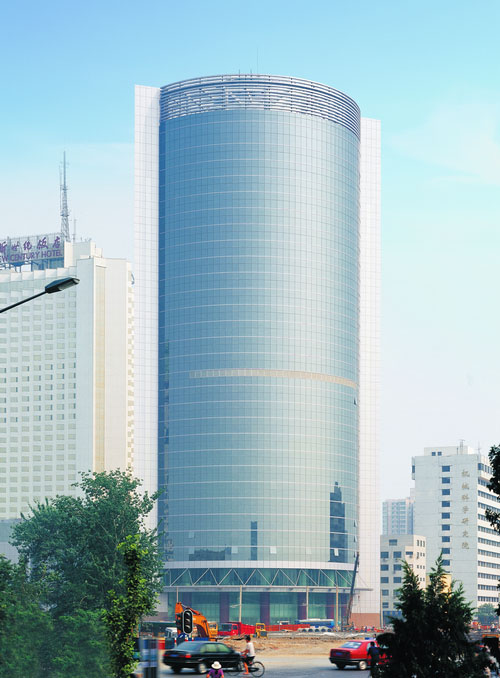
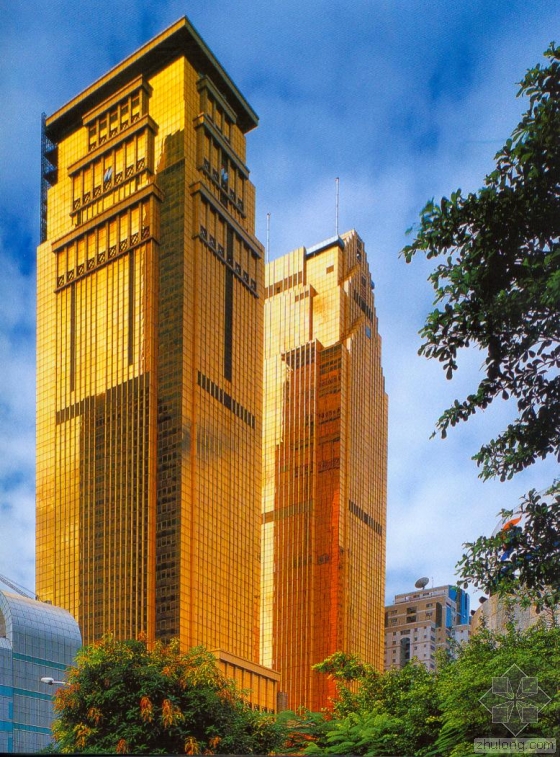
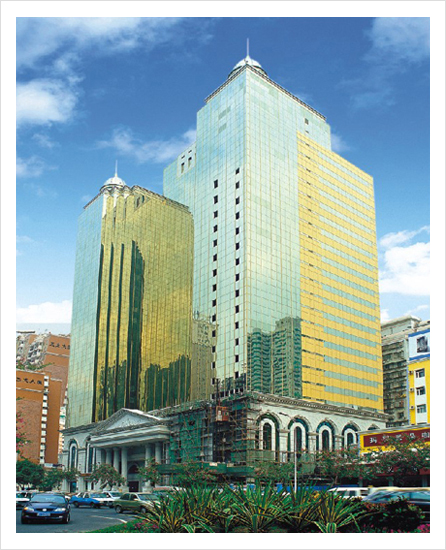
Soft coat Low‑E IGU is the default specification for commercial curtain walls worldwide. Double silver soft coat in 6+16Ar+6 configuration delivers the optimal balance of performance and cost.
High‑Rise & Super‑Tall Towers
Triple silver soft coat Low‑E with krypton fill provides the lowest SHGC (0.15–0.22) required for 300m+ towers in hot climates. Jumbo sizes reduce vertical joints.
Passive House & Net‑Zero Buildings
Triple silver soft coat Low‑E is essential for achieving Passive House Institute certification. U‑values below 0.80 W/m²K (whole window) require soft coat technology.
Office Buildings & Corporate Campuses
Double silver soft coat Low‑E on #2 surface (cold climates) or #3 surface (hot climates) optimizes energy performance and occupant comfort.
Hotels & Hospitality
Guestroom windows with soft coat Low‑E IGU eliminate drafts, reduce condensation, and improve acoustic comfort.
Healthcare Facilities
Patient rooms benefit from the combination of high VLT (daylight) and low SHGC (solar control) that soft coat Low‑E provides.
Airports & Transportation Hubs
Large‑span terminal facades use jumbo soft coat Low‑E IGU for both thermal performance and visual clarity.
Educational Institutions
Classrooms with soft coat Low‑E glazing stay cooler in summer and warmer in winter, reducing HVAC load and improving learning environments.
Retail & Shopping Malls
Atrium skylights and storefronts benefit from soft coat Low‑E's ability to transmit daylight while controlling solar gain.
8. Standards & Certifications
| Standard | Region | Scope |
|---|
| EN 3286‑4:2018 | Europe | Coated glass product standard; CE marking for Low‑E glass |
| EN 3299‑5 | Europe | Insulating glass unit standard |
| EN 4110 | Europe | Glass optical property determination |
| EN 4673 | Europe | U‑value calculation method |
| ASTM C4686‑10 | USA | Standard specification for pyrolytic and vacuum‑deposited coated glass |
| ASTM E4690 | USA | IGU performance standard |
| IGCC | USA/Canada | Insulating Glass Certification Council |
| ANSI Z470.1 | USA | Safety glazing material standard |
| AS/NZS 4728 | Australia/NZ | Safety glazing |
| AS/NZS 4736 | Australia/NZ | IGU standard |
| ISO 4741 | International | Quality management |
| CCC | China | Mandatory for Chinese market |
| SGS | Global | Third‑party inspection |
9. Pricing Guidance (FOB USD/m²)
Soft Coat Low‑E IGU (Per m²)
| Configuration | Coating / Gas | FOB Range (USD/m²) |
|---|
| 5+12Ar+5 | Single Silver / Argon | $24–36 |
| 6+12Ar+6 | Single Silver / Argon | $26–38 |
| 6+12Ar+6 | Double Silver / Argon | $28–42 |
| 6+16Ar+6 | Double Silver / Argon | $30–44 |
| 6+16Ar+6 | Triple Silver / Argon | $38–52 |
| 6+16Kr+6 | Triple Silver / Krypton | $44–60 |
| 6+16Ar+8 | Double Silver / Argon | $34–48 |
| 8+12Ar+8 | Double Silver / Argon | $36–52 |
| 8+16Ar+8 | Triple Silver / Argon | $46–64 |
| 8+16Kr+8 | Triple Silver / Krypton | $54–74 |
| 8+16Ar+8 Lami/Lami | Triple Silver / Argon | $72–96 |
| 10+16Kr+10 | Triple Silver / Krypton | $68–90 |
💡 Price determinants: coating generation (single/double/triple silver), gas fill (argon vs. krypton), spacer type, tempering/laminating, panel dimensions (jumbo surcharge 10–20% for >3300×6000mm), order volume, and destination port. For a precise project quotation with U‑value/SHGC/VLT calculations specific to your project, send us your glass schedule and performance targets.
10. Frequently Asked Questions
Q1: What is soft coat Low‑E glass?
Soft coat Low‑E (MSVD sputtered) is a low‑emissivity coating applied offline using magnetron sputtering. It delivers the highest thermal and solar control performance but must be sealed inside an IGU.
Q2: Why is soft coat better than hard coat?
Soft coat achieves lower emissivity (0.05–0.15 vs. 0.20–0.30), lower U‑values, and lower SHGC. It also offers better color neutrality and higher visible light transmittance. For commercial projects, soft coat is the standard.
Q3: Can soft coat Low‑E be used without an IGU?
Generally no. The coating is soft and susceptible to oxidation and scratching. It must be encapsulated in a sealed IGU with the coating facing the cavity.
Q4: What is edge deletion and why is it important?
Edge deletion removes the coating from the perimeter of the glass before IGU assembly. This ensures the sealant bonds directly to bare glass, preventing moisture ingress that would corrode the coating.
Q5: Which surface should the coating be on?
2 surface (outer pane, interior face) for cold climates. #3 surface (inner pane, exterior face) for hot climates. The coating must always face the cavity.
Q6: What is the maximum size for soft coat Low‑E IGU?
Up to 3280 × 9400 mm for double‑glazed IGU. Larger sizes may require custom engineering.
Q7: Can soft coat Low‑E be tempered?
Yes, but the coating is typically applied after tempering. Some post‑temperable variants exist. Our process flow: cut → temper → coat → edge delete → IGU assemble.
Q8: How long does soft coat Low‑E last?
When properly sealed inside an IGU, soft coat Low‑E lasts 20–30 years — the lifetime of the IGU itself.
Q9: What certifications do you provide?
EN 496‑4, EN 479‑5, ASTM C476, ASTM E490, IGCC, CE, ISO 941, CCC, SGS.
Q10: Is soft coat Low‑E available in colors?
Soft coat Low‑E is inherently neutral in appearance. Slight blue or grey tints may be present depending on the coating formulation. True colored Low‑E (blue, bronze, etc.) typically uses a tinted glass substrate with a neutral soft coat Low‑E coating.
Q11: What is the lead time?
4–6 weeks for standard IGU configurations. Jumbo sizes or special coatings may require 6–8 weeks.
Q12: How does soft coat Low‑E compare to reflective glass?
Reflective glass uses a different coating (not Low‑E) to create a mirror appearance. Soft coat Low‑E is designed to be visually clear while reflecting infrared heat. Both reduce solar gain, but Low‑E does so without the mirror effect.
11. Get a Quote for Soft Coat Low‑E Glass
Tell us your project requirements and we'll respond within 48 hours with a competitive FOB quotation and performance analysis.
Please provide:
- Coating generation: Single / Double / Triple Silver
- IGU configuration (e.g., 6+16Ar+6)
- Coating placement (#2 or #3)
- Glass types (clear, tempered, laminated)
- Spacer type (Aluminum / Warm Edge / Swisspacer / Structural Silicone)
- Gas fill (Air / Argon / Krypton)
- Target U‑value, SHGC, VLT
- Panel dimensions (width × height × quantity)
- Project location & climate zone
- Certifications required
- Target delivery date
- 📧 Email your specification to: tomron1688@gmail.com
- 🌐 Or visit: www.jumbotemperedglass.com
12. Related Pages (Internal Link Cluster)
Low‑E Glass Product Pages
IGU Configuration Pages
Related Resources