Triple Glazed Glass | Three‑Pane Insulated Glass Units (IGU) for Passive House & Extreme Climates
Three‑Pane Insulated Glass Units (IGU) – The Ultimate Solution for Passive House, Net‑Zero Buildings & Extreme Climates
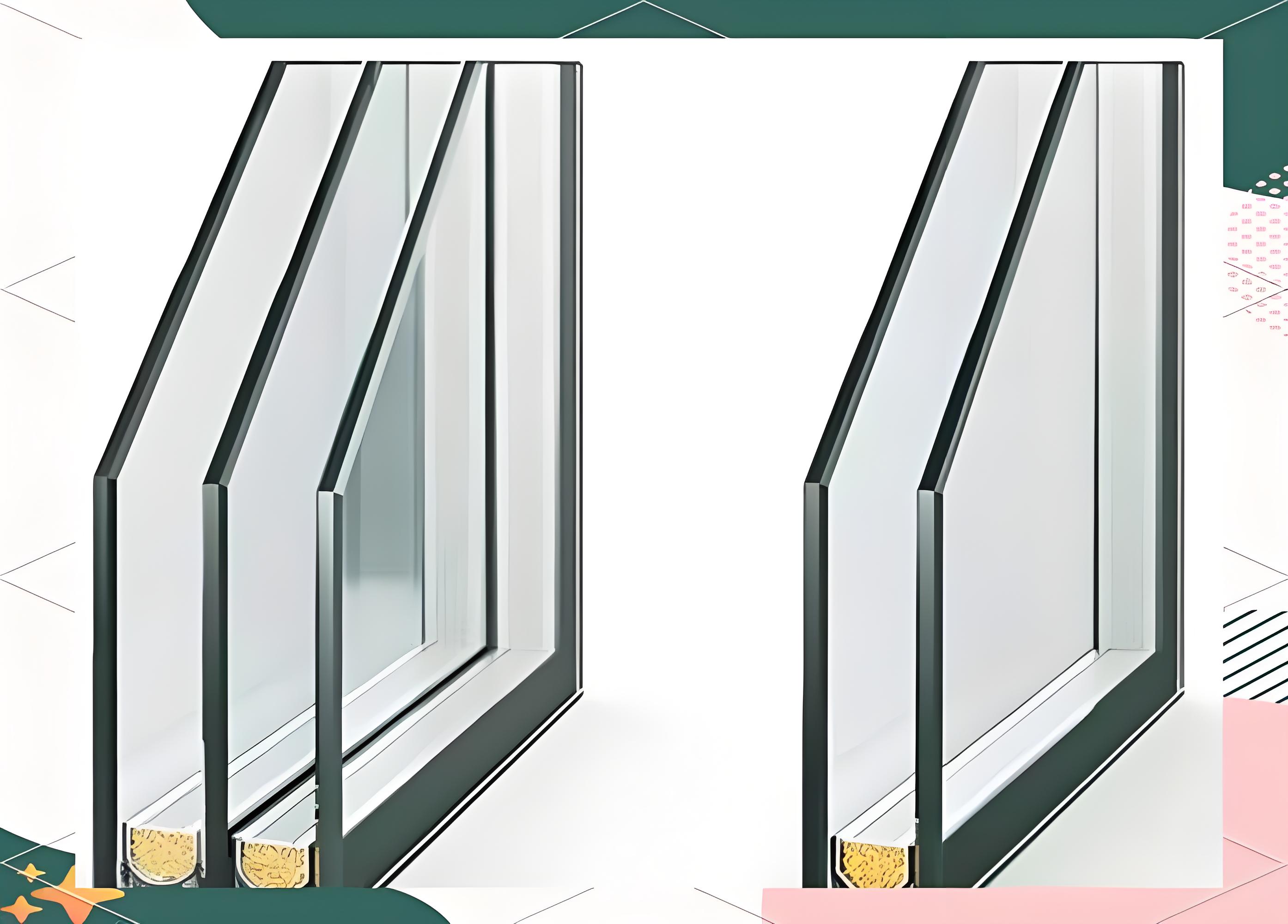
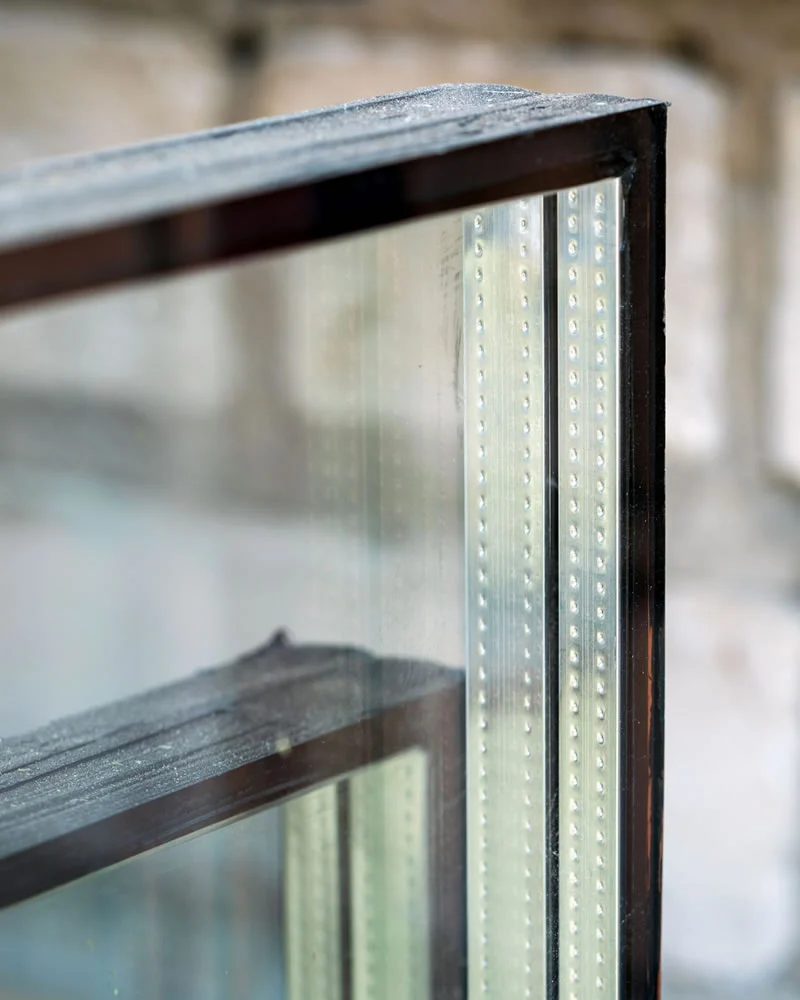
Triple glazed glass (also called triple glazing, three‑pane IGU, or triple insulated glass) is a factory‑sealed assembly of three glass panes separated by two spacer bars, creating two sealed cavities. It is the highest‑performing glazing technology available for windows, curtain walls, and building facades — delivering U‑values as low as 0.5 W/m²K and enabling buildings to achieve Passive House certification, net‑zero energy performance, and comfort in the world’s coldest climates.
While double glazing has become the global baseline, triple glazing is the specification of choice for:
- Passive House certified buildings (PHPP)
- Net‑zero energy and carbon‑neutral developments
- Arctic and sub‑arctic construction (Scandinavia, Canada, Russia)
- High‑altitude alpine architecture
- Luxury residential towers targeting the highest energy ratings
- Buildings requiring exceptional acoustic isolation (Rw > 45 dB)
Why Triple Glazed Glass? – The Performance Leap Over Double Glazing
| Parameter | Double Glazing (6+12A+6 Low‑E/Argon) | Triple Glazing (4+12A+4+12A+4 Low‑E/Argon) | Improvement |
|---|
| U‑Value (center of glass) | ~1.5 W/m²K | ~0.7 W/m²K | −53% |
| U‑Value (whole window) | ~1.8 W/m²K | ~0.9 W/m²K | −50% |
| Heating energy demand (typical) | Baseline | −40 to −60% | Major reduction |
| Surface temperature (interior, −20°C outside) | ~12°C | ~18°C | Warmer, no draft |
| Condensation risk | Moderate | Very low | Healthier interiors |
| Sound reduction (Rw) | ~31 dB | ~38 dB | Better acoustic comfort |
| Weight per m² (clear) | ~30 kg | ~36 kg | +20% (manageable) |
| Cost premium vs. double glazing | Base | +50–80% | Higher investment, rapid payback
|
💡 ROI perspective: Triple glazing typically adds 2–4% to total building construction cost but reduces heating energy by 40–60%. In cold climates (heating degree days > 3,000), the payback period is 3–7 years — after which the savings accrue for the building’s lifetime.
Common Triple Glazing Configurations
Triple glazing is identified by three glass thicknesses and two gap widths. Example: 4+12A+4+12A+4 means 4mm glass + 12mm air gap + 4mm glass + 12mm air gap + 4mm glass (total thickness = 36mm).
| Configuration | Total Thickness | Typical Application |
|---|
| 4+12A+4+12A+4 | 36mm | Passive House windows, mild‑cold climates |
| 4+16A+4+16A+4 | 44mm | Arctic construction, maximum thermal performance |
| 5+12A+5+12A+5 | 39mm | Higher wind load, mid‑rise Passive House |
| 5+16A+5+16A+5 | 47mm | High‑performance commercial, extreme climates |
| 6+12A+6+12A+6 | 42mm | Curtain walls, high‑rise Passive House |
| 6+16A+6+16A+6 | 50mm | Super‑tall towers, arctic commercial
Each configuration can be customized with different glass types, Low‑E coatings, gas fills, and spacer types. |
Glass Types Used in Triple Glazing
| Glass Type | Key Feature | Best For |
|---|
| Clear Float | Highest light transmission (~80%) | Budget triple glazing, mild climates |
| Low‑E (Double/Triple Silver) | Reflects infrared heat; essential for triple glazing | All energy‑efficient triple glazing |
| Tempered (Toughened) | 4–5× stronger; breaks into small cubes | Safety, doors, curtain walls |
| Laminated (PVB or SGP) | Two glass layers bonded with interlayer | Acoustic insulation, security |
| Low‑Iron | Ultra‑clear, no greenish tint | Display windows, museums |
| Tinted / Reflective | Solar control, privacy | Hot climates, specific aesthetics |
💡 In triple glazing, Low‑E coatings are typically applied to two surfaces — usually the #2 and #5 surfaces (the two cavity‑facing surfaces of the outer and inner panes) — to maximize thermal performance.
Spacer Types – Critical for Triple Glazing
Because triple glazing has two sealed cavities, spacer quality is even more important than in double glazing. Poor spacers create thermal bridges that degrade the overall U‑value.
| Spacer Type | Material | U‑Value Impact | Condensation Risk | Cost |
|---|
| Aluminum | Extruded aluminum | Baseline (thermal bridge) | Moderate | Lowest |
| Warm Edge (TPE) | Thermoplastic elastomer | Improves by ~0.1 W/m²K | Low | +10–15% |
| Swisspacer | Reinforced polymer | Improves by ~0.15 W/m²K | Very low | +20–30% |
| Stainless Steel | Box‑section stainless | Moderate improvement | Low | +15–20%
For Passive House certification, warm edge spacers are mandatory (Passive House Institute component requirements). |
Gas Fill Options
| Gas Fill | Thermal Improvement vs. Air | Cost Impact | Best For |
|---|
| Air | Baseline | None | Mild climates, budget |
| Argon | ~15% better per cavity | Low (+$2–4/m²) | Most common – best ROI |
| Krypton | ~25% better per cavity | Moderate (+$8–12/m²) | Passive House standard |
| Xenon | ~30% better per cavity | High (+$20–30/m²) | Extreme performance |
💡 For Passive House, the standard specification is krypton fill in both cavities — achieving U‑values as low as 0.5 W/m²K. Argon fill is acceptable for milder climates.
Low‑E Coating Placement in Triple Glazing
Triple glazing has six glass surfaces (numbered 1 to 6 from exterior to interior). Optimal coating placement:
| Surface | Coating | Function |
|---|
| #2 (outer pane, interior face) | Low‑E (hard or soft coat) | Reflects interior heat back into building |
| #5 (inner pane, exterior face) | Low‑E (soft coat) | Blocks heat loss from interior to exterior |
| Optional #3 or #4 | Additional Low‑E | Further improves U‑value (diminishing returns)
Recommended standard: Low‑E on #2 and #5 surfaces. For extreme climates, add Low‑E on #3 surface. |
Performance Data – Typical Values (Center of Glass)
| Configuration | Gas Fill | Low‑E Surfaces | U‑Value (W/m²K) | SHGC | VLT |
|---|
| 4+12A+4+12A+4 | Argon | #2, #5 | ~0.7 | ~0.55 | ~70% |
| 4+12A+4+12A+4 | Krypton | #2, #5 | ~0.6 | ~0.52 | ~68% |
| 4+16A+4+16A+4 | Krypton | #2, #5 | ~0.5 | ~0.50 | ~67% |
| 5+12A+5+12A+5 | Argon | #2, #5 | ~0.7 | ~0.53 | ~69% |
| 5+16A+5+16A+5 | Krypton | #2, #5 | ~0.5 | ~0.49 | ~66% |
| 6+12A+6+12A+6 | Argon | #2, #5 | ~0.8 | ~0.52 | ~68% |
| 6+16A+6+16A+6 | Krypton | #2, #5 | ~0.6 | ~0.48 | ~65%
Whole‑window U‑values are typically 0.1–0.2 W/m²K higher than center‑of‑glass values, depending on frame type. |
Acoustic Performance
| Configuration | Rw (dB) | Traffic Noise Reduction |
|---|
| 4+12A+4+12A+4 Clear | ~35 dB | Good |
| 4+12A+4+12A+4 Laminated (one pane) | ~40 dB | Very Good |
| 5+16A+5+16A+5 Laminated (two panes) | ~45 dB | Excellent |
| 6+16A+6+16A+6 Laminated (two panes) + asymmetric glass | ~48 dB | Near‑Silent |
Applications
Passive House Certified Buildings ⭐ Primary Application
Triple glazing is the defining glazing technology for Passive House buildings. The Passive House Institute requires whole‑window U‑values ≤ 0.80 W/m²K for certified windows — achievable only with triple glazing.
Net‑Zero Energy & Carbon‑Neutral Developments
Buildings aiming for net‑zero energy rely on triple glazing to minimize heating and cooling loads, reducing the size and cost of renewable energy systems.
Arctic & Sub‑Arctic Construction
In Scandinavia, Canada, Alaska, and Siberia, triple glazing is the standard for residential and commercial construction. U‑values below 0.7 W/m²K ensure comfortable interior surface temperatures even at −40°C outside.
Alpine & Mountain Architecture
High‑altitude buildings in the Alps, Rockies, and Himalayas use triple glazing to withstand extreme temperature swings and high wind loads.
Luxury Residential Towers
Premium apartments in cold climates (New York, Chicago, London, Stockholm) specify triple glazing for superior comfort, energy savings, and market differentiation.
Hospitals & Healthcare Facilities
Triple glazing provides draft‑free, condensation‑free environments critical for patient recovery and infection control.
Museums & Archival Facilities
Exceptional thermal stability and UV protection (>99% with laminated panes) protect priceless artifacts.
Technical Specifications
| Parameter | Typical Value |
|---|
| Glass Configuration | 3 panes, 2 cavities |
| Glass Thickness | 4mm, 5mm, 6mm per pane |
| Cavity Width | 12mm, 16mm (other widths on request) |
| Total Thickness | 36–50mm |
| Maximum Size | 2840 × 8480 mm (jumbo) |
| Weight (4+12A+4+12A+4 clear) | ~36 kg/m² |
| U‑Value (center of glass) | 0.5–0.8 W/m²K |
| U‑Value (whole window) | 0.7–1.0 W/m²K |
| SHGC | 0.45–0.55 |
| VLT | 65–72% |
| Sound Reduction (Rw) | 35–48 dB |
| UV Blockage | >99% (with laminated) |
| Spacer Types | Aluminum, Warm Edge TPE, Swisspacer, Stainless Steel |
| Gas Fill | Air, Argon, Krypton |
| Low‑E Coatings | Double Silver, Triple Silver |
| Certifications | EN 1527, CE, ISO 9621, CCC, SGS, Passive House Institute |
| MOQ | 1 × 20′ FCL (~100–150 m²) |
| Lead Time | 4–6 weeks |
Pricing Guidance (FOB USD/m²)
| Configuration | Glass Combination | Gas Fill | FOB Range (USD/m²) |
|---|
| 4+12A+4+12A+4 | Clear / Clear / Clear | Air | $38–52 |
| 4+12A+4+12A+4 | Low‑E (DS) / Clear / Low‑E (DS) | Argon | $48–64 |
| 4+12A+4+12A+4 | Low‑E (TS) / Clear / Low‑E (TS) | Krypton | $58–78 |
| 4+16A+4+16A+4 | Low‑E (TS) / Clear / Low‑E (TS) | Krypton | $62–84 |
| 5+12A+5+12A+5 | Low‑E (DS) / Clear / Low‑E (DS) | Argon | $52–70 |
| 5+16A+5+16A+5 | Low‑E (TS) / Clear / Low‑E (TS) | Krypton | $68–90 |
| 6+12A+6+12A+6 | Tempered / Clear / Tempered | Argon | $58–78 |
| 6+16A+6+16A+6 | Laminated / Clear / Laminated | Krypton | $78–104 |
💡 For a precise project quotation including Passive House certification support, send us your window schedule and PHPP target values.
Frequently Asked Questions
Q1: Is triple glazing worth the extra cost?
In cold climates (heating degree days > 3,000), triple glazing pays for itself within 3–7 years through energy savings. It also improves comfort, eliminates condensation, and increases property value.
Q2: What is the best configuration for Passive House?
4+16A+4+16A+4 with triple silver Low‑E on #2 and #5 surfaces, krypton fill, and warm edge spacers. Achieves U‑value ~0.5 W/m²K.
Q3: Can triple glazing be tempered?
Yes. One, two, or all three panes can be tempered. For safety glazing, the inner pane is typically tempered.
Q4: What is the maximum size?
Up to 2810 × 8410 mm for triple glazing. Larger sizes may require thicker glass.
Q5: How much does triple glazing weigh?
Approximately 36–50 kg/m² depending on glass thickness. Mechanical lifting is required.
Q6: Can triple glazing be used in hot climates?
Yes, with appropriate Low‑E coating placement (on #3 surface) to block solar heat gain. However, double glazing is often sufficient in hot climates.
Q7: What certifications do you provide?
EN 1547, CE, ISO 9731, CCC, SGS, Passive House Institute component certificate.
Q8: Do you provide PHPP data?
Yes. We supply verified U‑values, g‑values, and psi‑values for Passive House Planning Package input.
Get a Quote for Triple Glazed Glass
Tell us your project requirements and we'll respond within 48 hours with a competitive FOB quotation and PHPP‑ready performance data.
Please provide:
- Configuration (e.g., 4+16A+4+16A+4)
- Glass types (clear, Low‑E, tempered, laminated)
- Spacer type (Aluminum / Warm Edge / Swisspacer)
- Gas fill (Air / Argon / Krypton)
- Dimensions (width × height × quantity)
- Target U‑value or Passive House certification goal
- Certifications required
- Delivery timeline
- 📧 Email your specification to: tomron1688@gmail.com
- 🌐 Or visit: www.jumbotemperedglass.com
Related Products
•5+9A+5 / 5+12A+5 Insulated Glass – 20mm & 22mm IGU for residential & light commercial
•6+12A+6/6+16A+6 Insulated Glass–24mm/28mm IGU for heavier duty applications
•8+12A+8/8+16A+8 Insulated Glass – 28mm/32mm heavy‑duty IGU
•10+12A+10/10+16A+10 Insulated Glass – 32mm/36mm high‑performance IGU
•Double Glazed Glass – Standard IGU overview
•Triple Glazed Glass – Three‑pane IGU for Passive House
•Low‑E Insulated Glass – Energy‑efficient IGU with Low‑E coating
•Laminated IGU/safety insulated glass – Acoustic & security insulated glass
•Jumbo Insulated Glass – Up to 3300×12000mm oversized IGU